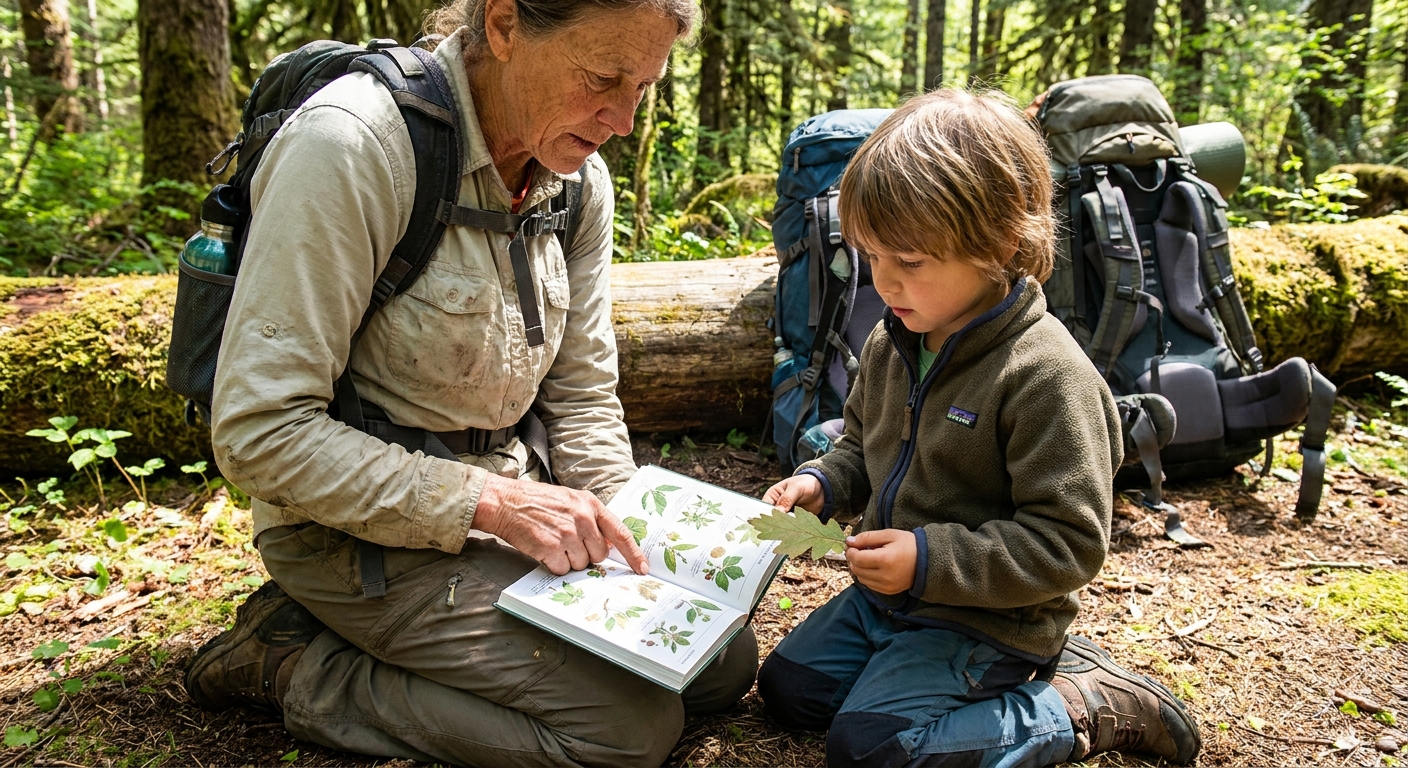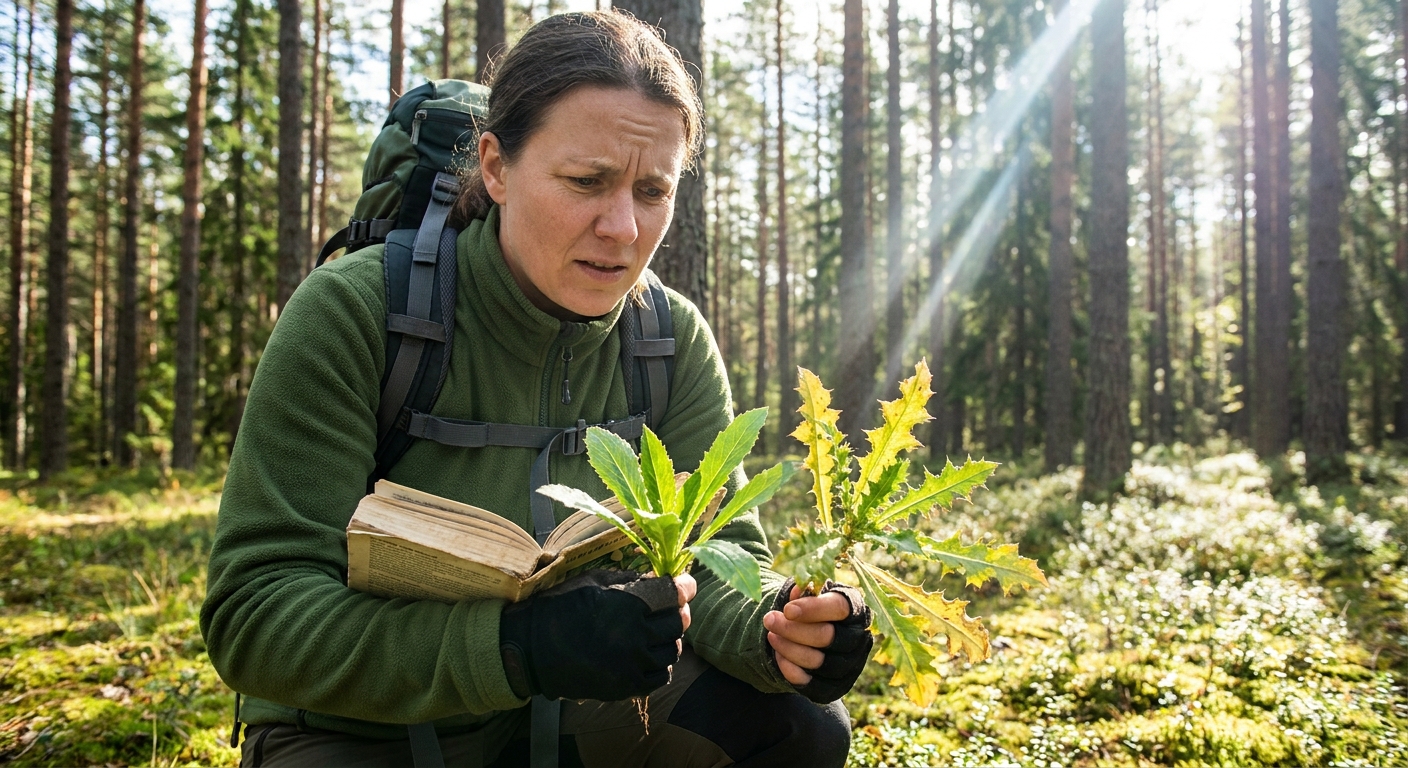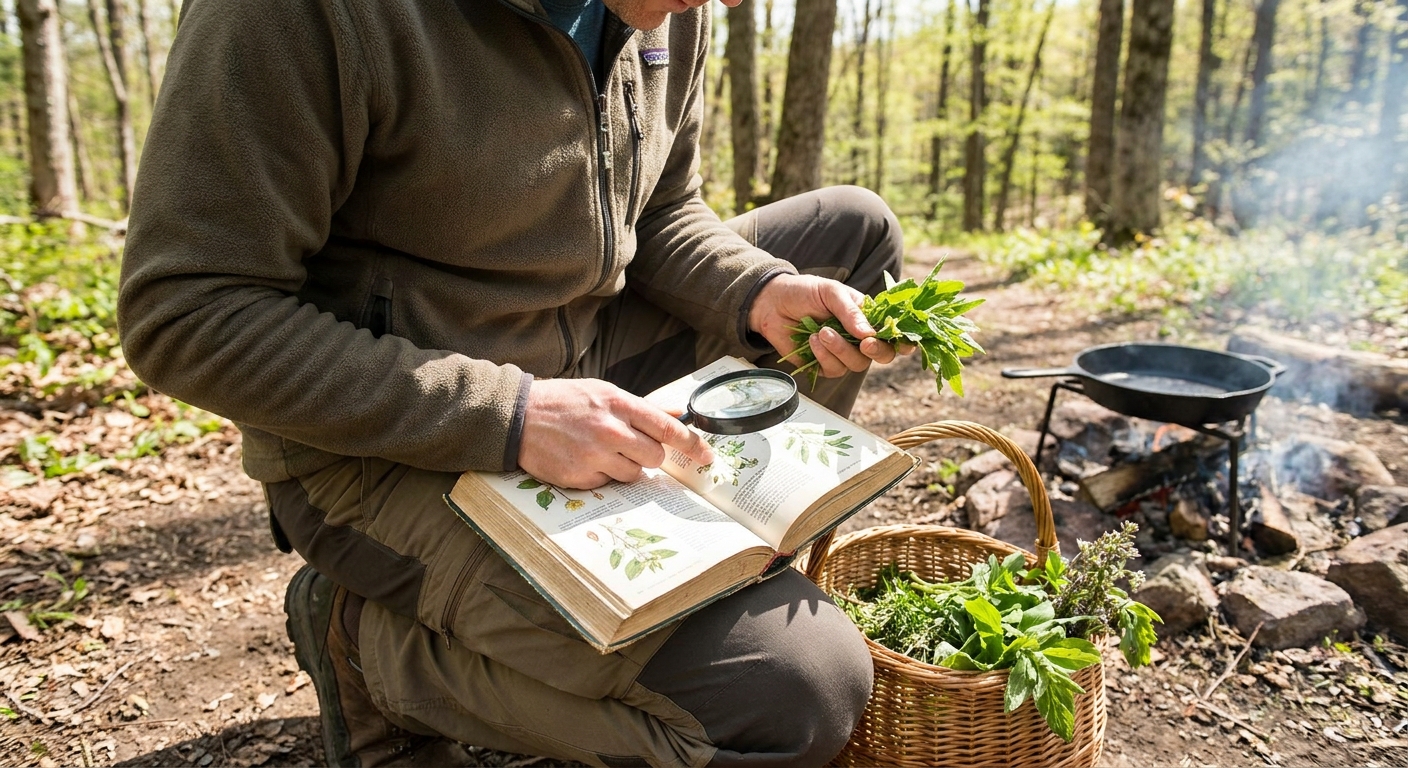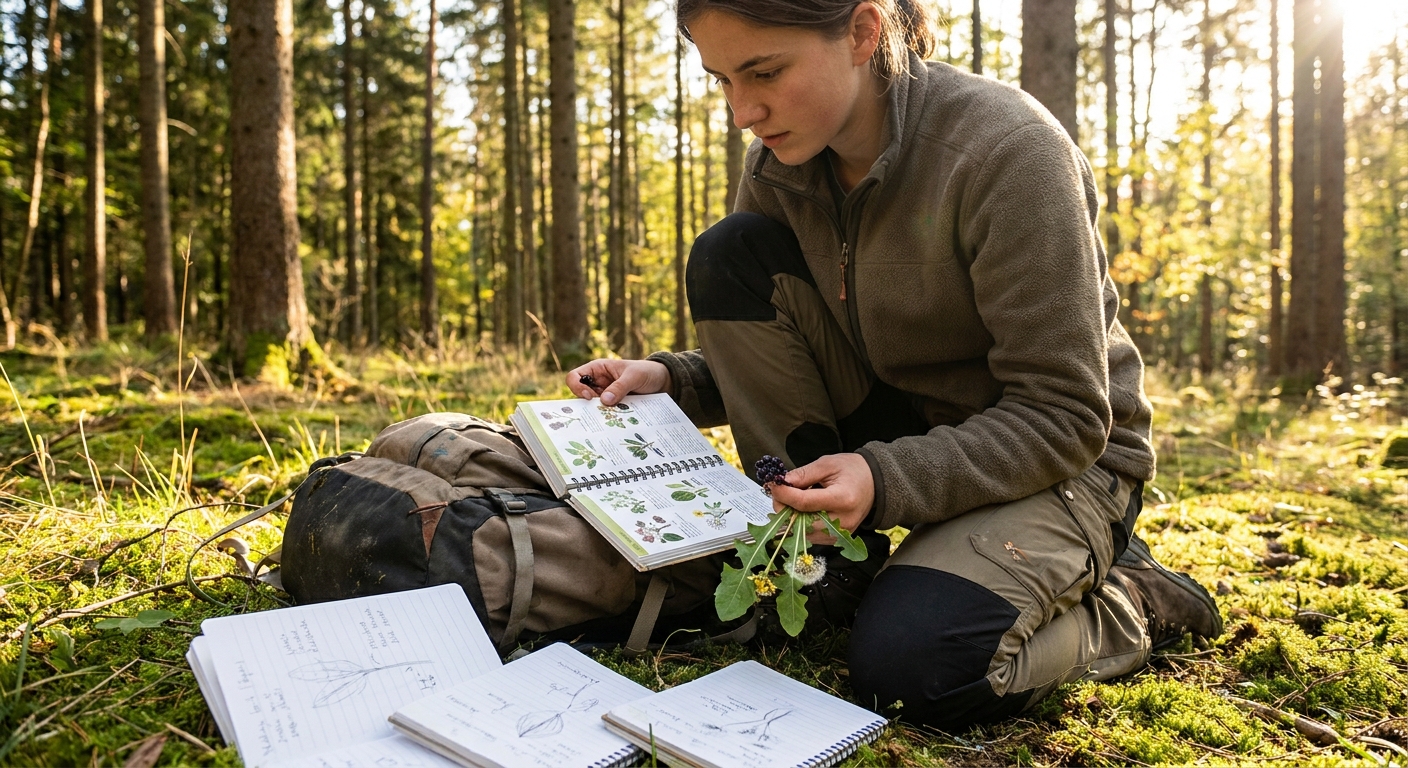
Foraging edible plants can transform a simple walk into a deeply satisfying harvest. But every responsible forager learns one rule first: if you are not 100% certain, do not eat it. This guide introduces seven widely distributed edible plants that are relatively easy to learn and hard to confuse—if you pay attention to details.
Introduction: Start Slow, Start Safe
Use this as a starting point, not a substitute for a field guide, local class, or mentor. Cross‑reference, double‑check, and build your plant vocabulary slowly.
1. Dandelion (Taraxacum officinale)
Why it’s good for beginners: Common, conspicuous, and entirely edible from root to flower.
Identification
- Leaves: Basal rosette only (no leaves on the flower stalk). Deeply toothed, pointing back toward the base, usually hairless.
- Stems: Hollow, unbranched flower stalks, oozing white milky sap when broken.
- Flowers: Bright yellow composite flower heads that are actually many small ray florets; one flower per stalk.
- Seeds: Classic “puffball” seed head with parachute-like tufts.
- *Cat’s ear (Hypochaeris radicata): Leaves and stems can be hairy; flower stems may branch and bear multiple flower heads. Generally edible but not identical.
- Hawkweeds (Hieracium spp.): May have leafy or hairy stems and multiple flowers per stalk.
Key Look-Alikes
Safety note: The main risk is misidentification with non-dandelion composites. While many are non-toxic, not all are, and some people react to the latex sap. Always confirm the single, hollow flower stalk and leaf-only rosette.
Habitat & Season
- Habitat: Lawns, parks, roadsides, open fields, disturbed soils.
- Season: Leaves can be foraged from early spring through late fall; flowers typically spring to early summer.
- Young leaves: fresh in salads (slightly bitter).
- Mature leaves: best cooked to mellow bitterness.
- Flowers: fritters, wine, jellies.
- Roots: roasted for a coffee-like drink.
Uses
2. Wood Sorrel (Oxalis spp.)
Why it’s good for beginners: Distinctive sour, lemony flavor and clover-like appearance.
Identification
- Leaves: Three heart-shaped leaflets attached at a central point, often folding downward in low light.
- Growth habit: Low-growing plants, often forming patches.
- Flowers: Small, 5-petaled; colors vary by species (often yellow, white with pink veins, or lilac).
- Taste: Noticeably sour, lemon-like.
- True clovers (Trifolium spp.): Leaflets are oval/rounded, not heart-shaped, and attach differently. Clovers are edible but don’t taste sharply sour.
Key Look-Alikes
Safety note: Wood sorrel contains oxalic acid, which contributes to its sour taste. In reasonable foraged amounts it’s fine for most people, but those with kidney issues or prone to kidney stones should limit it.
Habitat & Season
- Habitat: Woodland edges, lawns, shaded garden beds, along trails.
- Season: Spring through fall, depending on climate.
- Leaves: sprinkled in salads, added to chilled drinks, used as a tangy garnish.
- Flowers: edible and decorative.
Uses
3. Plantain (Plantago major & P. lanceolata)
Why it’s good for beginners: Abundantly common and useful both as food and first-aid herb.
Identification
Common plantain (P. major):
- Leaves: Broad, oval, in a basal rosette with prominent parallel veins running from base to tip.
- Stems: Leafless flower stalks rising from the center of the rosette.
- Flowers/Seeds: Dense, greenish-to-brown spikes on top of long stems.
- Leaves: Long, narrow, lance-shaped, still with prominent parallel veins.
- Flower spikes: Shorter, with a noticeable ring of white to yellowish stamens.
Narrowleaf plantain (P. lanceolata):
Key Look-Alikes
Few dangerous look-alikes when fully leafed out and in rosette form. Some grasses or lilies can superficially resemble narrowleaf plantain at a glance, but plantain’s prominent parallel veins and basal rosette are distinct.
Safety note: Avoid roadside and heavily trampled areas where plants collect pollution and pet waste.
Habitat & Season
- Habitat: Lawns, paths, compacted soils, fields, urban cracks.
- Season: Spring through fall; young leaves are most tender in spring.
- Young leaves: cooked as a green (older leaves become fibrous).
- Seeds: can be collected and used in small quantities; related to psyllium.
- Crushed leaves: traditional field remedy for insect bites and stings (external use).
Uses
4. Chickweed (Stellaria media)
Why it’s good for beginners: Tender, mild green that thrives in cool seasons.
Identification
- Growth habit: Low, mat-forming annual with weak, sprawling stems.
- Stems: Thin, somewhat translucent, with a single line of fine hairs running along one side of the stem.
- Leaves: Small, opposite, egg-shaped; lower leaves may have small petioles, upper leaves may be sessile.
- Flowers: Tiny, white, star-like with five petals so deeply lobed they appear as ten.
- Scarlet pimpernel (Anagallis arvensis): Sometimes grows near chickweed; has orange (or occasionally blue) flowers, not white, and lacks the single line of hair along the stem. Considered toxic.
Key Look-Alikes
Safety note: Confirm three features together: white star-like flowers, opposite small leaves, and a single line of hairs along the stem. Never eat a plant you think might be chickweed without all three.
Habitat & Season
- Habitat: Garden beds, disturbed soils, cool moist patches, often in partial shade.
- Season: Late winter through spring, sometimes in cool fall weather; disappears in summer heat.
- Young stems and leaves: raw in salads, or lightly wilted.
- Combine with stronger greens to add tenderness and mild flavor.
Uses
5. Lamb’s Quarters (Chenopodium album and relatives)
Why it’s good for beginners: Extremely nutritious “wild spinach” with distinctive leaf coating.
Identification
- Leaves: Variable, but often diamond- or goosefoot-shaped, with irregular teeth; underside and new growth often have a grayish, mealy or powdery coating.
- Stems: Upright, often grooved, can reach 1–2 m; may have reddish streaks.
- Flowers: Small, greenish, in dense, unshowy clusters at stem tips and leaf axils.
- Some Amaranthus species (pigweeds): Also edible but different leaf and flower structures.
- Danger warning: Never confuse with black nightshade (Solanum nigrum) or other Solanum species. Nightshades have very different flowers (star-shaped, usually white or purple) and sometimes dark berries; lamb’s quarters has dense, green, unremarkable flowers and no showy berries.
Key Look-Alikes
Safety note: Like spinach, lamb’s quarters contain oxalates. Cooking and moderation are wise, especially if you’re prone to kidney stones.
Habitat & Season
- Habitat: Gardens, field edges, disturbed soils, compost piles.
- Season: Late spring through fall; best harvested when young and tender.
- Leaves and young shoots: steamed, sautéed, added to soups or egg dishes.
Uses
6. Wild Garlic and Onion (Allium spp.)
Why it’s good for beginners: Strong onion/garlic scent is a key safety feature.
Identification
There are many wild Allium species, but they share a hallmark:
- Smell: Crushing any part should release a clear onion or garlic aroma.
- Leaves: Often grass-like or flat, sometimes hollow (like chives); arrangement varies by species.
- Bulbs: Underground bulbs or clusters similar to small onions.
- Flowers: Usually globe- or umbrella-shaped clusters (umbels) of white to purple star-like flowers.
- Death camas (Toxicoscordion venenosum and relatives):
- Similar grassy leaves and white flowers.
- No onion/garlic smell.
- Highly poisonous—even small amounts can be deadly.
Critical Look-Alikes
Safety rule: If it looks like an onion but does not smell strongly like onion or garlic, do not touch, do not taste.
Habitat & Season
- Habitat: Lawns, open woods, fields, streambanks (varies by species).
- Season: Leaves often appear in early spring; bulbs available whenever the ground is workable.
- Leaves: like chives or green onions.
- Bulbs: as you’d use cultivated garlic/onions, but harvest lightly and leave plenty to reproduce.
Uses
7. Wild Berries (with Emphasis on Brambles)
Why they’re good for beginners: Many wild berries are familiar, but some are toxic—so you must learn families, not just flavors.
Focus: Blackberries & Raspberries (Rubus spp.)
Identification
- Canes: Arching or upright woody stems, often thorny.
- Leaves: Usually compound (3–5 leaflets), toothed edges.
- Flowers: White to pink, 5 petals, typical rose-family look.
- Fruit: Aggregate of small juicy drupelets.
- Raspberries: Core stays on the plant; fruit is hollow.
- Blackberries: Core comes off with the fruit; not hollow.
- There are many Rubus species, but most are edible, though flavor varies.
- Avoid unknown berries with different growth forms (e.g., ornamental shrubs, lone stems) until positively ID’d.
- Never assume a berry is safe just because birds eat it.
- Avoid white, yellow, and unfamiliar red berries until you know the species.
- Learn the overall shrub structure*, leaves, and flowers—not just the fruit.
- Habitat: Sunny forest edges, thickets, old fields, disturbed sites.
- Season: Typically midsummer to late summer, varying by region and species.
- Fresh eating, jams, syrups, dried fruit leather.
Key Look-Alikes
Safety note:
Habitat & Season
Uses
Safety Fundamentals for All Edible Plants
Use the “Three-Source Rule”
Confirm a plant with at least three reliable sources (field guides, reputable websites, local experts).
Identify the Whole Plant
Don’t rely only on one part (just the flower or leaf). Learn the leaf, stem, flower, fruit, and growth habit.
Avoid Contaminated Areas
Skip roadsides, industrial areas, sprayed fields, and dog-heavy parks. When in doubt, leave it.
Try Small Amounts First
Some people have allergies or sensitivities. Taste a tiny portion the first time, after correct ID.
Respect the Ecosystem
Harvest lightly: no more than 10–20% of a patch, and even less for slow-growing or native plants.
Conclusion: Build Your Foraging Skills Gradually
Learning edible plants is a long, rewarding process. Start with a few easy species like dandelion, wood sorrel, plantain, chickweed, lamb’s quarters, wild onions, and familiar berries. Study them in every season. Over time, you’ll train your eyes and instincts—but always keep your caution sharp.
Remember: a meal is never worth a mistake. Confidence in foraging should come from solid identification skills, not from taking chances.