In foraging, mistakes don’t just taste bad—they can be life-threatening. Many beloved edible plants share their habitats with poisonous neighbors that look similar at a glance. Knowing the edible plant is only half the job; the other half is knowing what it isn’t.
Why Look-Alikes Deserve Your Full Attention
This comparison guide pairs six common edible targets with their most notorious look-alikes. Study them side by side. The goal isn’t to scare you away from foraging, but to sharpen your eye and deepen your respect for wild plants.
1. Wild Carrot (Queen Anne’s Lace) vs. Poison Hemlock & Water Hemlock
The Edible: Wild Carrot (Daucus carota)
- Habitat: Dry fields, roadsides, open ground.
- Key ID points:
- Feathery, carrot-like leaves.
- Hairy, solid, greenish stems.
- Flat-topped clusters (umbels) of tiny white flowers.
- Often a single dark purple flower at the center of the umbel (not always present).
- When dug, taproot smells like carrot (though smaller and woodier than cultivated varieties).
The Look-Alikes: Poison Hemlock (Conium maculatum) & Water Hemlock (Cicuta spp.)
- Habitat: Often in damper areas, ditches, along streams or moist field edges.
- Key danger traits (especially for poison hemlock):
- Smooth, hairless stems.
- Purple blotches or streaks on stems.
- Unpleasant, mousy or musty odor when crushed (not carroty).
- Thick, ridged stems, often near or in water.
- Tuberous roots with chambered cross-sections (extremely toxic).
Water hemlock has:
How to Tell Them Apart Safely
- Stem texture: Wild carrot’s stem is hairy; hemlocks’ stems are smooth.
- Stem color: Purple blotches or streaks strongly suggest poison hemlock.
- Smell: True wild carrot roots smell distinctly of carrot; hemlocks do not.
- Habitat: Be extra wary of “wild carrot” in or near wet ground—often a red flag.
Rule: If you have any doubt between wild carrot and a hemlock species, do not harvest. The risk-to-reward ratio is not worth it.
2. Wild Leeks (Ramps) vs. Lily-of-the-Valley
The Edible: Ramps/Wild Leek (Allium tricoccum and relatives)
- Habitat: Moist, rich deciduous forests.
- Key ID points:
- Usually 1–3 broad, smooth leaves per plant.
- White to purplish stem bases.
- Strong onion/garlic aroma when any part is crushed.
The Look-Alike: Lily-of-the-Valley (Convallaria majalis)
- Habitat: Similar woods and sometimes garden plantings that can naturalize.
- Toxic: Contains cardiac glycosides.
- Key traits:
- Typically two (sometimes three) leaves rising from a single point.
- No onion/garlic smell.
- Later in season, has dangling white bell-shaped flowers along one side of a stalk.
How to Tell Them Apart Safely
- Smell is non-negotiable: Ramps smell strongly like onion/garlic. Lily-of-the-valley has no such odor.
- Leaf attachment: Ramps have separate stems per leaf; lily-of-the-valley leaves sheath a single stalk.
- Seasonal clues: If you see the characteristic bell flowers, it’s lily-of-the-valley.
Rule: If it doesn’t smell distinctly like onion or garlic, do not harvest as an edible Allium.
3. Wild Garlic/Onion vs. Death Camas
The Edibles: Wild Garlic & Onion (Allium spp.)
- Habitat: Lawns, fields, open woodlands.
- Key ID points:
- Hollow or solid grass-like leaves, depending on species.
- Onion/garlic smell from bulb, leaf, or stem.
The Look-Alike: Death Camas (Toxicoscordion spp. and related genera)
- Habitat: Meadows, open slopes, sometimes intermixed with edible Allium species.
- Toxic: Potentially deadly.
- Key traits:
- Grass-like, V-shaped leaves in basal clumps.
- White to cream-colored flowers in a terminal cluster.
- No onion or garlic odor when crushed.
How to Tell Them Apart Safely
- Crush and smell: Every part of an Allium should smell of onion or garlic. Death camas has no such odor.
- Bulb structure: Allium bulbs have a familiar onion-like layering; death camas bulbs are more lily-like, without the same distinct onion layers.
Rule: Never eat a plant that you identify as an onion or garlic based on sight alone. Smell is your primary safety check.
4. Edible Berries vs. Pokeweed Berries
The Edibles: Common Wild Berries (Example: Elderberry, Blackberry)
- *Elderberry (Sambucus spp.): Woody shrub, opposite compound leaves, flat-topped clusters of small, dark berries.
- Blackberry/Raspberry (Rubus spp.): Thorny canes, compound leaves, aggregate berries.
The Look-Alike: Pokeweed (Phytolacca americana)
- Habitat: Disturbed soils, edges, fields, fencelines.
- Toxic: All parts considered poisonous; toxicity may be reduced by specific traditional preparations, but pokeweed is not a beginner plant.
- Key traits:
- Tall herbaceous plant with large, simple leaves.
- Distinctive reddish to purplish central stem.
- Hanging clusters of dark purple berries on vibrant, often pinkish-red stalks.
How to Tell Them Apart Safely
- Plant structure: Pokeweed is a single, succulent-stemmed plant, not a woody shrub (elder) or thorny cane (blackberry).
- Leaf type: Large, entire (unlobed) leaves vs. compound leaves in elder and Rubus*.
- Berry clusters: Pokeweed berries hang in long, thin clusters directly from colorful central stalks.
Rule: Avoid dark berries on fleshy, non-woody, red-stemmed plants unless you are thoroughly trained in pokeweed identification and preparation—and even then, extreme caution is warranted.
5. Wild Parsnip vs. Poison Hemlock and Cow Parsnip
The Edible (With Caveats): Wild Parsnip (Pastinaca sativa)
- Habitat: Roadsides, fields, waste places.
- Key ID points:
- Yellow flower umbels (carrot-family structure).
- Grooved, hollow stems.
- Leaves pinnate, with large, toothed leaflets.
- Edible root similar to cultivated parsnip, but caution needed.
Important safety note: Wild parsnip sap causes photodermatitis—painful skin blisters when exposed to sunlight.
The Look-Alikes: Poison Hemlock (Conium maculatum) & Cow Parsnip (Heracleum maximum)
- Poison hemlock: White flower umbels, purple-blotched stems, very toxic.
- Cow parsnip: Giant plant, large white umbel flowers; its sap also causes severe skin reactions.
How to Tell Them Apart Safely
- Flower color: Wild parsnip has yellow umbels; poison hemlock and cow parsnip have white umbels.
- Skin safety: Both wild parsnip and cow parsnip sap can damage skin. Always wear gloves and cover skin.
Rule: Because of skin risk and confusion with hemlock, wild parsnip is not recommended for beginners. If you choose to work with it, protective clothing is mandatory.
6. Burdock vs. Foxglove and Other Large-Leaved Plants
The Edible: Burdock (Arctium spp.)
- Habitat: Disturbed soils, field edges, trailsides.
- Key ID points:
- Large, heart-shaped leaves forming a basal rosette in year one.
- Leaves dull green above, lighter and slightly woolly beneath.
- In year two, tall flowering stalks with purple thistle-like flowers that become hooked burrs.
- Edible part: long taproots, usually in first-year plants.
The Look-Alikes: Foxglove (Digitalis spp.) and Others
- Foxglove: Ornamental that can escape cultivation; highly toxic heart-affecting cardiac glycosides.
- Key foxglove traits:
- Tall flowering spikes with tubular, bell-shaped flowers (often purple, pink, or white).
- Leaves in basal rosettes with heavy venation and fuzzy texture.
How to Tell Them Apart Safely
- Flower and seed heads: Burdock produces burrs that cling to clothing; foxglove produces tall spikes of bell flowers that dry into seed pods.
- Leaf undersides: Burdock’s underside is notably lighter and more woolly; foxglove leaves are textured but the whole plant looks more “garden-ornamental.”
- Patch study: Identify confirmed burdock second-year plants with burrs in a patch, then find first-year rosettes nearby.
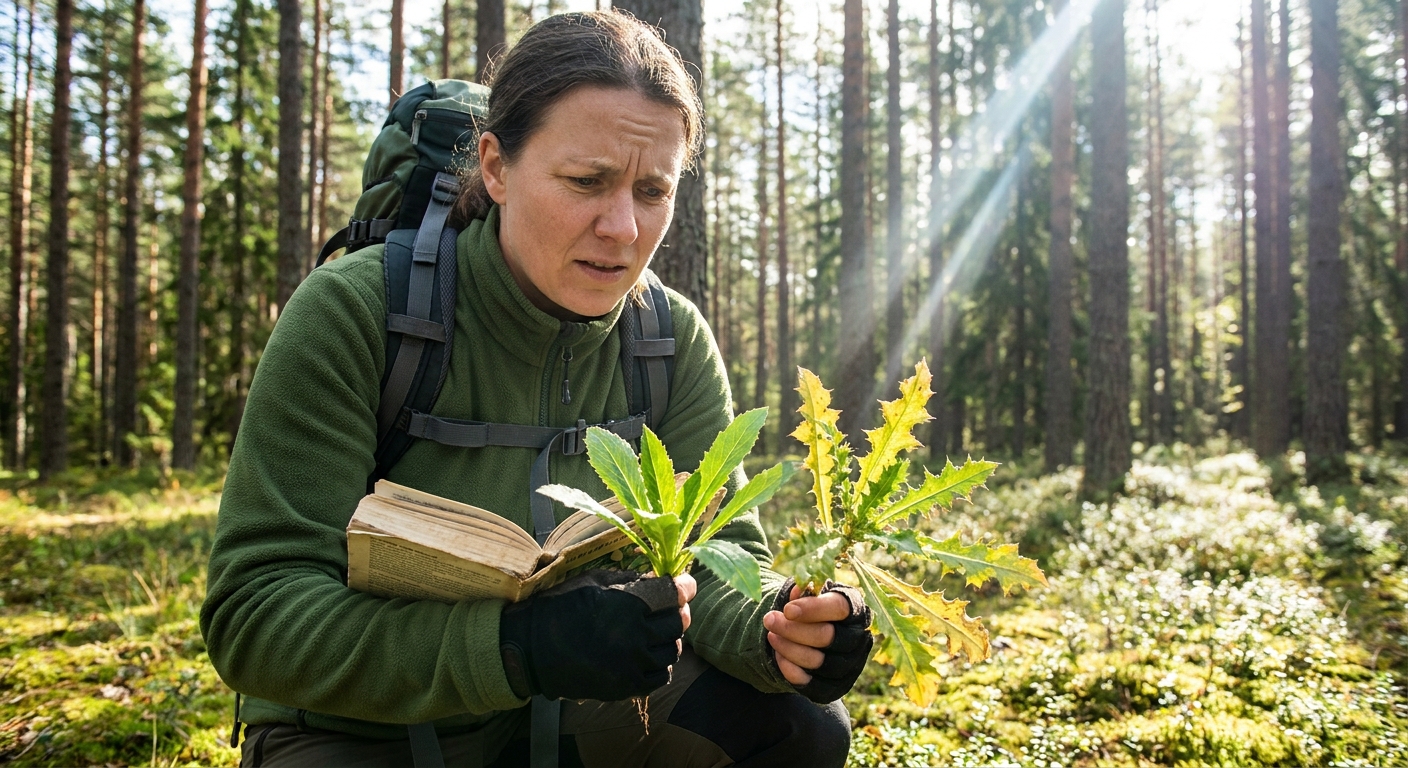
Rule: Never harvest large-leaved rosette plants for food unless you can also identify their second-year flowering or seeding form in the same patch.
General Strategies for Dealing with Look-Alikes
1. Study Pairs, Not Singles
When you learn an edible plant, always learn its main look-alikes at the same time. It’s far easier to remember distinctions when your brain holds them as a contrast set.
2. Prioritize High-Consequence Confusions
Plants like poison hemlock, water hemlock, death camas, and certain ornamentals (oleander, yew, foxglove) should be on your personal "never experiment" list. Learn them well enough to avoid them, even if you never intend to eat them.
3. Avoid Root and Bulb Harvesting Until You’re Advanced
Underground parts are where many plants concentrate toxins. If you’re early in your foraging journey, focus on:
- Easily distinguished greens.
- Familiar fruits like blackberries and raspberries.
- Aromatic herbs with unmistakable smells.
- Regional foraging books with color photos.
- Local botany or foraging classes.
- Herbarium specimens or high-quality online databases.
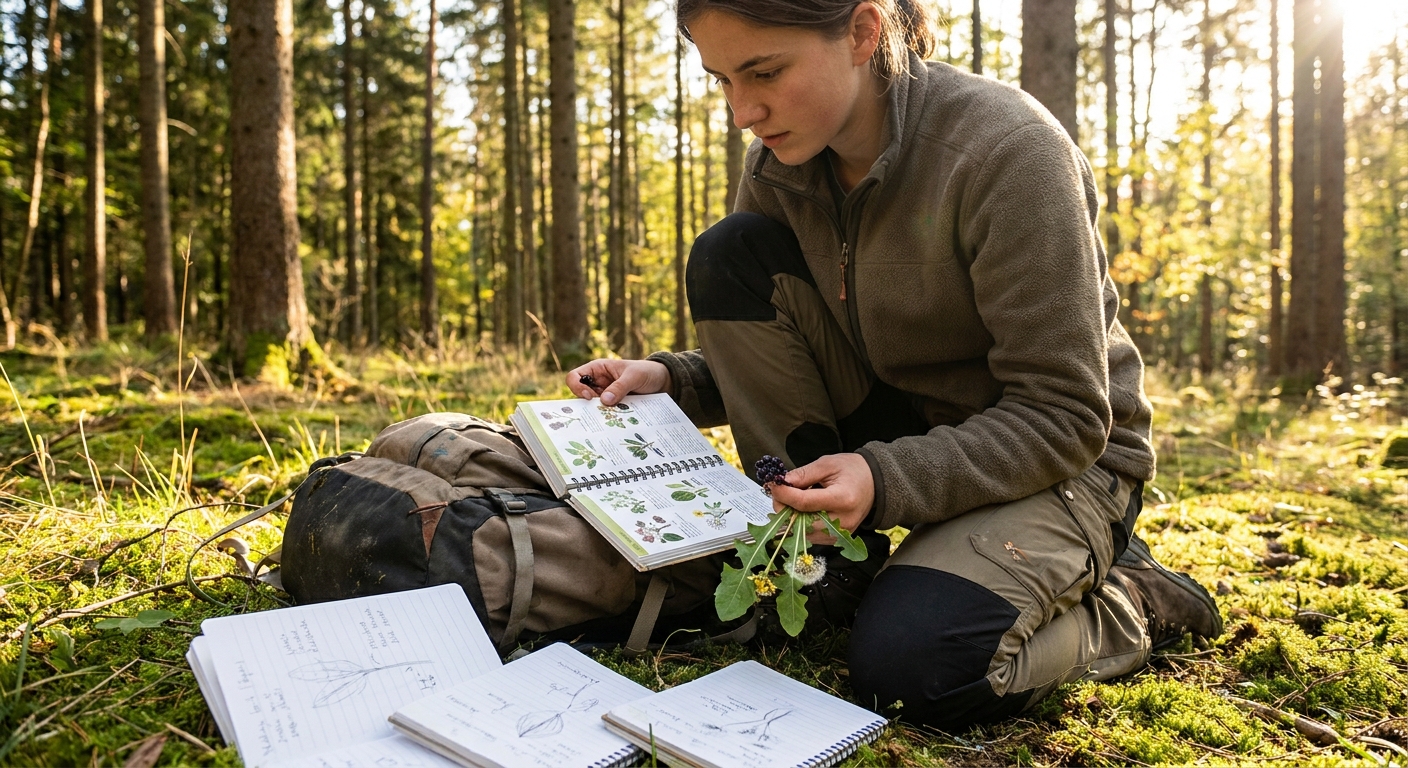
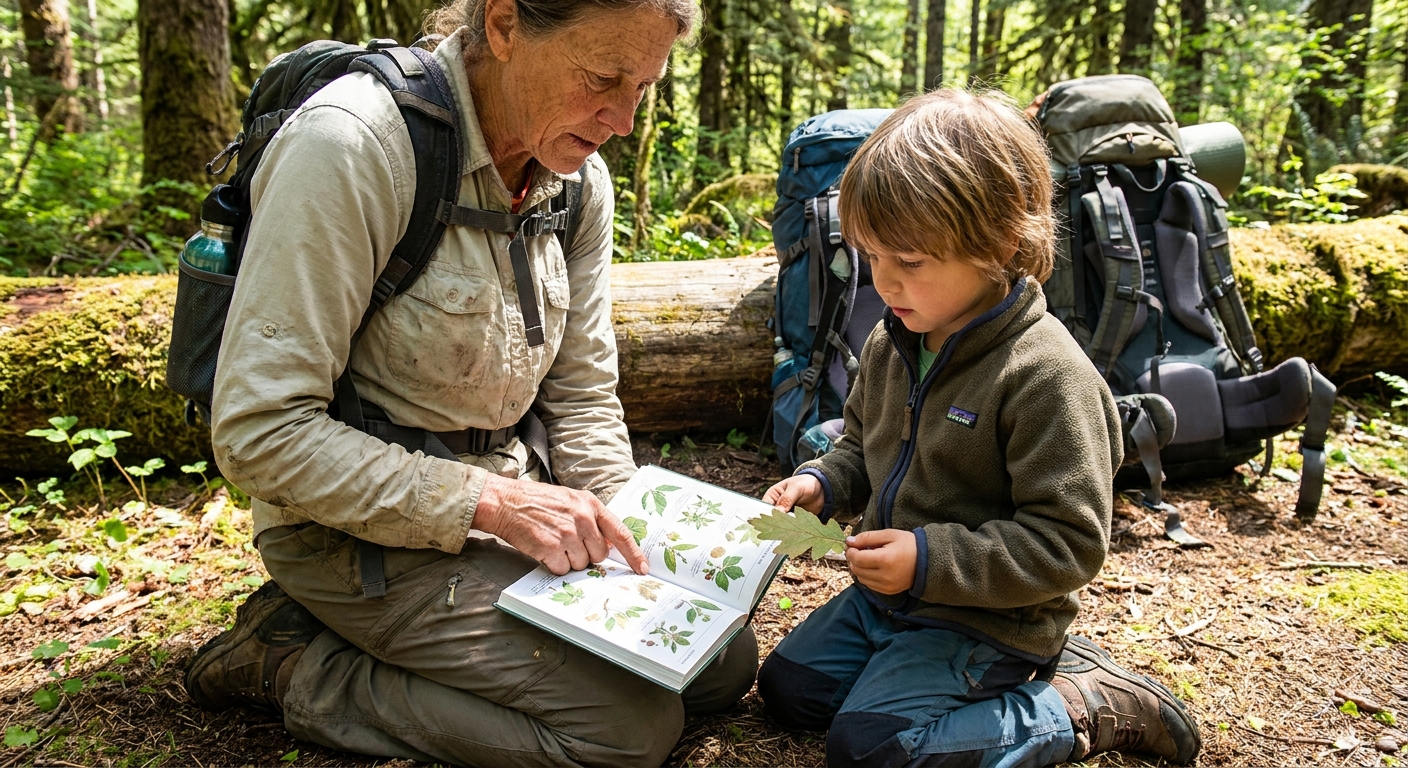
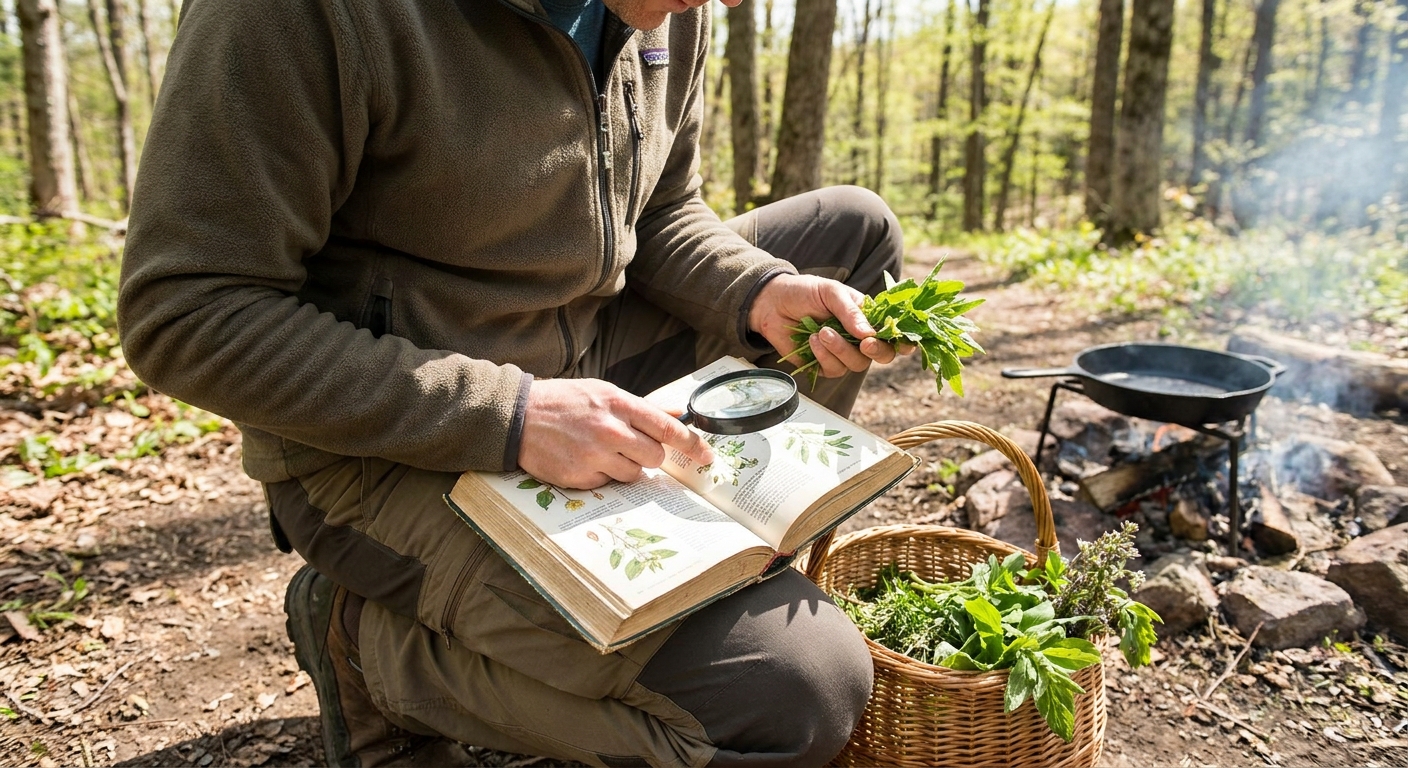
4. Use Multiple Resources
And remember: plant ID apps are aids, not authorities.
The Mentored Mindset: Respect Over Fear
It’s possible to read about look-alikes and feel overwhelmed. Instead, treat them as teachers that sharpen your observation.
- Learn slowly.
- Focus on one or two new species each season.
- Review them at different life stages and in different habitats.
The more time you spend genuinely seeing plants, not just glancing at them, the less room there is for dangerous mistakes. Edible plants can be a source of joy and connection—but only when approached with deliberate caution and respect.