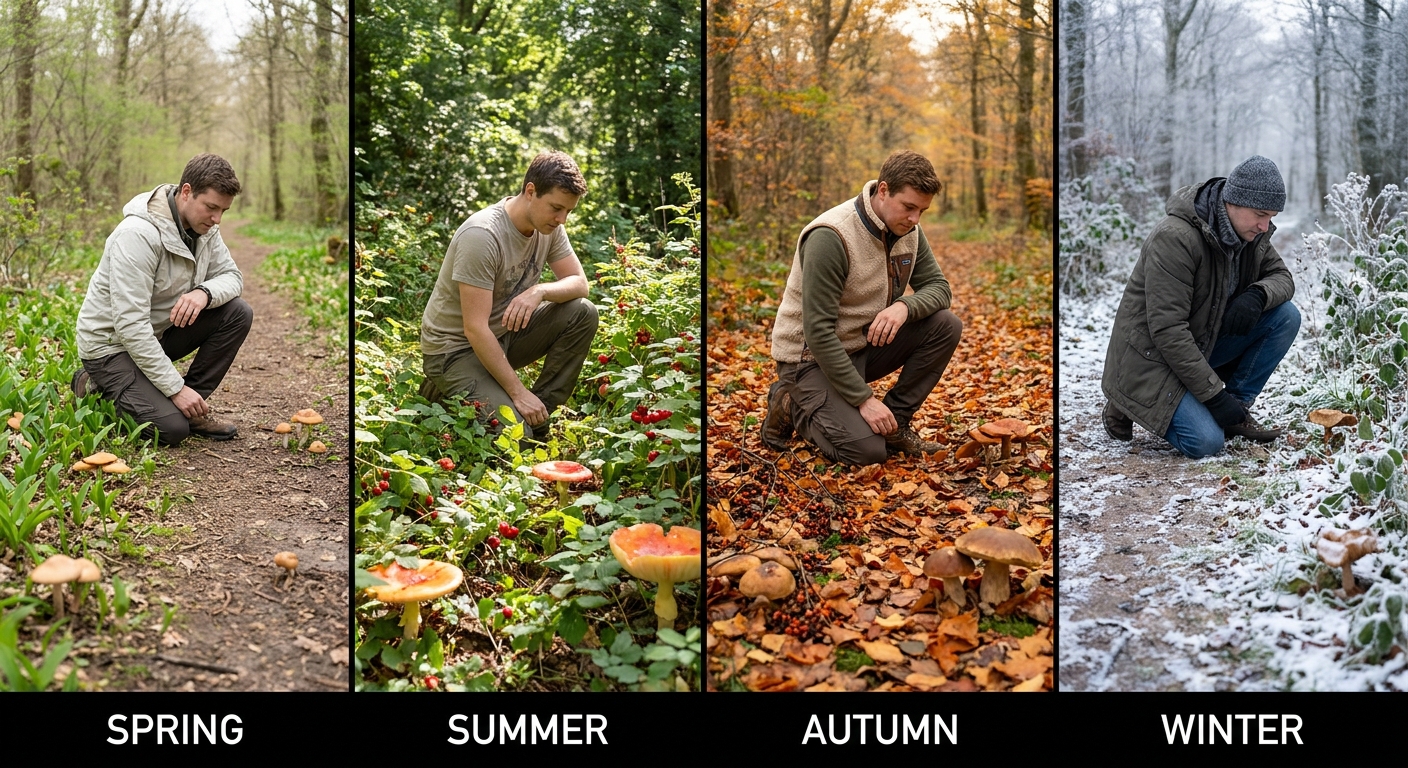
Foraging mistakes rarely come from malice; they come from enthusiasm outrunning knowledge. Many of the most common errors are seasonal—picking the right plant at the wrong time, or failing to notice how a safe spring edible becomes a risky autumn look‑alike.
Introduction
Below are ten frequent seasonal foraging mistakes, with practical strategies to avoid them in every part of the year.
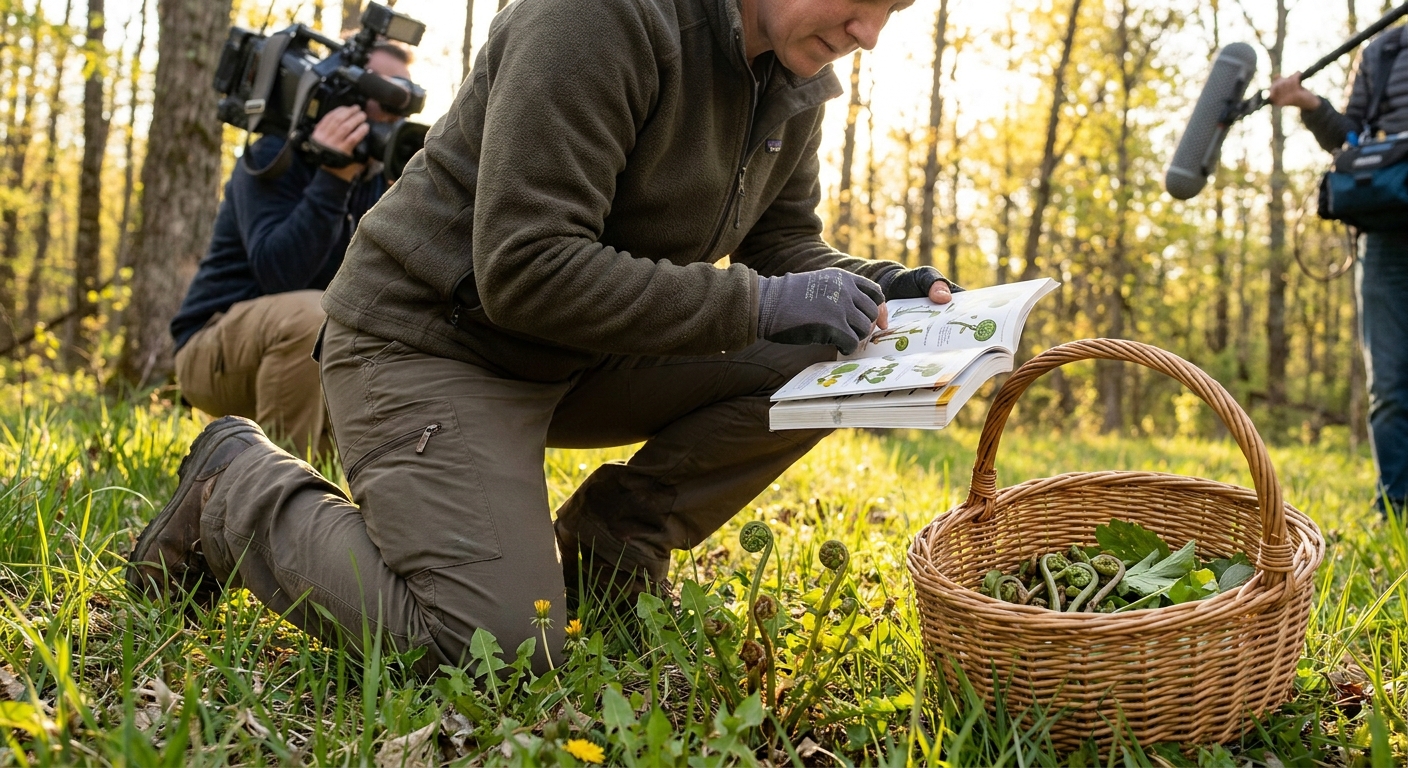
1. Treating Apps as Authorities Instead of Assistants
The mistake: Relying on a plant ID app’s single photo match and then eating the plant.
Why it’s risky:
- Apps can confuse edible and deadly species, especially when plants lack flowers or fruit.
- Seasonal appearances differ; a spring rosette may not resemble the app’s summer photo.
- Use apps only to generate candidate species names.
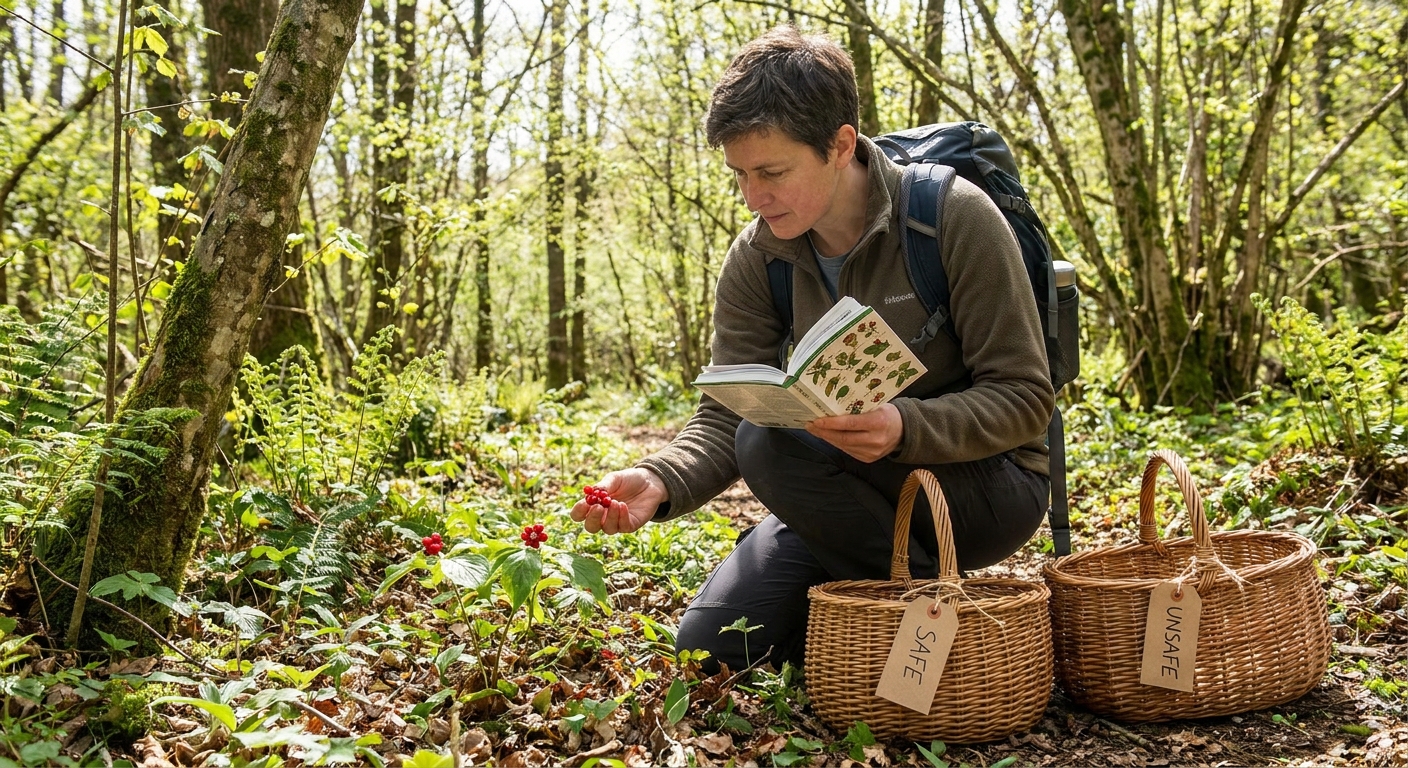
- Verify ID in two or more reputable field guides and, ideally, with a local mentor.
- Refuse to eat any wild plant identified by app alone—regardless of season.
How to avoid it:
2. Ignoring How Plants Change With Age
The mistake: Learning a plant only at one life stage (usually flowering) and assuming you can confidently identify it at all stages.
Risk example:
- You recognize blooming yarrow in summer but misidentify its early rosettes in spring and confuse them with young poison hemlock or other umbellifers.
- Follow specific patches through the entire year: first shoots, full growth, flowering, seeding, and dieback.
- Take photos and notes by month; build your own seasonal field guide.
- Only harvest non-flowering stages of a plant (spring shoots, autumn roots) once you’ve watched that plant complete a full cycle.
How to avoid it:
3. Harvesting From Polluted or Sprayed Areas
The mistake: Prioritizing convenience—roadsides, park edges, vacant lots—without assessing chemical risk.
Seasonal twist:
- Spring plants along roads may look the freshest just as winter road salt, exhaust particles, and de-icing chemicals are concentrated in the soil.
- Autumn nuts from urban or industrial edges may contain heavy metals.
- Stay at least 50–100 meters from major roads when foraging food.
- Learn your municipality’s mowing and spraying schedules for parks and paths.
- Avoid plants directly under power lines, fence lines, or along railways, where herbicide use is common.
How to avoid it:
4. Confusing Edible Alliums With Deadly Look‑alikes
The mistake: Picking “wild onion” or “wild garlic” based on appearance alone.
Seasonal context:
- In early spring, many bulb plants send up strap-like leaves. Some are ornamental, some are edible, some are extremely toxic (e.g., death camas).
- Every part (leaf, bulb, stem) of an edible Allium should smell strongly of onion or garlic when crushed.
- No onion/garlic smell = do not eat, no matter how convincing the appearance.
- Wait for flowers if unsure; many toxic species have very different blooms.
How to avoid it:
5. Harvesting Over-Mature Greens in High Summer
The mistake: Picking large, tough leaves because they’re abundant, ignoring flavor and potential irritants.
Examples:
- Nettles: Older, heavily flowering plants may cause kidney irritation if consumed in quantity.
- Mustards: Hotter, more pungent leaves can be harsh on the stomach.
- For leafy greens, focus on tender top growth or younger plants.
- If a plant is in full flower and seeding, consider it past its ideal edible stage (with some exceptions like kale-type mustards where you take new side shoots).
How to avoid it:
6. Underestimating Root and Seed Risks in Autumn
The mistake: Assuming that because a plant’s spring leaves are edible, its autumn roots, seeds, or pods must also be safe.
Counterexamples:
- Pokeweed: Young shoots are traditionally eaten with elaborate preparation; roots, mature stems, and berries remain toxic.
- Some buttercups (Ranunculus spp.): Young leaves may be nibbled in tiny amounts by some traditional foragers, but roots and other parts are more strongly irritating or toxic.
- Research which part of the plant is edible and in which season—don’t generalize.
- Assume each plant part is a different food with its own rules.
How to avoid it:
7. Misjudging Fruit Ripeness and Fermentation
The mistake: Eating under-ripe or overripe wild fruits without checking carefully.
Seasonal pattern:
- In late summer and autumn, many fruits change rapidly: green → ripe → fermented/rotten within days.
- Under-ripe fruits are often sour or astringent to the point of digestive upset.
- Overripe, fermenting fruits can contain alcohols and molds that may cause illness.
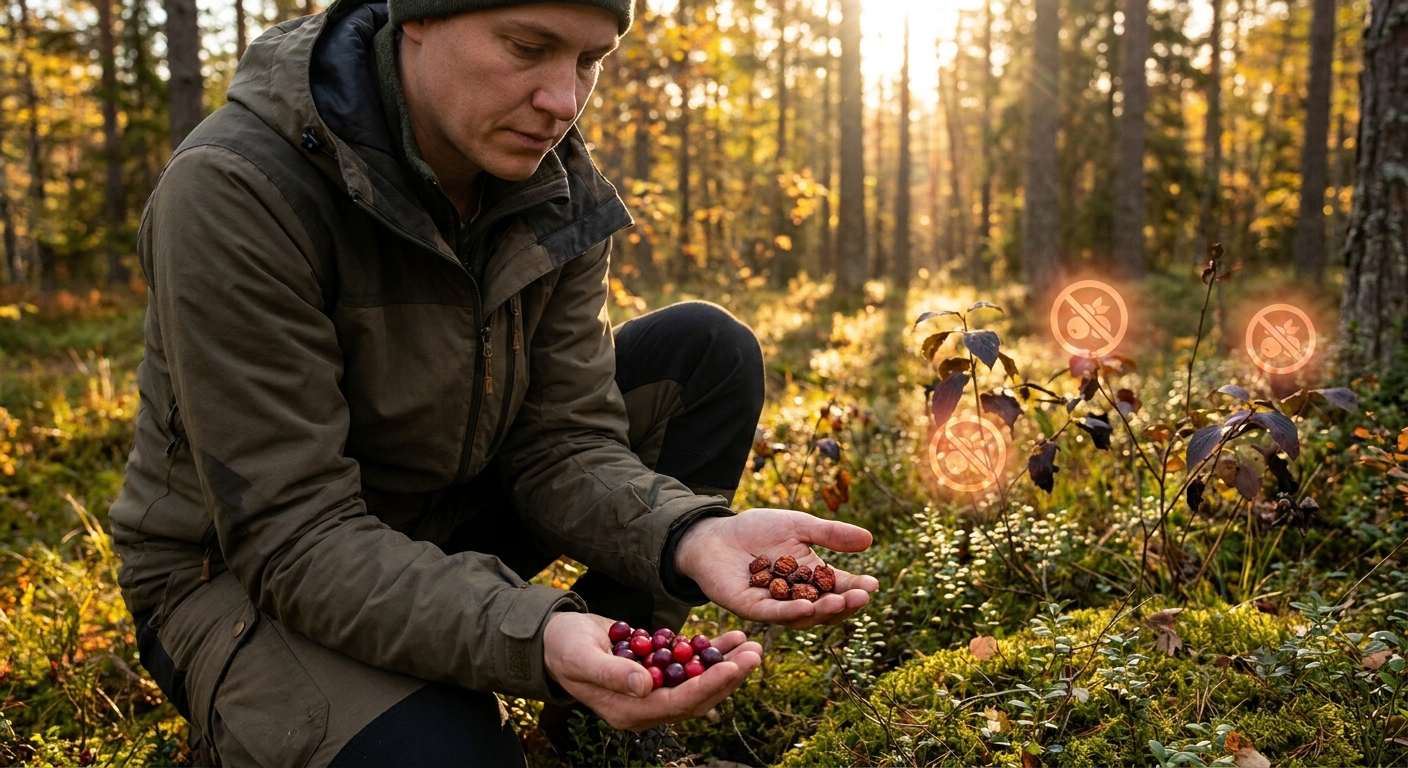
- Learn each fruit’s ripe appearance, feel, and taste (e.g., rose hips soften and sweeten after frost; hawthorn berries redden fully).
- Avoid fruits with mold, splits, or a fermented smell.
- Discard windfalls with visible insect or rodent damage.
Risks:
How to avoid it:
8. Forgetting That Nuts Need Processing
The mistake: Eating wild nuts, especially acorns, raw and in quantity.
Seasonal case:
- Autumn acorns are abundant and tempting, but rich in tannins, which can cause digestive distress.
- For acorns:
- Shell them.
- Leach in multiple changes of water (cold or hot) until the water stays clear and nuts taste mild.
- Dry thoroughly before storage.
- For other nuts (e.g., chestnuts):
- Learn to distinguish *edible sweet chestnut (Castanea spp.) from horse chestnut (Aesculus hippocastanum), which is toxic.
- Sweet chestnut burrs are densely, thinly spiny with usually multiple nuts per burr.
- Horse chestnut has fewer, thicker, widely spaced spines on the husk and usually a single large, glossy nut.
How to avoid it:
Quick ID contrast:
9. Overharvesting in Spring and Again in Autumn
The mistake: Taking too much in seasons when plants are most visible and exciting.
Impact:
- In spring, overharvesting young shoots can stunt or kill perennial plants.
- In autumn, stripping fruits and nuts leaves less for wildlife and natural regeneration.
- Follow the 10–20% rule: take no more than 10–20% of a patch, even when it seems abundant.
- Spread your harvest among multiple sites rather than hammering one location.
- Pay attention to species status: for invasives (like garlic mustard) you can take more; for sensitive natives you may choose to take none.
How to avoid it:
10. Failing to Keep a Seasonal Foraging Journal
The mistake: Relying on memory alone—forgetting exactly where you saw that elderflower stand or when the chanterelles usually appear.
Why it matters for safety:
- A journal helps you predict timing: when plants emerge, flower, and fruit.
- You avoid mis-timing a harvest and being tempted to pick look‑alikes instead.
- Carry a small notebook or use a dedicated digital note app.
- For each find, record:
- Date, location (GPS if possible), habitat.
- Plant species (even if only tentative at first).
- Stage: first shoot, leafing out, flowering, fruiting, seeding.
How to avoid it:
Over a year or two, this becomes a powerful personal reference for safe, seasonal foraging.
A Simple Seasonal Safety Checklist
Before eating anything you forage, run through this quick list:
Identification:
- Do I know the plant’s full life cycle and key features? - Have I checked multiple references and considered look‑alikes?
Season and Plant Part:
- Is this the recommended season for this part (leaf, flower, fruit, root, seed)?
Location:
- Is the site likely to be free of spraying, heavy metals, and road contaminants?
Condition:
- Is the plant fresh, undamaged, and free from mold or obvious pests?
Quantity:
- Am I taking a modest amount from a healthy, abundant population?
Personal Test:*
- Is this my first time eating this species? If so, will I start with a small portion?
If any answer makes you hesitate, don’t eat it. Photograph, learn, and try again next season.
Conclusion
Seasonal foraging mistakes are most dangerous when we rush. Slow down, respect the calendar, and accept that some plants will be “for learning only” this year. By avoiding these ten pitfalls, you build a safer, more sustainable practice that will serve you—and the landscapes you walk—well for many seasons to come.