Spring is the most exciting—and risky—time to forage. Tender shoots and early greens emerge before insects and diseases peak, making them clean and flavorful. But this is also when many poisonous plants look deceptively similar to edible ones.
Why Spring Demands Extra Caution
In early growth stages, key identification features like flowers and fruits may be absent. You’ll often be working with only leaves and habitat clues, so rigor and patience are essential.
Core Safety Principles for Spring Foraging
Before we dive into specific plants, anchor your practice with these habits:
- Insist on full identification. If you can’t describe the plant’s adult form, flowers, fruits, and seasonal changes, you aren’t ready to eat its spring shoots.
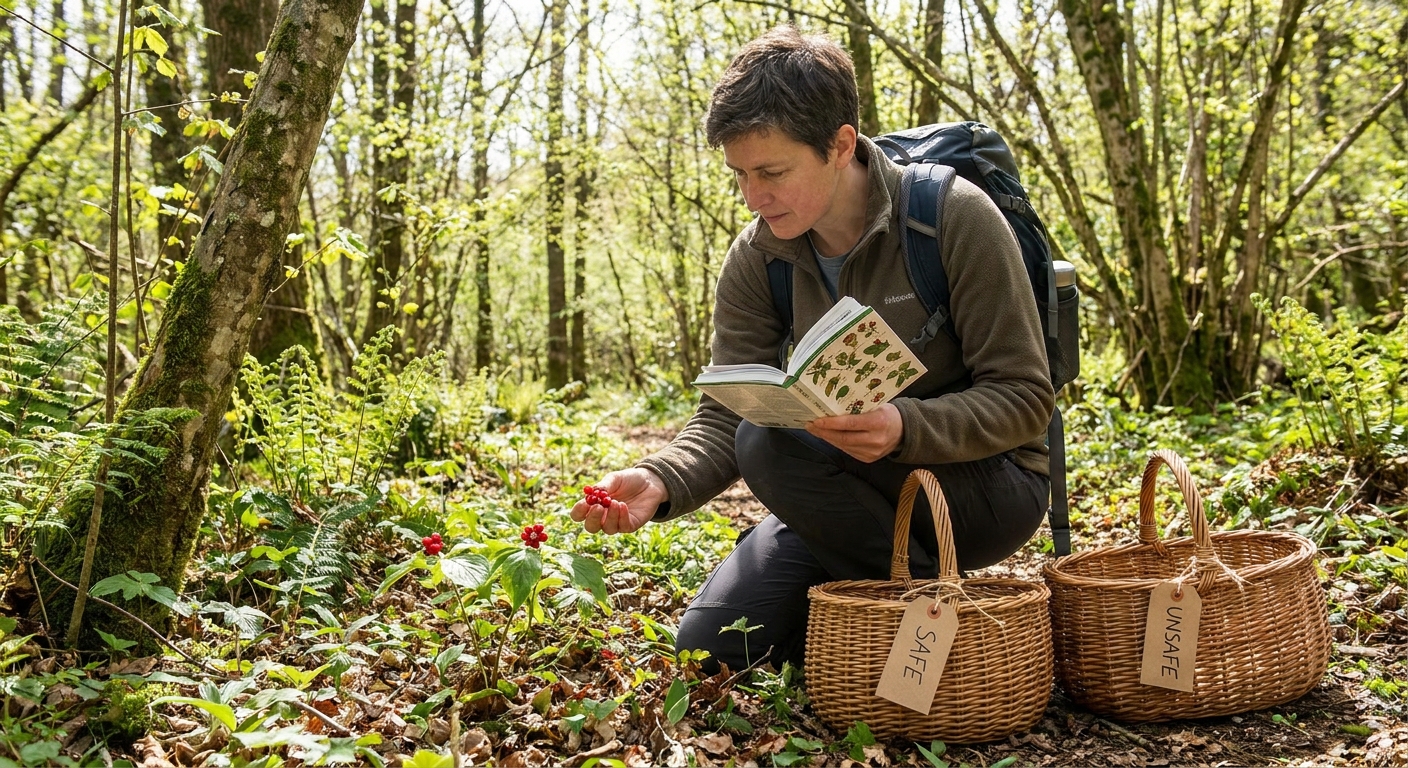
- Use at least three field marks. Leaf shape alone isn’t enough. Confirm stem, arrangement, smell, and habitat.
- Never rely on apps alone. Plant ID apps are a starting point, not a verdict. Always cross-check with books or experienced foragers.
- Taste is the last test, not the first. Never nibble to “see what it is.” You must already know what it is before it goes near your mouth.
Species Profile 1: Stinging Nettle (Urtica dioica)
Identification
- Habitat: Moist, nutrient-rich soils; riversides, hedgerows, old farm sites.
- Growth habit: Dense stands 0.5–2 m tall as the season progresses.
- Leaves: Opposite, serrated, pointed, with a heart-shaped base; rough to the touch.
- Stems: Square in cross-section, covered in stinging hairs.
- Flowers: Greenish, drooping clusters later in spring or early summer.
Seasonal Timing
- Best harvested in early spring when plants are 15–30 cm tall.
- Avoid older plants with tough stems and heavy flowering; older leaves may irritate kidneys if eaten in quantity.
Safe Harvesting
- Wear gloves and long sleeves.
- Snip top 2–3 leaf whorls; the tenderest growth.
Dangerous Look‑alikes
- *Dead-nettles (Lamium spp.):
- Similar leaf shape but do not sting.
- Square stems, often with purple or white flowers on short plants.
- Non-toxic, but not the same as stinging nettle.
The main risk here is misusing dead-nettles as nettles in recipes, not poisoning. Still, practice noticing the sting as a key ID feature.
Preparation & Use
- Blanching, steaming, or sautéing neutralizes the sting.
- Use like spinach in soups, pestos, and sautés.
Species Profile 2: Wild Garlic / Field Garlic (Allium vineale, A. ursinum and regional species)
Identification
- Habitat: Lawns, fields, open woods, streambanks.
- Leaves: Grass- to strap-like; solid, not hollow (varies by species).
- Smell: Strong onion/garlic aroma when crushed—this is non-negotiable.
- Bulbs: Small, onion-like bulbs underground.
- Flowers: Umbels of white, pink, or purplish flowers later in the season, sometimes with bulbils.
Seasonal Timing
- Appears in late winter or early spring, often before many other greens.
- Best flavor before flowering.
Critical Look‑alikes
Several deadly plants can resemble spring alliums:
- Death camas (Toxicoscordion spp.):
- Similar grassy leaves.
- No onion smell.
- White star-shaped flowers in spikes.
- Extremely poisonous.
Young daffodils, tulips, and other ornamentals:
- Grow from bulbs in lawns and garden borders. - No onion or garlic scent.
Rule: If a plant looks like an onion but does not smell strongly like onion or garlic when crushed, do not eat it.
Harvest & Use
- Dig carefully to avoid depleting dense patches; in weedy, invasive stands, more liberal harvest is acceptable.
- Use leaves, bulbs, and flower buds as you would chives or spring onions.
Species Profile 3: Violet Leaves and Flowers (Viola spp.)
Identification
- Habitat: Moist lawns, forest edges, shaded gardens.
- Leaves: Heart- to kidney-shaped, often forming low rosettes.
- Flowers: Five-petaled, typically purple, white, or yellow, with a spur at the back.
- Growth habit: Low, clumping, spreading by rhizomes.
Seasonal Timing
- Leaves emerge in early spring; flowers soon follow.
- Young leaves are milder and more tender.
Look‑alike Concerns
- Some non-viola species may have vaguely similar leaves, but true violets have characteristic flowers.
- Avoid harvesting only by leaves until you’ve seen the same patch flower and can confirm ID.
Use & Safety
- Leaves and flowers are edible raw or cooked.
- Use flowers as garnish; leaves in salads or light cooking.
- As with all new foods, start with small amounts to check for sensitivities.
Species Profile 4: Garlic Mustard (Alliaria petiolata)
Identification
- Habitat: Woodland edges, shady paths, disturbed soils.
- First-year plants: Basal rosette of rounded, scalloped leaves.
- Second-year plants: Upright stems 30–100 cm tall, with triangular, toothed leaves.
- Flowers: Small, white, four-petaled flowers in clusters at stem tips.
- Smell: Crushed leaves smell of garlic/mustard.
Seasonal Timing
- Rosettes overwinter; rapid growth in early spring.
- Best flavor before heavy flowering (leaves become bitter later).
Look‑alike Notes
- Few dangerously toxic look-alikes once flowers are present.
- Early rosettes could be confused with some non-toxic mustards and other weeds; rely on garlicky odor and four-petaled flowers.
Ecological Note
- Garlic mustard is invasive in many regions.
- Responsible foragers can help control it by harvesting generously (including roots, where allowed) and preventing seed set.
Species Profile 5: Fiddleheads (General Caution)
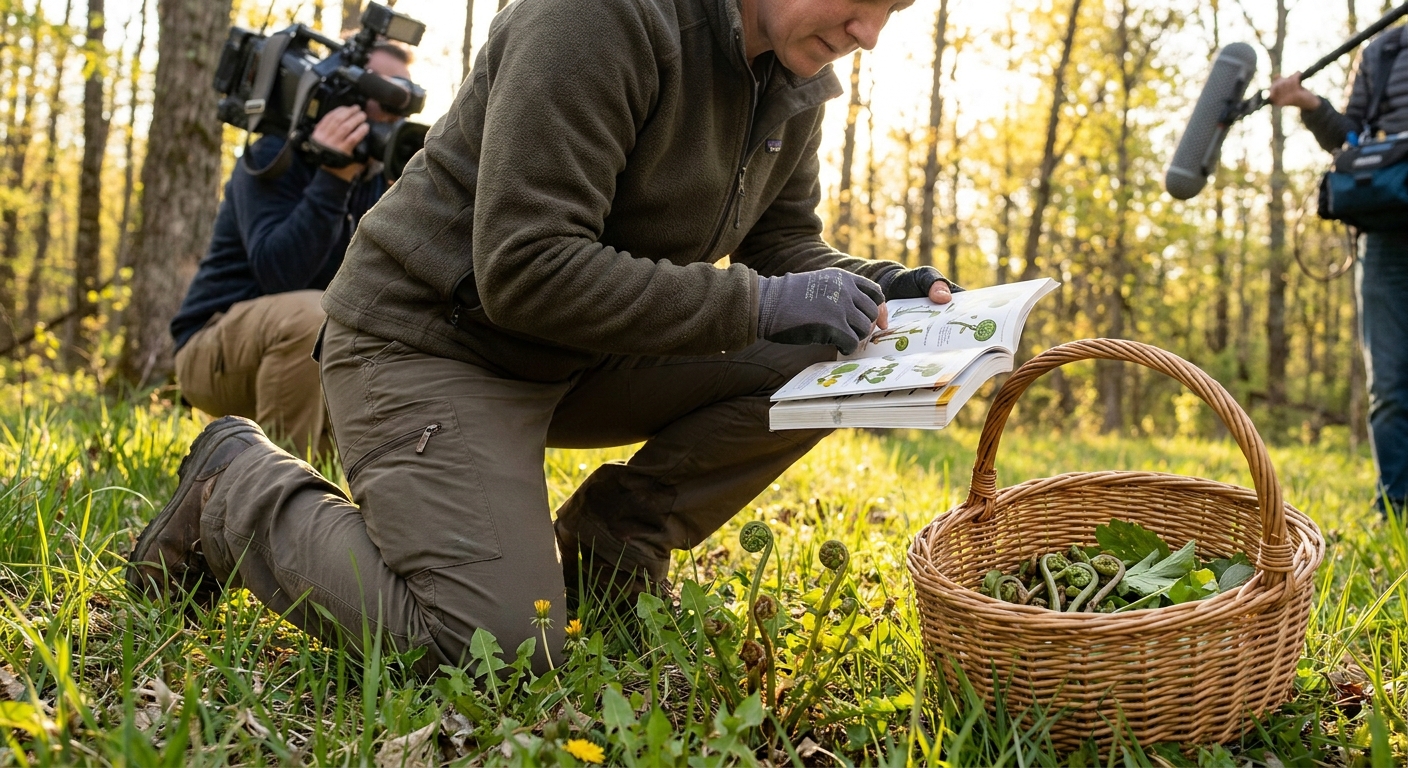
Fiddleheads—young coiled fern fronds—appear tempting in spring, but not all are safe.
Safer Option: Ostrich Fern (Matteuccia struthiopteris)
- Habitat: Riverbanks, moist floodplains.
- Key ID traits:
- U-shaped groove inside the stem.
- Smooth stem with thin brown papery sheaths.
- Emerge in dense crowns from last year’s tall, feathery fronds.
Risky Confusions
- Bracken fern (Pteridium aquilinum): Linked to health issues when eaten frequently; avoid.
- Hairy-stemmed, un-grooved fiddleheads should be left alone unless you’re highly confident about species.
Safety Rules for Fiddleheads
- Only pick from an identified, safe species (ostrich fern in most North American guides).
- Cook thoroughly—boil at least 10–12 minutes and discard cooking water.
- Avoid large servings the first time you try them.
Step‑by‑Step: Planning a Safe Spring Forage
- Choose 2–3 beginner-friendly species (e.g., nettle, violet, garlic mustard) and learn them deeply.
- Study in books before going out. Note habitat, leaf shape, and any toxic look-alikes.
- Visit the same spots weekly. Watch how plants change; seeing the full life cycle cements ID.
- Photograph, don’t pick, until you’re confident and have cross-checked multiple references.
- Confirm with a mentor or local group if possible—photos and live plants are invaluable for learning.
Spring Foraging Ethics
- Harvest lightly. Take only what you’ll use within a couple of days.
- Leave the roots of perennial species unless you’re in an area where they are invasive and removal is beneficial.
- Avoid trampling.* Spring soils are often wet and easily compacted; move gently and stick to established paths where possible.
Closing Thoughts
Spring can fill your kitchen with wild flavors long before the garden is awake, but it rewards humility. Focus on a few easy, distinctive plants, give yourself permission to say “I’m not sure,” and you’ll build a foundation for safe seasonal foraging that will carry you through the rest of the year.