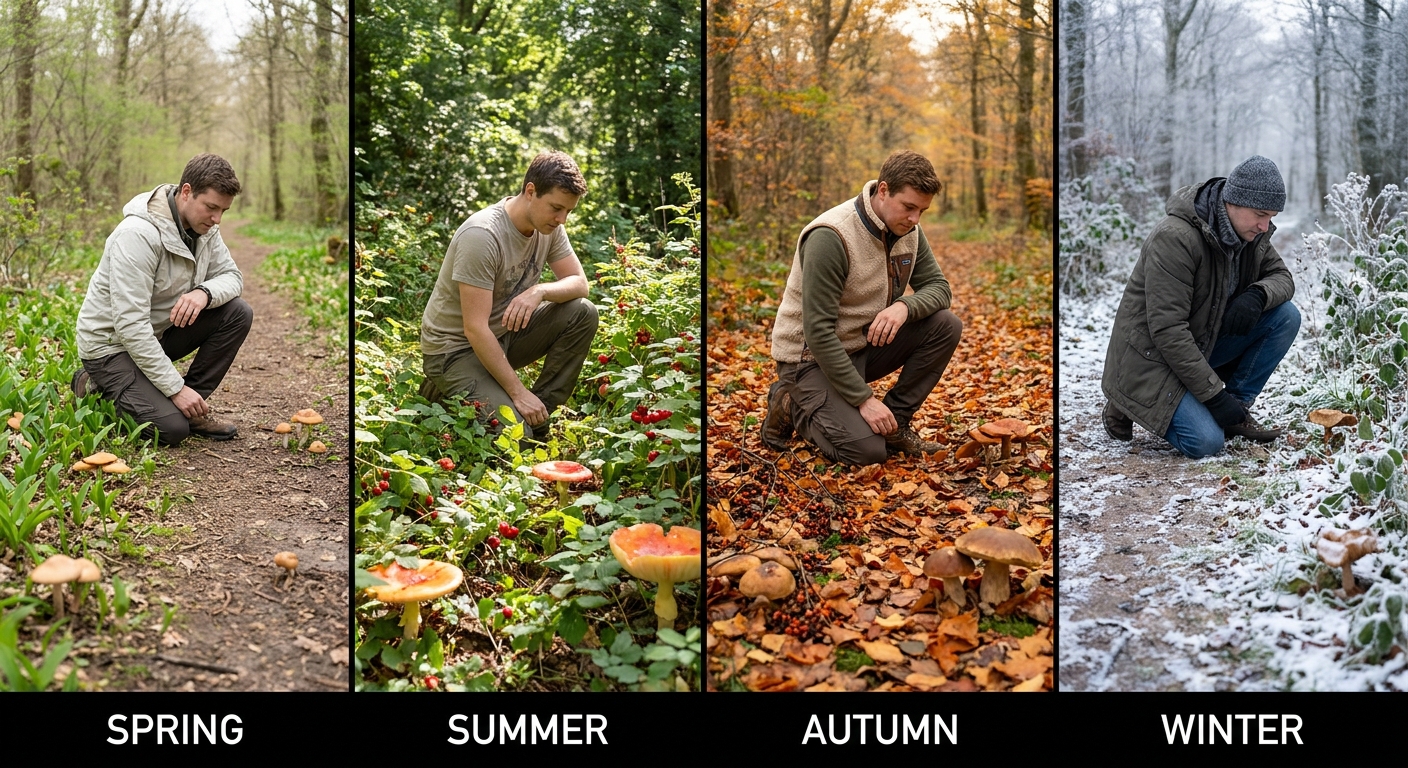
Seasonal foraging is about more than finding free food. It’s the art of moving with the year: knowing when plants are at their safest, most flavorful stage and when to leave them alone. A responsible forager plans by season, not impulse. This guide walks you through the year with a mentor’s eye—highlighting key species, their safest windows, and the look‑alikes that can ruin your day.
Introduction
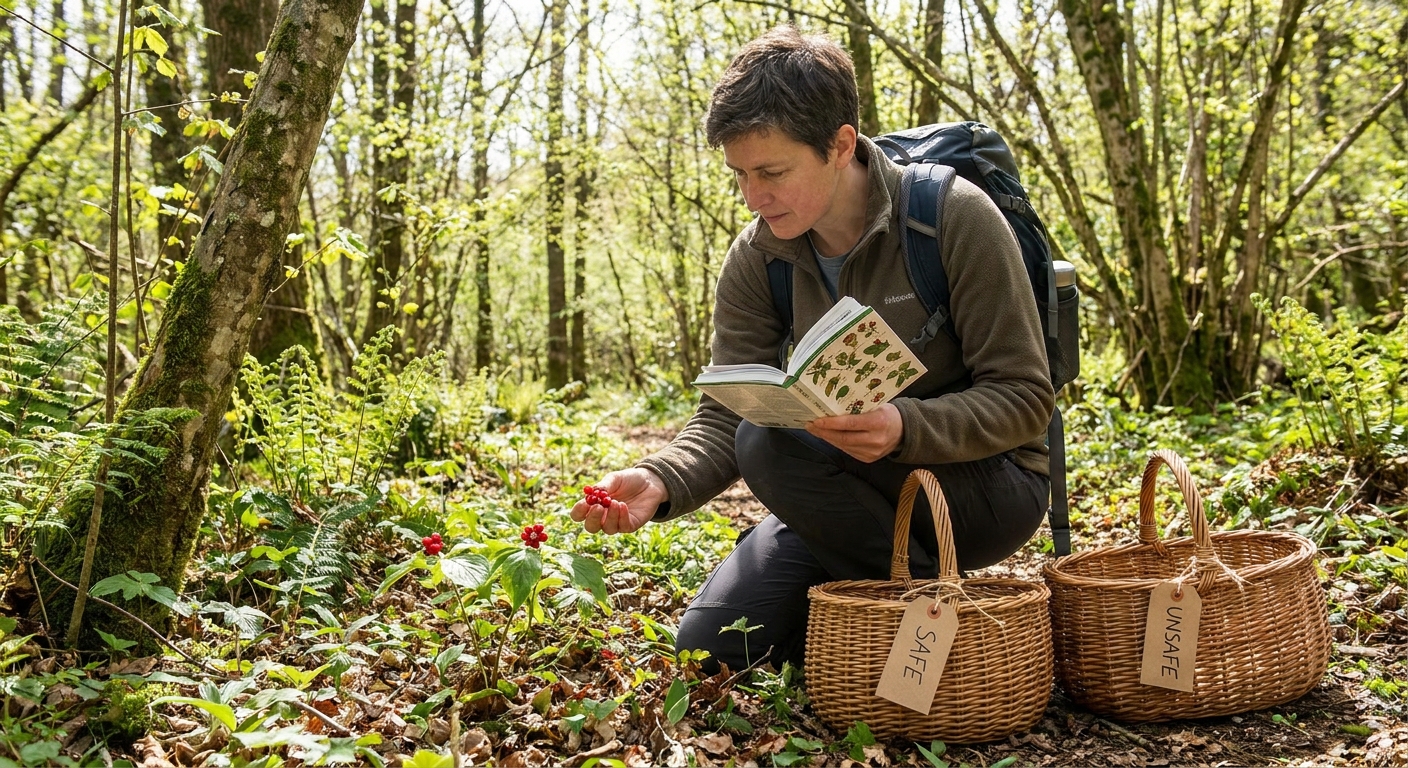
Core rule: If you are not 100% certain of an ID, do not eat it. No exceptions.
Spring: Tender Shoots and Early Greens
Spring is when many perennial plants push up young, edible growth. It’s also when tender stages can resemble very toxic species.
1. Ramps / Wild Leeks (Allium tricoccum)
- Habitat: Rich, moist deciduous woods; often on slopes with sugar maple, beech, and poplar.
- Key ID features:
- Broad, smooth leaves (usually 1–3 per plant), 2–5 cm wide.
- Distinct onion/garlic smell from crushed leaf or bulb.
- Solid white stems, sometimes blushing red or purple near the base.
- Season: Early to mid-spring, when leaves are fully unfurled but before the tree canopy fully closes.
- *Lily of the valley (Convallaria majalis):
- No onion smell at all.
- Leaves come in pairs from a single stem.
- Produces bell-shaped white flowers later.
- Highly toxic. Never eat an “Allium” that doesn’t smell strongly of onion/garlic.
- Never harvest whole patches. Take one leaf per plant or harvest from dense stands only, leaving plenty intact.
Look‑alike warnings:
Safety & ethics:
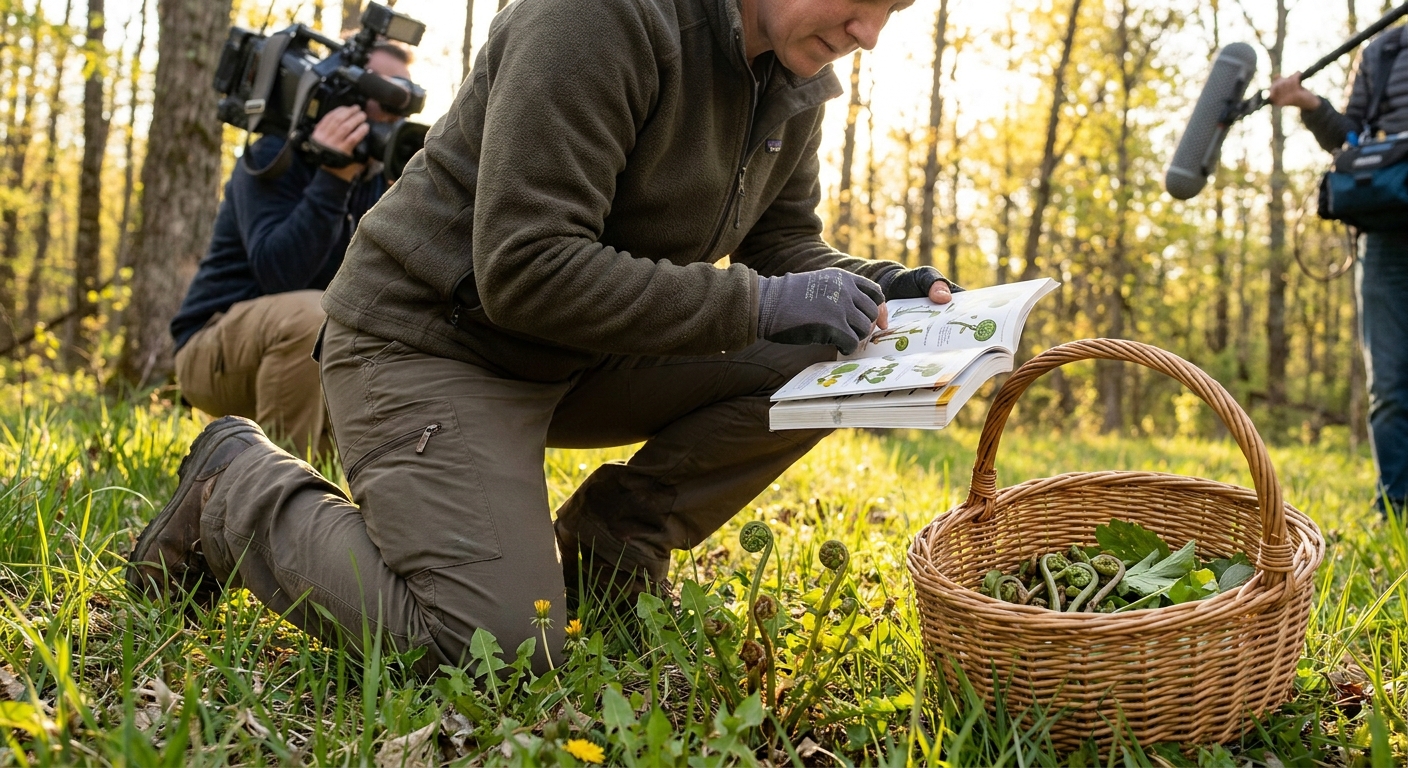
2. Ostrich Fern Fiddleheads (Matteuccia struthiopteris)
- Habitat: Moist floodplains, riverbanks, and shaded ditches.
- Key ID features (fiddlehead stage):
- U-shaped groove like celery down the inside of the stem.
- Smooth, brown, papery sheath that peels away.
- Emerging from a crown of last year’s tall, plume-like fronds.
- Season: Very early spring—the window is narrow, often 1–2 weeks.
- Many fern species produce fiddleheads; some are mildly toxic or irritating.
- Avoid fiddleheads with hairy stems, no U-groove, or no papery sheath.
- Wash thoroughly, discard papery husks.
- Boil 10–12 minutes, then optionally sauté. Do not eat raw.
Look‑alike warnings:
Preparation:
Early Summer: Flowers, First Fruits, and Expanding Choices
As days warm, flowers and early fruits appear. It’s tempting to sample everything—resist. Stick to well-known species and learn them deeply.
3. Blackberries & Raspberries (Rubus spp.)
- Habitat: Forest edges, clearings, road margins, disturbed ground.
- Key ID features:
- Arching canes with thorns.
- Compound leaves, typically 3–5 leaflets with serrated edges.
- White or pinkish 5-petaled flowers.
- Fruit made of many small drupelets (little segments) clustered together.
- Season: Flowers in late spring; fruits from early to mid-summer depending on region.
- Few dangerous look-alikes for ripe berries in this group; however, avoid unripe red berries from unknown shrubs.
- Don’t forage berries from roadsides sprayed with herbicides or heavily trafficked, polluted areas.
- Learn your region’s poisonous shrubs (e.g., some Daphne species, yew berries) to build pattern recognition.
Look‑alike warnings:
Safety tip:
4. Elderflower (Sambucus nigra, S. canadensis)
- Habitat: Moist hedgerows, streambanks, forest edges.
- Key ID features (flower stage):
- Large, flat-topped clusters of tiny, creamy-white flowers.
- Opposite leaves, usually pinnate with 5–11 leaflets.
- Pith inside stems is soft and white.
- Season: Late spring to early summer.
- Water hemlock (Cicuta spp.) and poison hemlock (Conium maculatum) grow in similar habitats and are deadly:
- Umbels (umbrella-shaped) rather than flat plates.
- Finely divided, carrot-like leaves.
- Often purple blotches on stems (poison hemlock).
- Use flowers for cordial, fritters, or tea.
- Avoid raw leaves, stems, and unripe berries; they contain cyanogenic compounds.
Look‑alike warnings:
Use & safety:
High Summer: Greens Fade, Fruits Peak
By midsummer, many greens are bitter or tough, but fruits, seeds, and some late flowers are at their best.
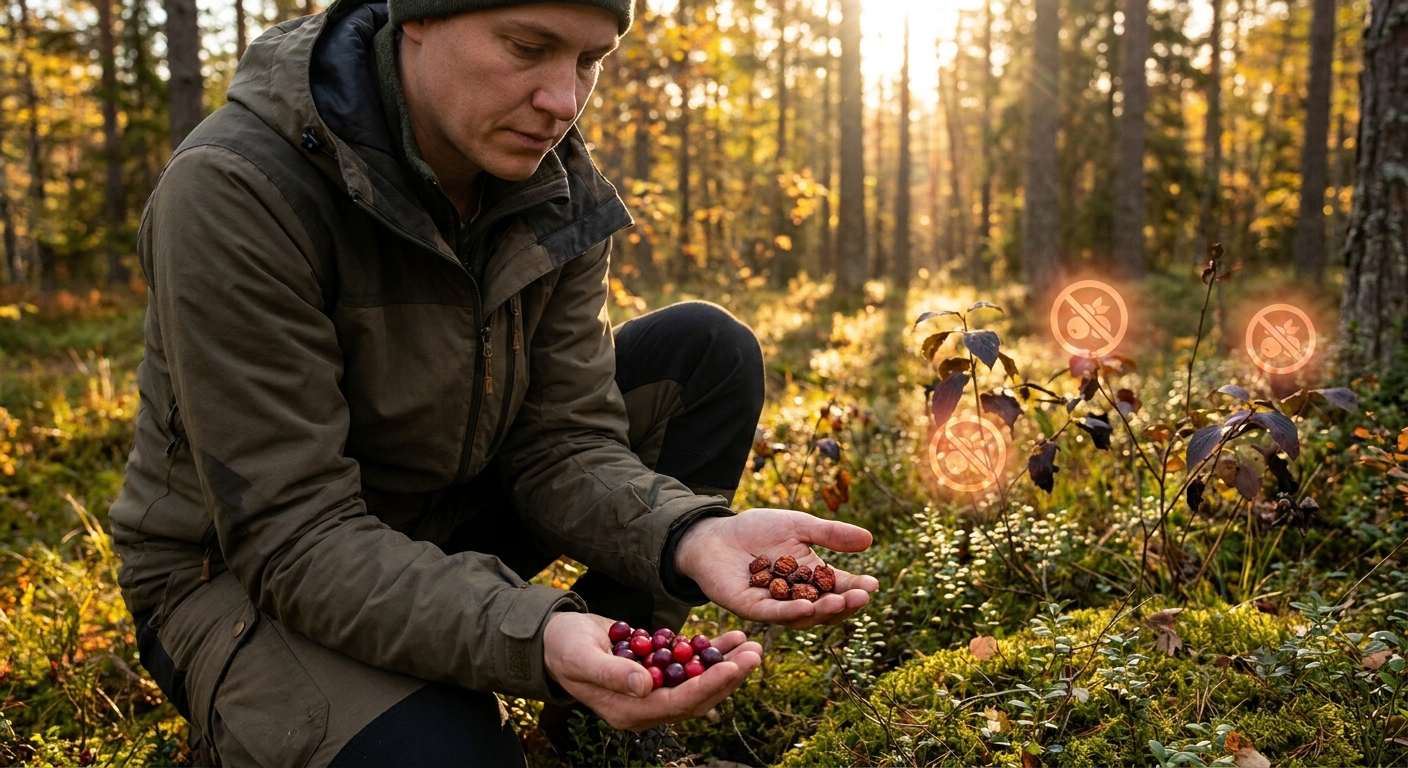
5. Wild Blueberries (Vaccinium spp.)
- Habitat: Acidic soils: barrens, rocky slopes, coniferous forests, heathlands.
- Key ID features:
- Small shrubs, often under knee height.
- Simple, small leaves; entire or slightly toothed edges.
- Bell-shaped flowers earlier in the season.
- Blue to blue-black berries with a pale dusty “bloom” and a 5-pointed crown at the end.
- Season: Mid to late summer.
- Some Mahonia (Oregon grape*) and other dark berries may share habitat but have very different leaves (holly-like in Mahonia).
- Learn to recognize the 5-point crown of blueberries.
- As with all fruits, avoid plants growing in areas known to be sprayed or contaminated (old industrial sites, mine spoil, etc.).
Look‑alike warnings:
Safety tip:
6. Lamb’s Quarters / Fat Hen (Chenopodium album)
- Habitat: Gardens, field edges, disturbed soil, compost piles.
- Key ID features:
- Diamond or goosefoot-shaped leaves with a often mealy, white coating near the growing tips.
- Leaves may look slightly dusty.
- Greenish flower clusters, often conical, at the tops of stems.
- Season: All summer, best as young leaves.
- Some nightshades can grow in similar habitats:
- Nightshade leaves are usually glossier and not mealy.
- Nightshades often have berries, lamb’s quarters does not.
- Cook like spinach; raw in moderation.
- Rinse well—this species often grows where animals frequent.
Look‑alike warnings:
Use:
Autumn: Nuts, Roots, and Late Fruits
Autumn is harvest time for calorie-dense foods: nuts and starchy roots. It’s also when many toxic species are most visible.
7. Acorns (Oaks, Quercus spp.)
- Habitat: Oak woodlands, parks, mixed forests.
- Key ID features:
- Hard, brown nuts with a woody cap.
- On or under oak trees (learn your local oaks’ leaves and bark).
- Season: Early to mid-autumn.
- All acorns contain tannins; some are extremely bitter.
- Shell, then leach tannins using repeated soaks in water (cold or hot, changing water frequently) until bitterness is gone.
- Dry and grind into flour or use as a nut.
- Do not eat raw, un-leached acorns in quantity; they can cause digestive upset.
Tannin warning:
Preparation:
Safety tip:
8. Burdock Root (Arctium lappa, A. minus)
- Habitat: Disturbed soils, field edges, roadsides.
- Key ID features (first-year plants):
- Large basal rosette of heart-shaped leaves with woolly undersides.
- Thick taproot, often 30–60 cm long.
- Second-year plants send up tall stalks with purple thistle-like burrs.
- Season: Best in autumn of the first year or very early spring of the second year before flowering.
- Foxglove, digitalis, some dock species may resemble rosettes; learn each carefully.
- Second-year stems can be confused with thistles; burdock burrs are velcro-like hooks.
- Harvest away from roadsides to avoid contamination.
- Peel and cook roots thoroughly.
Look‑alike warnings:
Use & safety:
Winter: Planning, Bark, and Evergreen Options
Winter is lean but not empty. It’s an ideal time to learn tree ID and plan for next year.
9. Wintergreen (Gaultheria procumbens)
- Habitat: Acidic, coniferous forests; often with mosses.
- Key ID features:
- Low-growing evergreen plant, 5–15 cm tall.
- Shiny, leathery oval leaves.
- Red berries persisting into winter.
- Strong wintergreen/minty aroma when leaves are crushed.
- Season: Late autumn through winter.
- Some non-aromatic berries can share habitat. Always confirm smell.
- Berries and leaves for tea or flavoring, in moderation.
Look‑alike warnings:
Use:
Year‑Round Safety Habits for Seasonal Foragers
Regardless of season, a few habits keep you safe and ethical:
- Use multiple ID points. Never rely on just one feature. Confirm leaf, stem, flower/fruit, smell, and habitat.
- Cross-check several sources. Field guides, reputable websites, and local experts should agree before you eat.
- Avoid polluted areas. Roadsides, railways, industrial lots, and sprayed fields are off-limits for food.
- Start with tiny test portions. When you first try a new food (even if ID is certain), eat a small amount and wait 24 hours.
- Respect ecosystems. Harvest modestly, spread your impact, and leave plenty for wildlife and plant regeneration.
- Know your local killers. Learn to confidently identify a handful of the most dangerous plants in your region (e.g., hemlocks, deadly nightshade, oleander).
Conclusion
Seasonal foraging is a long relationship with the land, not a single outing. By learning when each plant is at its best—and when its look‑alikes are lurking—you build both safety and skill. Take it one season at a time, focus on a few species each year, and let experience accumulate. The goal is not just a full basket, but a lifetime of safe, respectful harvests.