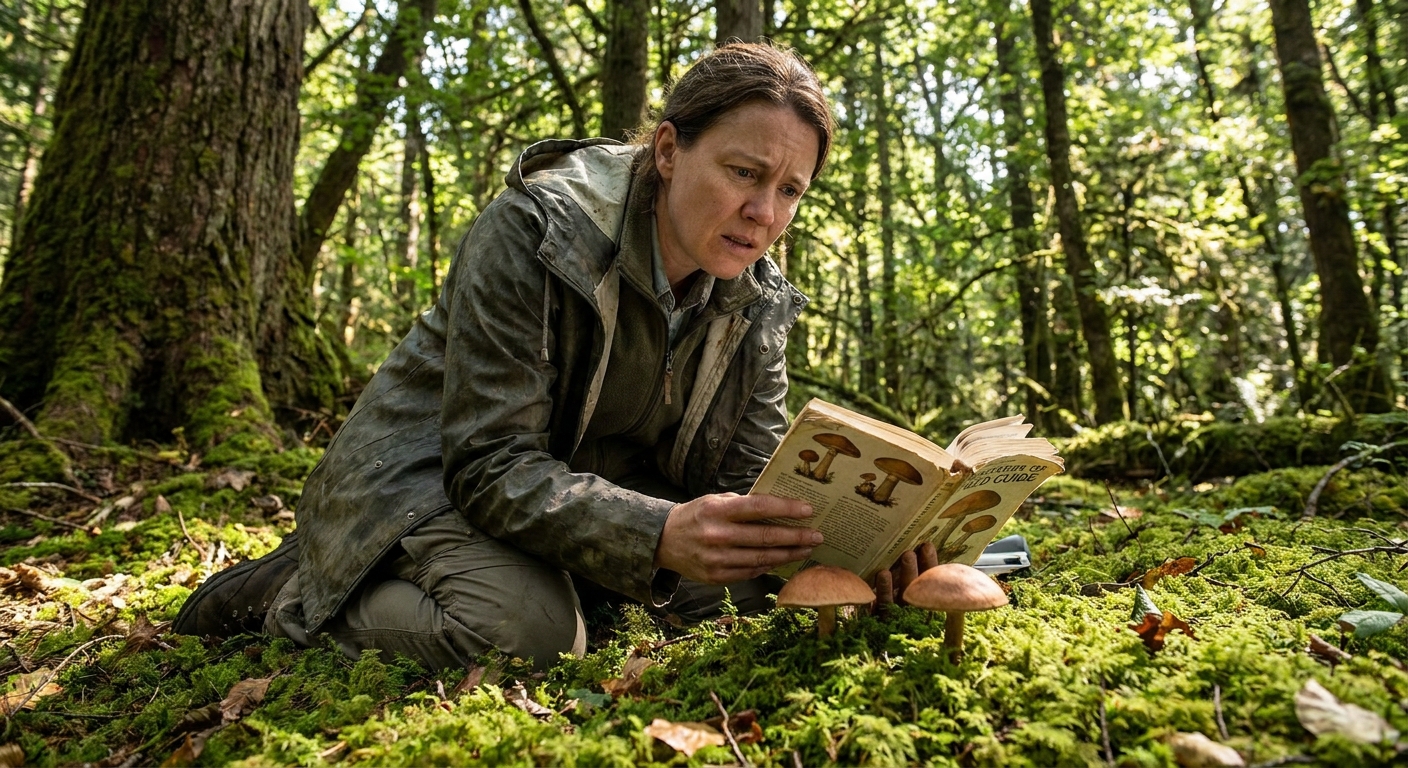
Wild mushroom foraging is less about clever tricks and more about disciplined observation. Experienced foragers don’t just “spot” mushrooms—they study them. They know that one sloppy assumption can put them or someone they love in the hospital.
Introduction: Why Mushroom ID Demands Humility
This guide walks you through a mentor-style approach to mushroom identification: the habits, checklists, and mindset that keep you safe while you build skill.
The Golden Rule of Mushroom Foraging
If you are not 100% certain of an ID, you do not eat it.
Not "pretty sure." Not "it looks like the photos." Absolute, boring, no-drama certainty—based on multiple features, habitat, season, and confirmation from trustworthy references.
Every skilled forager you admire follows this rule. It’s the foundation of a lifetime of safe wild food enjoyment.
The Four Pillars of Mushroom ID
When you encounter a mushroom, you are not just looking at "a mushroom." You’re gathering structured data across four main categories:
Macroscopic Features (what you see and feel)
2. Microscopic/Technical Features (spores, gill attachment, etc.)
Ecology & Habitat (where it grows and on what)
Phenology (when it appears in your region)
Think of these like puzzle pieces. You never rely on just one.
Pillar 1: Macroscopic Features – Slow Down and Observe
Stand back first. Then move in.
Overall Form
- Cap and stem? Coral-like? Puffball? Shelf/fan-shaped?
- Growing singly, scattered, or in tight clusters?
- Shape: convex, bell-shaped, flat, funnel-shaped, depressed center.
- Surface: smooth, slimy, dry, scaly, cracked.
- Color: note both center and margin; colors often change with age.
- Bruising: gently scratch or press—does it stain yellow, blue, red, or not at all?
- Underside type:
- Gills (bladelike)
- Pores (sponge-like surface, usually boletes and polypores)
- Teeth/spines (hanging icicle-like structures, e.g., hedgehog mushrooms)
- Gill attachment:
- Free (do not touch stem)
- Adnate (squarely attached)
- Decurrent (running down stem)
- Sinuate/Notched (slightly indented)
Cap Details
Gills / Pores / Teeth
This often separates edible from deadly look-alikes.
Stem and Base
- Presence/absence of stem: Some polypores grow directly from wood with no stem.
- Surface: smooth, fibrous, scaly.
- Ring/annulus: a skirt-like ring is critical in Amanita identification.
- Volva: a sac or bulb at the base is a major warning sign (many deadly Amanitas).
- Color changes: slice lengthwise—does the stem blush, bruise, or change color?
Always dig the entire mushroom out carefully so you can see the full base.
Pillar 2: Technical Details & Spore Prints
Many safe identifications require going a step beyond “eyeballing.”
Spore Print Basics
A spore print is one of your most powerful, low-tech tools.
- Remove the stem, place cap gill-side down on half white / half black paper.
- Cover with a bowl or cup to keep humidity in.
- Wait 4–12 hours.
- Check spore color: white, cream, pink, brown, dark brown, black, rusty, etc.
Spore color can instantly rule out or confirm entire groups:
- White spore print: includes many Amanita (some deadly), Russula, Lactarius.
- Pink to salmon: some Pluteus and Entoloma species.
- Brown to chocolate: many Agaricus.
- Black: inky caps and others.
Never skip this when a positive ID matters.
Other Technical Features
- Gill attachment (mentioned above) is a true ID cornerstone.
- Latex/milk: Many milkcaps (Lactarius) exude colored latex when cut.
- Odor: almond, anise, mealy, phenolic (ink/chemical), or unpleasant—can be diagnostic, but don’t rely on it alone.
Pillar 3: Habitat and Substrate
Mushrooms are not randomly distributed. Their tree partners and substrates often narrow ID dramatically.
Ask:
- On wood or on the ground? If on wood, is it:
- Hardwood (oak, maple, beech, birch) or
- Conifer (pine, spruce, fir)?
- Live tree, dead trunk, buried roots, or leaf litter?
- Soil type: sandy, clay, rich loam, calcareous?
- Nearby trees: learn to recognize common genera in your region.
- Chanterelles often partner with oaks, beeches, spruces, and pines.
- Porcini (Boletus edulis group) associate with conifers or hardwoods, depending on species.
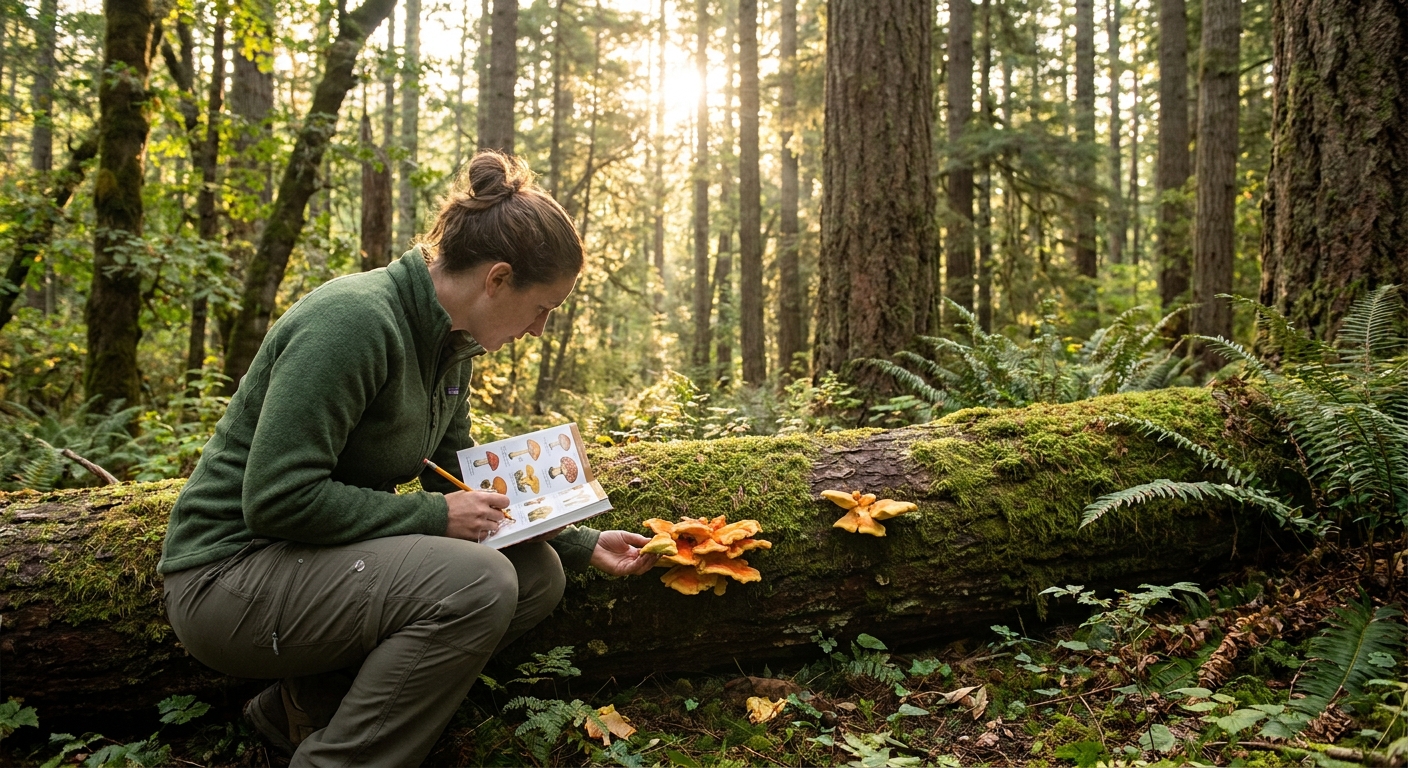
- Chicken of the Woods appears on hardwoods, especially oak (some species on conifers are more suspect for edibility).
For example:
If the habitat doesn’t match what trusted sources describe, stop and reconsider.
Pillar 4: Season and Regional Timing
Each species has a seasonality pattern that varies by climate zone.
- Spring: morels, some oysters, early boletes, spring Amanitas.
- Summer: chanterelles, boletes, russulas, many Amanitas.
- Autumn: peak diversity in temperate regions; many choice edibles and dangerous species both.
- Winter: certain oysters, velvet shanks, and cold-tolerant polypores.
Use local field guides and regional mushroom clubs to match species to your area and month. A mushroom that "shouldn’t" be fruiting yet might actually be something else.
Common Edible Groups & Major Look-Alike Warnings
Below are patterns, not complete IDs. Always cross-check with multiple sources.
1. Chanterelles vs. Jack-o’-Lanterns
True Chanterelles (Cantharellus spp.)
- Solid, firm flesh
- Blunt, forked ridges instead of true gills
- Ridges are decurrent (run down the stem)
- Fruity, apricot-like aroma
- Often scattered or in small groups, not tight clusters
- Sharp, blade-like gills (not blunt ridges)
- Gills are crowded and not forked
- Often grows in dense clusters on wood or buried roots
- Can cause severe gastrointestinal distress
Look-alike: Jack-o’-Lantern (Omphalotus spp.) – Poisonous
When teaching newcomers, I insist on side-by-side photo comparison and a hands-on understanding of "false gills" vs. true gills before anyone eats chanterelles.
2. Oysters vs. Angel Wings
True Oyster Mushrooms (Pleurotus spp.)
- Typically on hardwoods (though some species vary)
- Thick, white to greyish caps
- Decurrent gills
- Pleasant, mild odor
- Very thin, delicate, pure white
- Often on conifer wood
- Linked to poisonings in some regions
Look-alike: Angel Wings (Pleurocybella porrigens)
If you’re not comfortable distinguishing these, skip white "oysters" on conifers.
3. Boletes: A Safer Family with Caveats
General bolete safety rule (with regional exceptions):
- Avoid boletes with red or orange pores or flesh.
- Avoid boletes that instantly stain dark blue when cut.
- Avoid boletes with bitter taste (taste-and-spit, do not swallow).
- Brown to tan caps
- Pores that stay yellowish to olive without dramatic color change
- Pleasant, mild aroma
Many excellent edibles (porcini, butter boletes) share:
Still, always confirm species through a good guide.
Non-Negotiable Safety Habits for Foragers
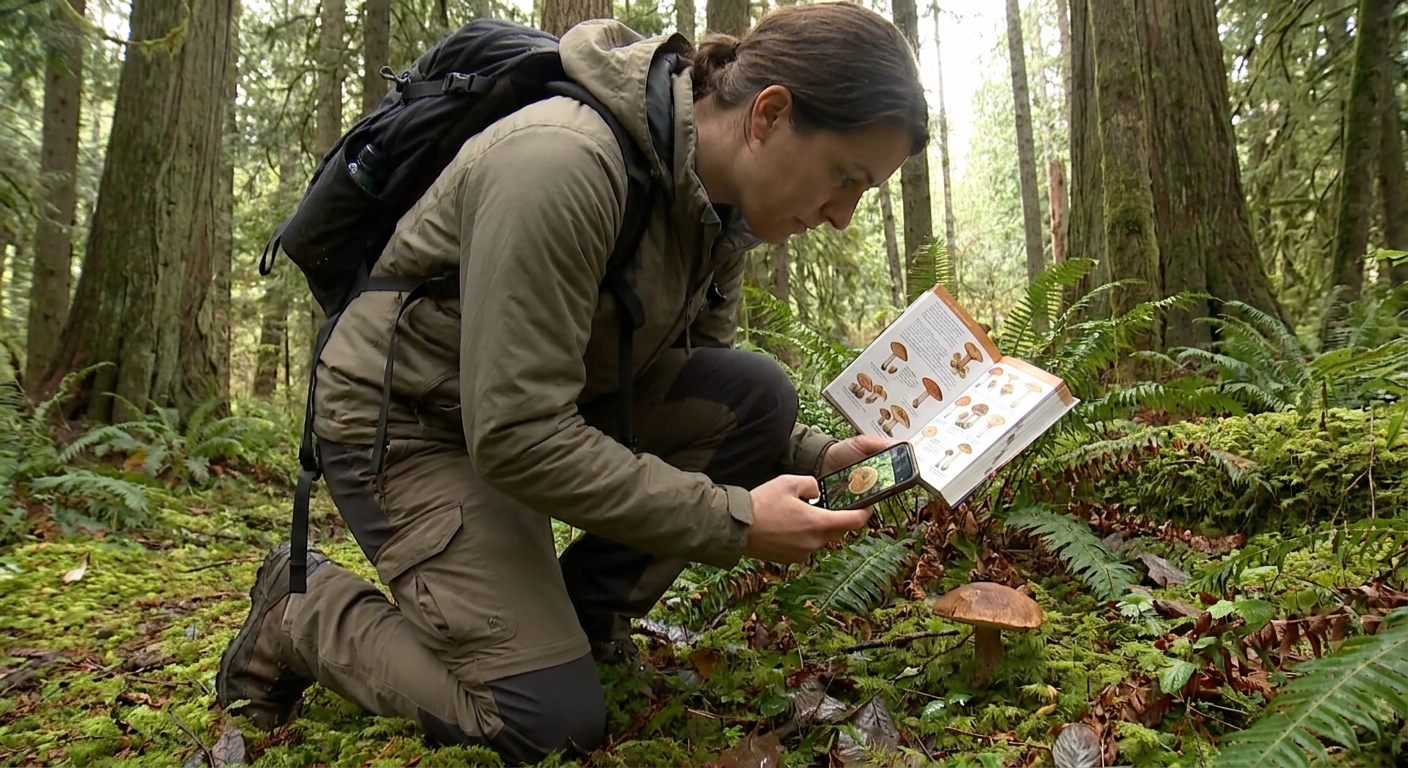
- Never rely on phone apps alone. They can be wildly wrong.
- Use at least two reputable field guides, ideally regional.
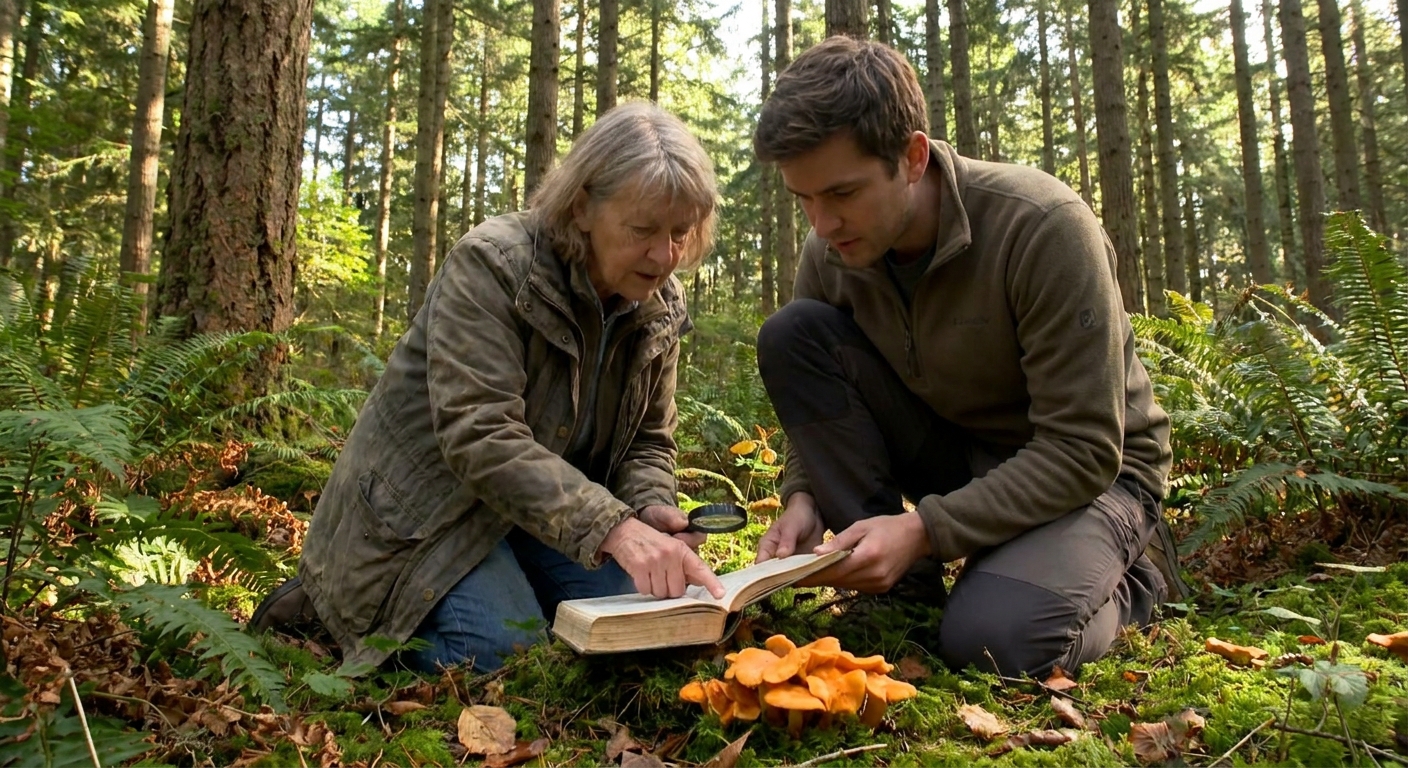
- Join a local mycological society or foray group. Nothing beats walking the woods with people who know your local species.
- Keep a foraging journal. Record date, location, tree partners, weather, and photos from multiple angles.
- Test new species cautiously. Even with solid ID, some people react badly. Start with a small, cooked portion.
- Teach your household. Children and pets should know not to eat any wild mushroom without an adult forager’s say-so.
How to Practice Without Eating Anything
You can build ID skill without putting your stomach at risk.
- Spend a season identifying and photographing, but not harvesting.
- Practice spore prints and note gill attachment.
- Compare your IDs with local experts or online communities that require habitat/underside photos.
- Learn 3–5 common toxic species in your region as thoroughly as you learn any edible.
When you finally add an edible species to your basket, you’ll be doing it from a foundation of observation, not guesswork.
Conclusion: The Slow, Rewarding Path to Mushroom Literacy
Confident mushroom ID isn’t about memorizing a few signature species; it’s about becoming literate in the language of fungi—forms, colors, substrates, seasons.
Approach each mushroom as a patient teacher. Observe everything, verify with multiple sources, and never let hunger or excitement override caution. Do that, and you’ll enjoy a lifetime of safe, satisfying foraging—bringing home not just food, but knowledge, stories, and a deeper relationship with the forest.