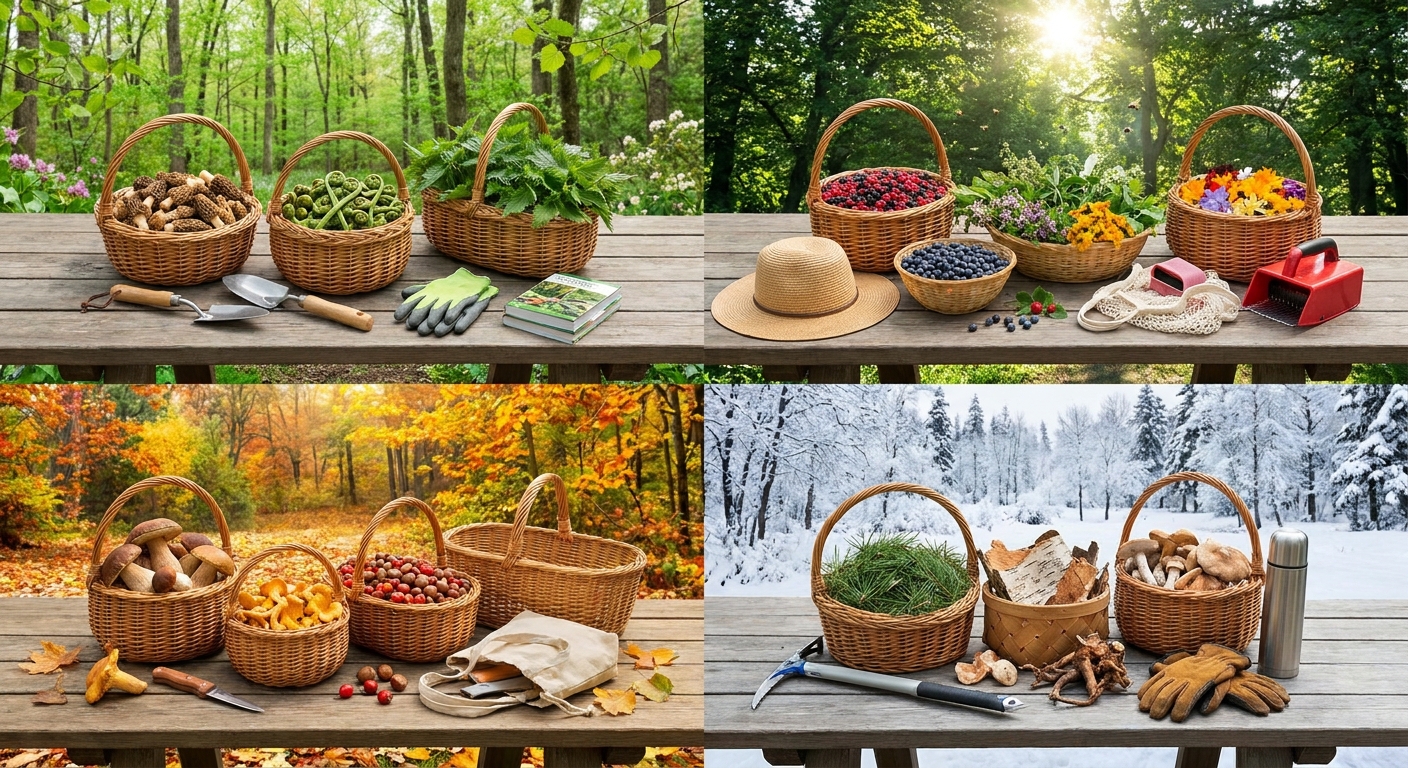
As the year turns, the wild pantry changes—and so should your gear. Spring nettles and ramps grow in different places and pose different risks than autumn mushrooms or winter rose hips.
One Kit Doesn’t Fit All Seasons
Rather than one overloaded backpack, think of four seasonal setups. Each emphasizes:
- The likely target species
- Their habitats and look‑alikes
- The safety gear that best supports accurate ID and low‑impact harvest
Spring Setup: Shoots, Greens, and Early Mushrooms
Likely Targets
- Stinging nettle (Urtica dioica)
- Ramps / wild leeks (Allium tricoccum, region‑dependent)
- Fiddleheads (especially ostrich fern, Matteuccia struthiopteris)
- Early morels (Morchella spp., some regions)
Key Spring Hazards and Look‑Alikes
- Poison hemlock (Conium maculatum) and water hemlock (Cicuta spp.) in moist areas near edible umbel species.
- False morels (Gyromitra, Verpa spp.) fruiting around the same time as true morels.
- Poison ivy nestled among young greens.
Spring Gear Priorities
Waterproof Boots
- Habitats: floodplains, streambanks, damp woods. - Essential to access ramps and fiddleheads safely without slipping.
Nitrile and Work Gloves
- Protect against nettle stings and unknown plants while scouting. - When checking for Allium: crush a tiny leaf between gloved fingers and smell; true ramps/wild garlic always smell strongly of onion/garlic. No scent = walk away.
Plant‑Focused Regional Field Guide
- Should emphasize: - Leaf arrangements (alternate vs. opposite) - Venation patterns - Habitat notes (streamside vs upland) - For fiddleheads, you need photos and drawings of mature fronds, not just fiddleheads, to distinguish ostrich fern from bracken and other potentially harmful species.
Small Trowel (Where Legal)
- For bulbs or roots, but use sparingly. - Example – Ramps: - Habitat: Rich, deciduous forests; often on north‑facing slopes. - Look‑alikes: Lily of the valley (Convallaria majalis) and other lilies, which are toxic. - Safety practice: Prefer cutting ramps above the bulb with a knife, leaving roots to regrow, and never harvesting from a small patch.
Layered Clothing and Rain Shell
- Spring weather swings quickly, and hypothermia is a risk when wet. - Long sleeves and pants also reduce tick exposure.
Summer Setup: Berries, Flowers, and Early Fungi
Likely Targets
- Berries: blackberries, raspberries, blueberries, serviceberries
- Edible flowers: elderflower (Sambucus nigra), some daylilies (Hemerocallis spp.)
- Early chanterelles, boletes in some regions
Key Summer Hazards and Look‑Alikes
- Toxic berries like deadly nightshade relatives, Daphne, and some honeysuckles.
- Water hemlock near streams (most poisonous plant in many temperate regions).
- Red‑pored boletes, many of which cause GI distress or worse.
Summer Gear Priorities
Sun Protection
- Wide‑brimmed hat, sunscreen, and breathable long sleeves. - Hedge briars and UV are as real as toxins.
Berry Containers
- Shallow, rigid containers to prevent crushing and fermenting. - Mesh bags can work for sturdier berries; avoid deep buckets that crush fruit and obscure ID features.
Field Guide with Strong Berry Section
- Must emphasize: - Leaf arrangement and margins - Flower structures (for shrubs you encounter out of season) - Example – Elderberry (Sambucus nigra / canadensis) vs. Water Hemlock Berries: - Elderberry: Opposite leaves, dark purple berries in flat or slightly domed clusters; shrubs on edges of wetlands. - Water hemlock: Carrot family; compound umbels of small white flowers and seeds; entire plant extremely toxic. - Gear: Guide + photos + refusal to eat any “berry” off an unfamiliar umbel.
Extra Water and Electrolytes
- Heat leads to fatigue and sloppy decisions.
Tick and Insect Protection
- Light‑colored clothing - Repellent according to your region’s guidance - Fine‑toothed comb for post‑trip tick checks
Mushroom Basket and Paper Bags (Optional)
- If you’re in chanterelle or early bolete country, bring your mushroom kit elements. - For chanterelles, note that jack‑o’-lanterns (toxic) tend to grow in tight clusters on wood; chanterelles usually cluster individually from the soil.
Autumn Setup: Peak Mushroom and Nut Season
Likely Targets
- Broad array of mushrooms: chanterelles, porcini/boletes, oysters, puffballs, hedgehogs, etc.
- Nuts: acorns, walnuts, chestnuts, hazelnuts (region‑dependent)
- Late greens and roots
Key Autumn Hazards and Look‑Alikes
- Deadly Amanitas among edible boletes and Russulas.
- Galerina mixed in with honey mushrooms.
- Horse chestnuts vs. edible sweet chestnuts.
Autumn Gear Priorities
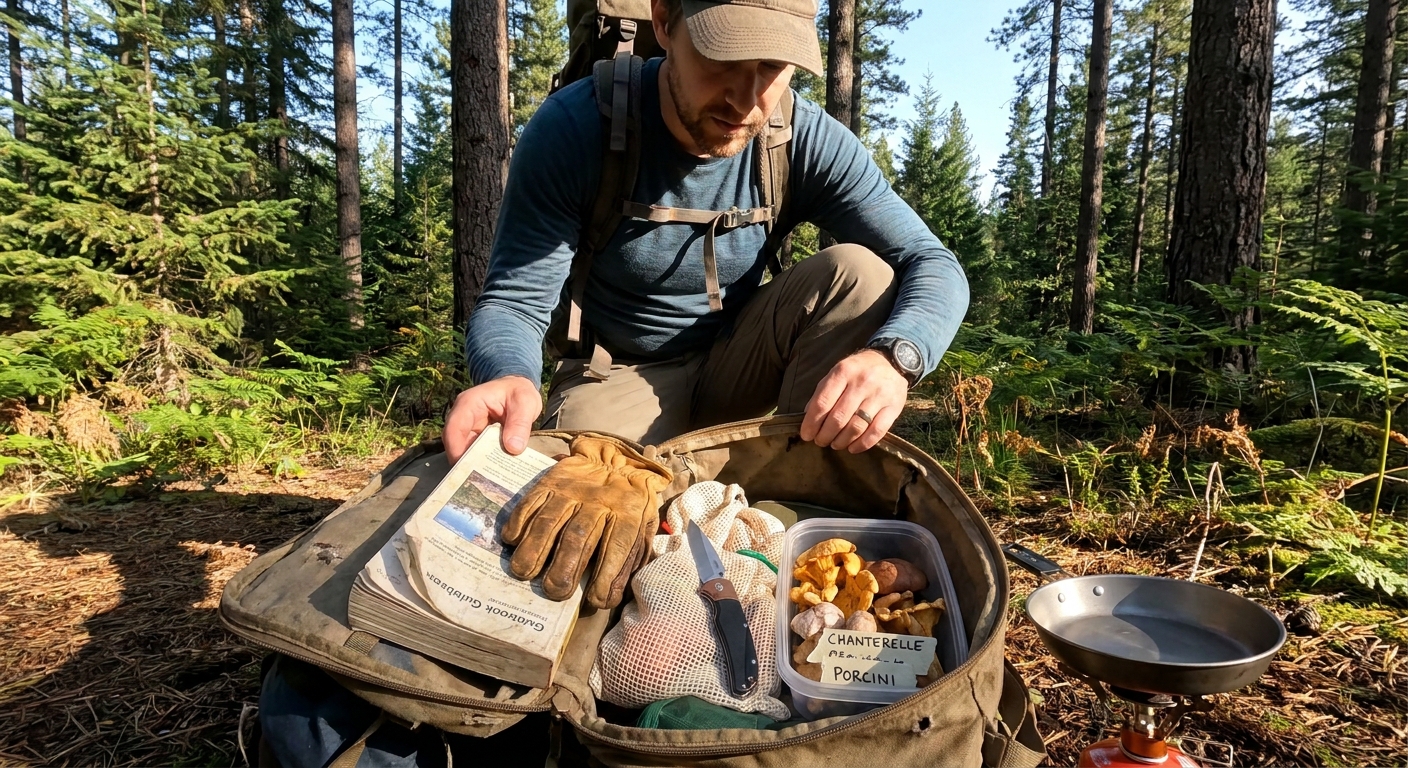
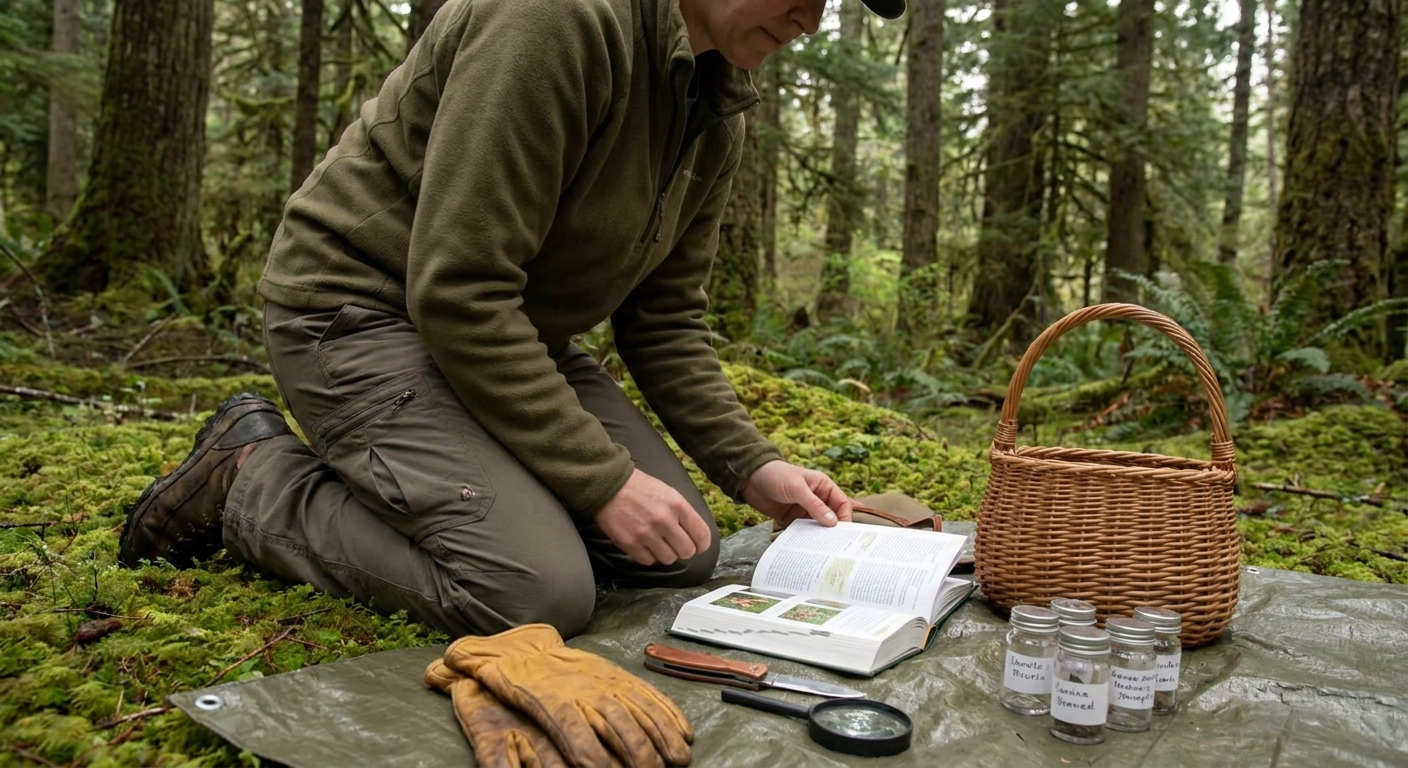
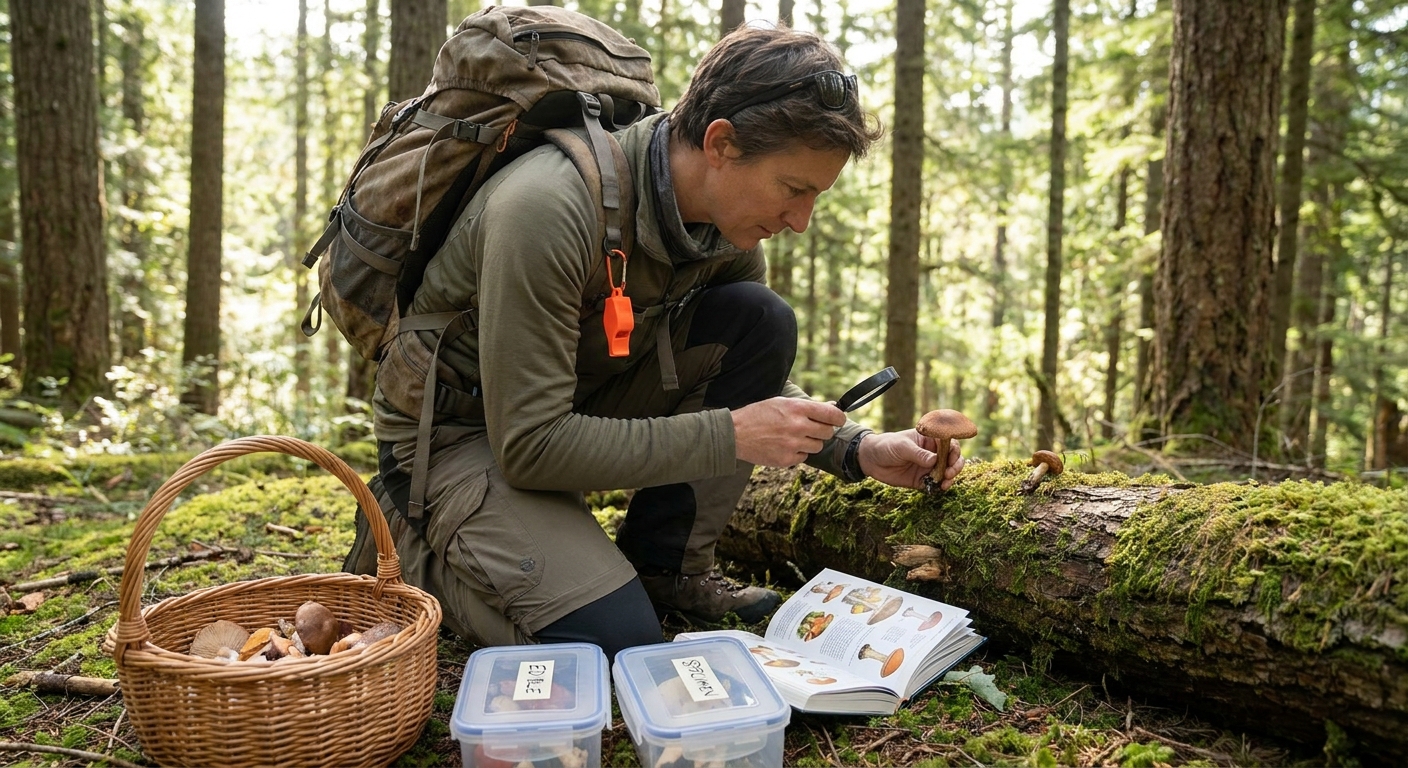
Mushroom‑Specific Kit
- Basket(s), paper bags, field knife, hand lens. - Spore print kit (paper/foil), notebook for Tree associations.
Nut Collection Gear
- Sturdy bag or bucket for nuts. - Guide with clear illustrations of nut husks and shells.
Example – Sweet Chestnut (Castanea spp.) vs. Horse Chestnut (Aesculus hippocastanum):
- Sweet chestnut: Very spiky, hedgehog‑like husk with multiple small nuts; edible when properly prepared; often in woodland or planted groves.
- Horse chestnut: Thicker, fewer spines, often single large glossy seed; not edible, can cause GI issues and more.
Warm, Layered Clothing and Waterproof Footwear
- Leaf litter hides slippery logs and rocks; ankle support reduces falls.
Headlamp or Compact Flashlight
- Shortening days can catch you far from the trailhead.
Expanded First Aid
- Add blister care items for longer hikes. - Include emergency blanket in case of overnight delays.
Winter Setup: Bark, Buds, and Evergreen Edibles
Likely Targets
- Conifer needles for teas (spruce, fir, pine—species dependent)
- Rose hips (Rosa spp.)
- Cattail roots in milder climates (Typha spp., checking regulations)
- Overwintering greens in some regions (e.g., chickweed)
Key Winter Hazards and Look‑Alikes
- Yew (Taxus spp.) mistaken for edible conifers—needles and seeds are highly toxic.
- Rose hip vs. other red fruits with similar appearance.
- Hypothermia and icy conditions.
Winter Gear Priorities
Cold‑Weather Clothing System
- Moisture‑wicking base layer, insulating mid‑layer, and wind/waterproof shell. - Insulated boots with good grip; trekking poles for icy ground.
Conifer Identification Guide
- Should clearly show: - Needle arrangement (bundled vs. single) - Cone types - Bark patterns - Example – Edible Pine vs. Yew: - Pines/firs/spruces: Distinct cones, resinous smell; many species suitable for teas. - Yew: Red arils around seeds; flat needles; often ornamental; extremely toxic. - Winter gear: Lens and guide are critical; if you’re not confident, skip conifer use.
Food and Hot Drink in a Thermos
- Keeps you focused and warm.
Emergency and Navigation Gear Upgraded
- Map, compass, GPS, and headlamp are non‑negotiable in early sunsets. - Extra batteries; phone power bank.
Pruners and Small Saw (Where Permitted)
- For harvesting small branches safely from storm‑downed limbs rather than living trees.
Shared Gear Across All Seasons
Some items belong in every seasonal setup:
- Regional field guide(s)
- Notebook, pencil, labels
- Hand lens (10x)
- Knife with sheath
- First aid kit, including tweezers
- Water, snacks, trash bag
- Map and compass or GPS with offline maps
- Phone with charged battery (and backup power if possible)
Adjusting Gear to Habitat and Target Species
Think in layers:
- Base Kit (above): Always in your bag.
- Seasonal Layer: Tailored to likely species and weather.
Habitat‑Specific Tools:
- Waders or tall boots for marshes and cattails. - Climbing‑grade caution and ropes are not recommended for casual foragers—avoid risky terrain instead.
Example Workflow for a Spring Floodplain Trip (Ramps and Fiddleheads):
- Base kit: guides, notebook, lens, knife, first aid, water.
- Seasonal: waterproof boots, gloves, rain shell.
- Habitat‑specific: small trowel (if legal), extra socks.
- In the field: confirm onion scent for ramps; study mature ferns nearby to confirm ostrich fern before touching any fiddleheads.
Every outing, ask:
- What species am I expecting?
- How might I be wrong about them?
- Which gear best protects me from those specific mistakes?
When your gear and your mindset both start with these questions, your seasonal setups become powerful tools for safe, sustainable foraging.