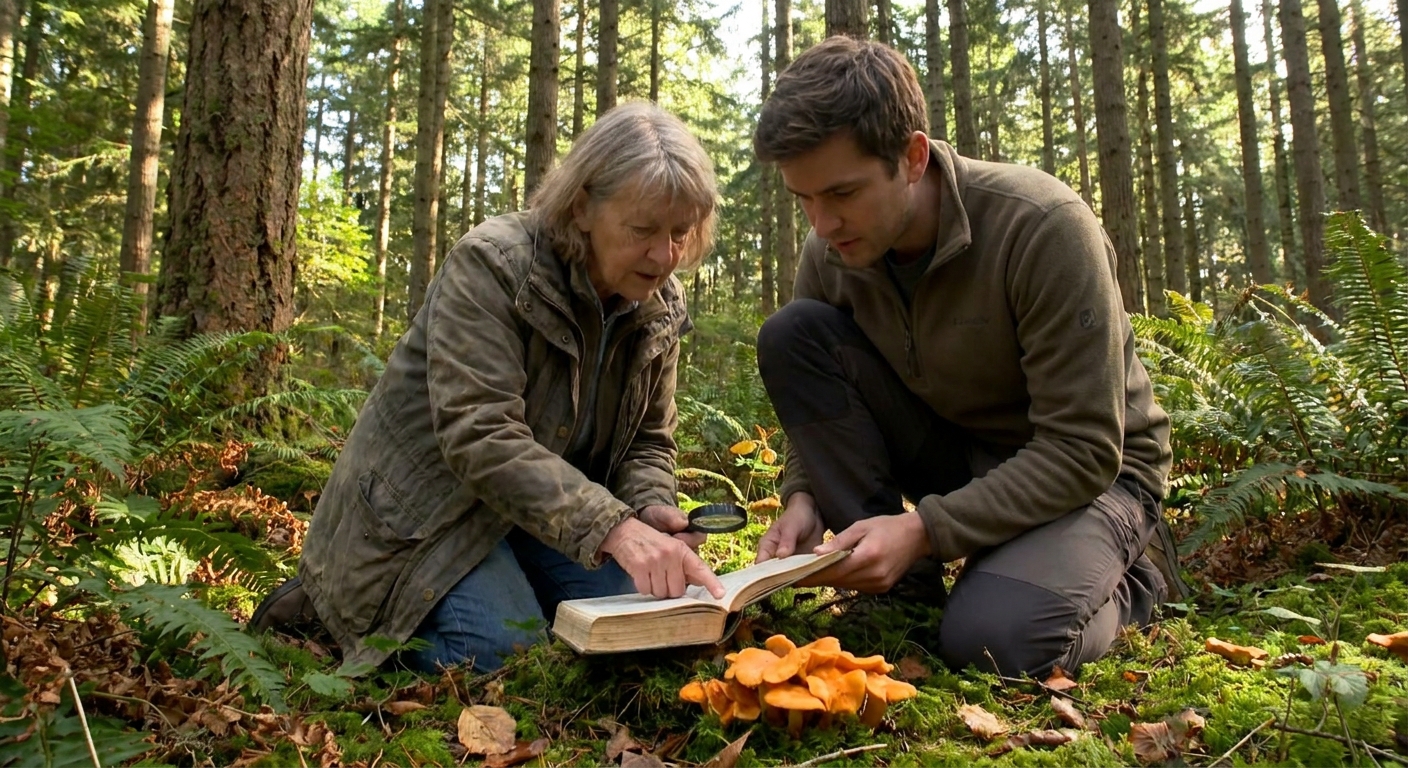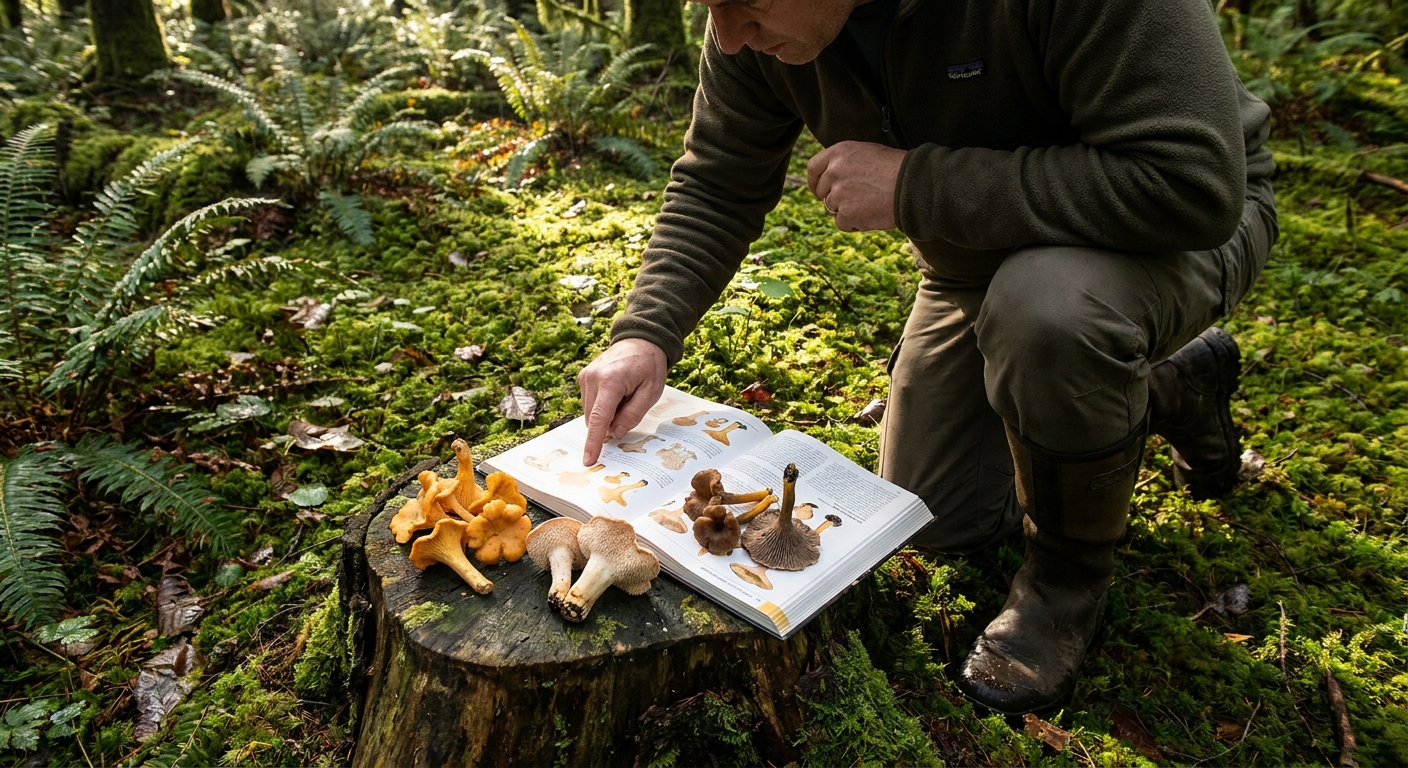
Golden mushrooms on the forest floor excite every forager—but not all orange or yellow caps are created equal. True chanterelles and hedgehog mushrooms are cherished edibles. False chanterelles and jack-o’-lanterns can make you very sick.
Introduction: Three Golden Mushrooms, Three Very Different Stories
This comparison guide walks you through side-by-side field distinctions for three common "chanterelle-like" mushrooms: true chanterelles, hedgehogs, and false chanterelles. We’ll emphasize structure, habitat, and season over color alone.
Important: This guide is for education. Always confirm identifications with regional field guides and expert input before eating any wild mushroom.
Overview: The Main Players
We’ll focus on:
- True Chanterelles (Cantharellus spp.) – edible
- Hedgehog Mushrooms (Hydnum spp.) – edible
False Chanterelles (Hygrophoropsis aurantiaca and allies) – generally considered inedible/suspect
Jack-o’-lanterns (Omphalotus spp., clearly toxic) will be mentioned as an important additional comparison.
1. Underside Structures: Ridges vs. Teeth vs. True Gills
When teaching new foragers, I start with the underside. If you learn nothing else from this article, learn this section.
True Chanterelles (Cantharellus spp.)
Underside:
- False gills: blunt, shallow ridges rather than sharp, blade-like gills.
- Ridges are often forked, wavy, and irregular.
- They are decurrent, meaning they run down the stem.
- If you run a finger across them, they feel thick and rounded, not like paper.
Hedgehog Mushrooms (Hydnum spp.)
Underside:
- Covered in soft spines or teeth—tiny, downward-pointing projections.
- Teeth are easily visible; they often brush off if you rub them.
- Decurrent in a sense (teeth may extend a bit down the stem) but visually distinct from gills or ridges.
False Chanterelles (Hygrophoropsis aurantiaca)
Underside:
- Has true gills: thin, blade-like, and more regular.
- Gills often fork and can be somewhat decurrent, which adds confusion.
- However, they are sharper, more crowded, and feel like traditional gills.
Jack-o’-Lanterns (Omphalotus spp.) – Bonus Warning
Underside:
- Also have true gills: sharp, blade-like, crowded.
- Often more substantial mushrooms, usually in dense clumps.
- Ridges (false gills) → think chanterelles.
- Teeth → think hedgehogs.
- Sharp blades (true gills) → think false chanterelles or jack-o’-lanterns and proceed with caution.
Key takeaway:
2. Cap Shape, Texture, and Color
Color alone misleads; pay attention to shape and surface.
True Chanterelles
- Cap: often funnel-shaped or wavy, with rounded edges as they age.
- Surface: smooth to slightly matte, not hairy or velvet-like.
- Color: from pale yellow to deep egg-yolk or apricot orange, depending on species and age.
- Flesh: solid, firm, often whitish to pale yellow inside.
Hedgehogs (Hydnum repandum, H. umbilicatum, etc.)
- Cap: irregular, often slightly depressed in the center; edges may be lobed or wavy.
- Surface: dry, can be slightly bumpy or uneven but not hairy.
- Color: pale buff, cream, to orange-tan; generally not as bright orange as some chanterelles.
- Flesh: firm, often paler than the outer surface.
False Chanterelles
- Cap: more evenly rounded when young, often with a noticeable central depression when older.
- Surface: can be slightly hairy or fuzzy near the center; more delicate.
- Color: typically more orange to orange-brown, sometimes with darker center.
- Flesh: thinner and more fragile than true chanterelles.
Practical field note: When you hold them, chanterelles and hedgehogs feel solid and substantial; false chanterelles tend to feel lighter and more fragile.
3. Stems and Attachment
Stem structure and how the cap meets the stem provide reliable cues.
True Chanterelles
- Stem: solid, not hollow; usually the same color as the cap or a bit paler.
- Attachment: smooth transition from stem to cap; no sharp line—like one flowing piece.
- No ring or volva.
Hedgehogs
- Stem: sturdy, often paler than the cap, sometimes off-center depending on species.
- Teeth clearly arise from the underside of the cap and may slightly descend the stem.
- No ring or volva.
False Chanterelles
- Stem: often more slender, sometimes paler; may be hollow or less dense.
- Attachment: the cap and stem can look more separated, with a clearer line.
- No ring or volva, but the overall impression is more "typical gilled mushroom" than chanterelle’s blended form.
4. Habitat: What They Grow With and From
Ecology is your ally. Always ask where and on what the mushroom is growing.
True Chanterelles
- Habitat: on the ground in forests, often in mossy or leafy areas.
- Partners: mycorrhizal with trees. Common associates include:
- Hardwoods: oak, beech, birch.
- Conifers: spruce, fir, pine (depending on region and species).
- Growth pattern: scattered, in small groups, or loose drifts—not usually from wood.
Hedgehogs
- Habitat: on the ground in woodlands.
- Partners: also mycorrhizal with trees (often with similar forest types as chanterelles).
- Growth pattern: scattered or in modest groups, sometimes forming patches.
False Chanterelles
- Habitat: often on or near rotting wood, forest litter, or heavily decayed material.
- Substrate: may seem to be on soil but usually drawing from decaying wood underneath.
- Growth pattern: can appear clustered but typically not in tight, stem-sharing clumps like jack-o’-lanterns.
Jack-o’-Lanterns (for context)
- Habitat: true wood-lovers.
- Substrate: emerge in dense clusters from stumps, buried roots, or bases of trees.
Rule of thumb: Bright orange gilled clusters directly on wood or from buried wood should trigger extra caution.
5. Seasonality and Regional Nuances
Timing varies by climate, but general patterns help.
True Chanterelles
- Season: often summer into fall in temperate zones; some regions have extended or second flushes with rain.
- In warm areas, may appear with early summer rains and again after autumn storms.
Hedgehogs
- Season: usually later than chanterelles—late summer into fall, sometimes into early winter in mild climates.
False Chanterelles
- Season: typically late summer through fall, often overlapping with chanterelle time.
Because seasons overlap, you must rely on morphology and habitat, not calendar alone.
6. Smell and Texture: Subtle but Useful Clues
Scent isn’t a standalone ID tool, but it can support your assessment.
True Chanterelles
- Scent: often described as fruity, apricot-like, or pleasantly mushroomy.
- Texture: firm, meaty, not crumbly.
Hedgehogs
- Scent: mild, clean, sometimes slightly nutty.
- Texture: firm but slightly more brittle where the teeth attach.
False Chanterelles
- Scent: weak, generic mushroom or slightly musty; lacks the distinct fruitiness of true chanterelles.
- Texture: more fragile; caps can tear more easily.
Use smell only as a supporting observation, never as proof of edibility.
7. Edibility and Safety Considerations
True Chanterelles
- Widely valued as excellent edibles.
- Must be cleaned carefully; dirt and debris love to hide in the folds.
- Some individuals experience digestion issues; always cook well and try a small amount first.
Hedgehogs
- Considered safe and choice edibles by many.
- Younger specimens are best; older hedgehogs can become bitter.
- Teeth detach easily and can be brushed off during cleaning.
False Chanterelles
- Reported as inedible to mildly toxic in many guides.
- Associated with gastrointestinal upset in some cases.
- With so many better options in the forest, there is no reason to eat them.
Overarching Safety Rules
- Never eat a mushroom based solely on color and a quick resemblance.
- Always confirm underside structure (ridges vs. teeth vs. true gills).
- Cross-check multiple field guides, prioritizing ones for your specific region.
- When in doubt, leave it in the woods.
Quick Field Comparison Table
| Feature | Chanterelles (Cantharellus) | Hedgehogs (Hydnum) | False Chanterelles (Hygrophoropsis) |
|---|---|---|---|
| Underside structure | Blunt ridges (false gills) | Teeth/spines hanging down | True gills, thin and blade-like |
| Underside attachment | Ridges strongly decurrent | Teeth decurrent or slightly down the stem | Gills decurrent to slightly decurrent |
| Cap feel | Firm, fleshy | Firm, slightly brittle | Thinner, more fragile |
| Typical substrate | Soil/forest floor | Soil/forest floor | On/near heavily decomposed wood |
| Growth pattern | Scattered or loose groups | Scattered, sometimes in groups | Often scattered, sometimes clustered |
| Typical color | Yellow to deep egg-yolk | Cream, buff, pale orange-brown | Orange to orange-brown, darker center |
| Status | Choice edible | Choice edible | Inedible/suspect |
Final Thoughts: Learn the Group, Not Just the Prize
Chanterelles and hedgehogs are rewarding, forgiving mushrooms for careful foragers—but only if you also study their mimics. Make it a habit to:
- Examine the underside first.
- Note substrate and tree companions.
- Compare several specimens, not just one.
- Verify ID in multiple trustworthy sources.
Approach every golden mushroom as a small investigation, not a quick score. That mindset—curious, meticulous, and cautious—is what turns bright forest finds into safe, satisfying meals instead of regrettable guesses.