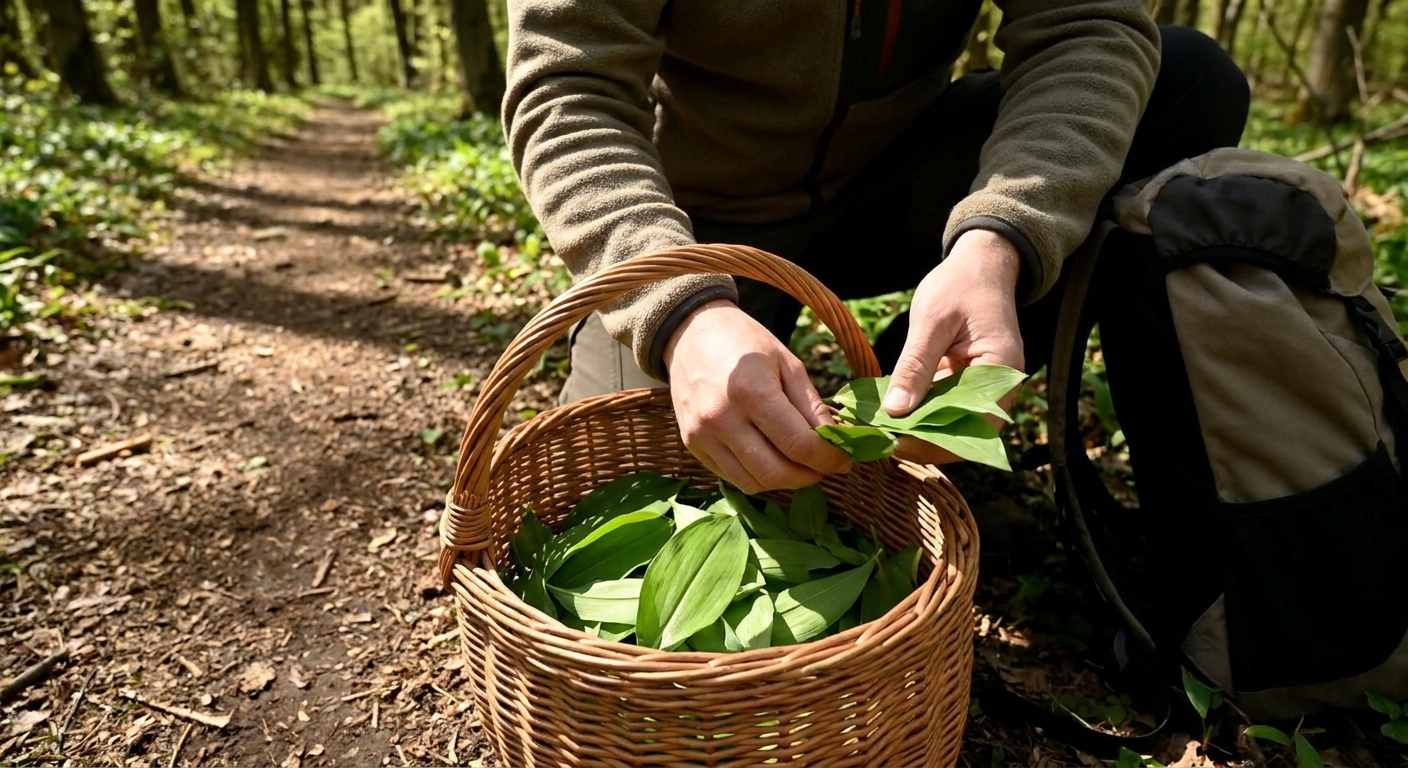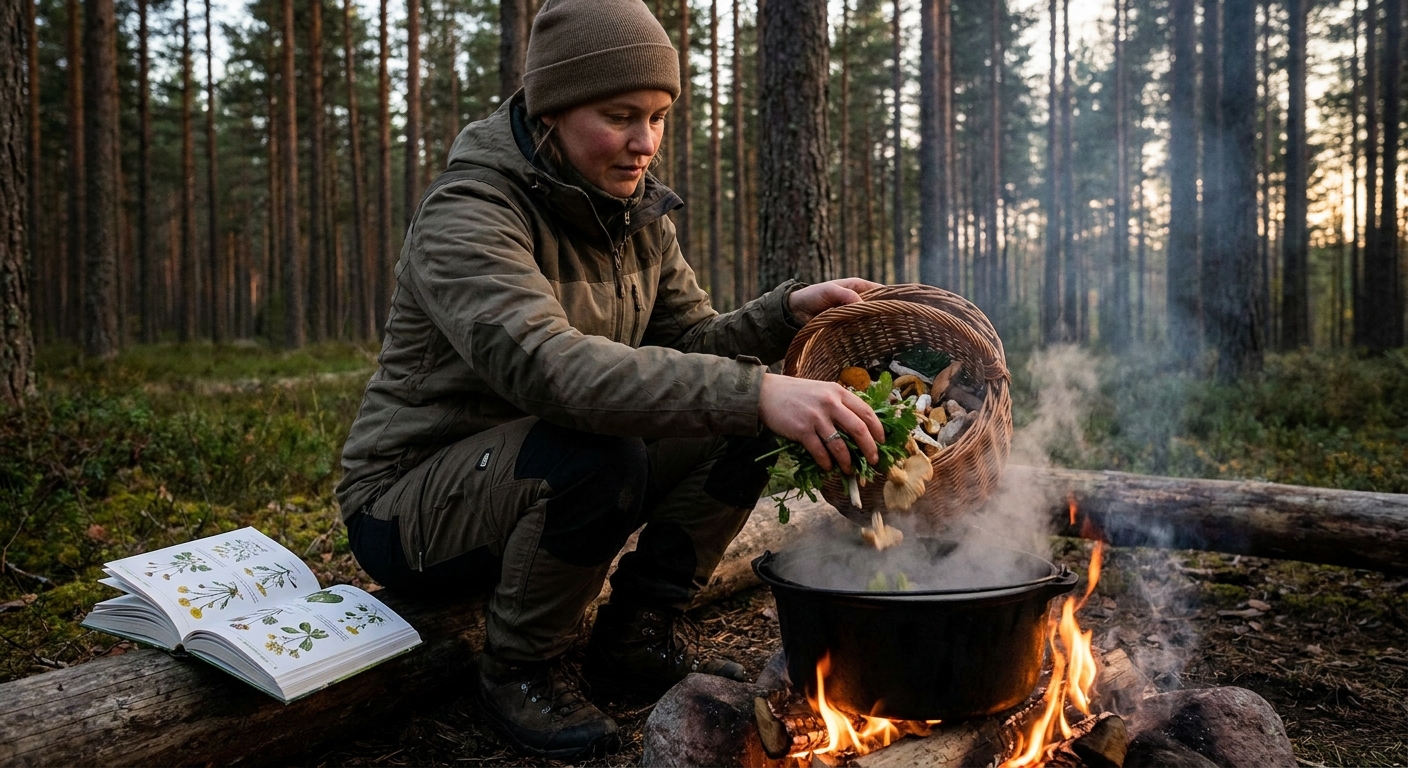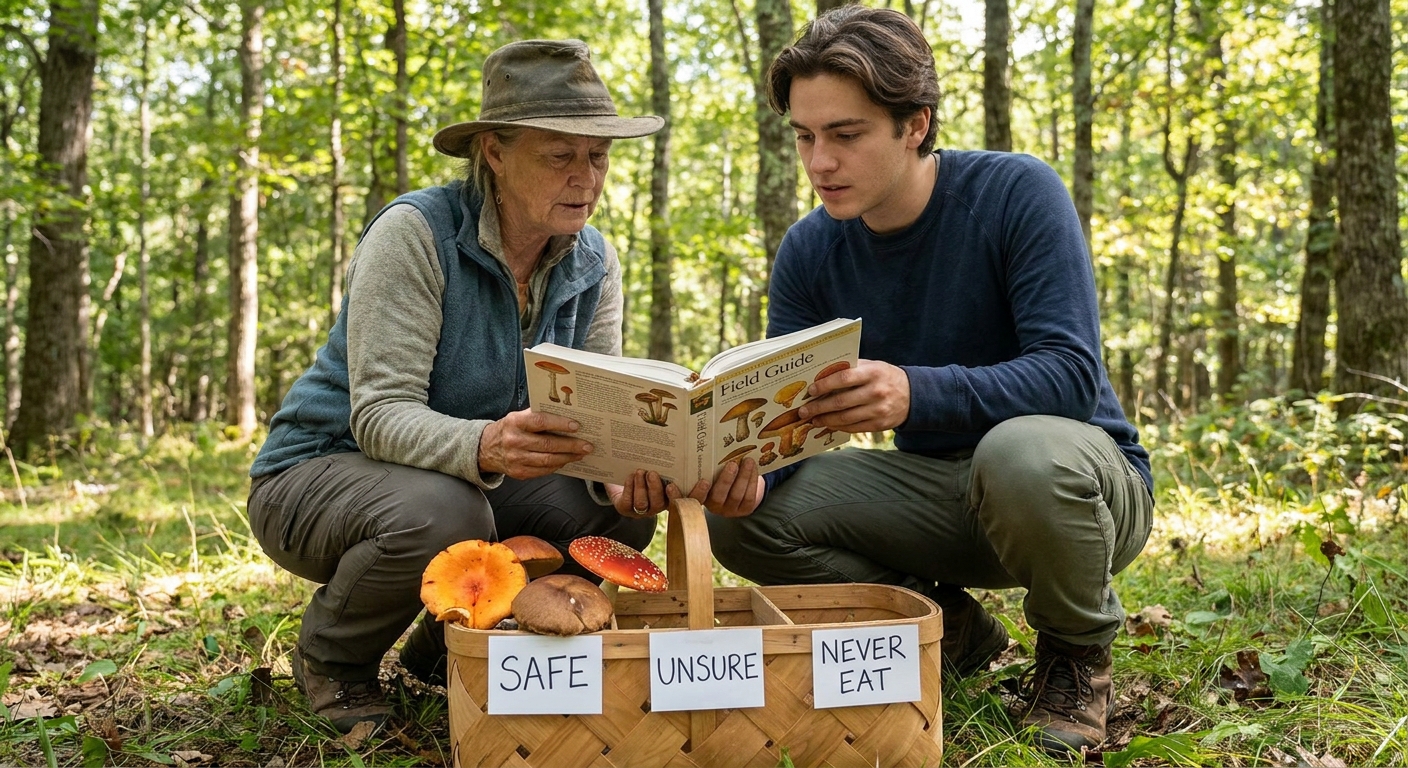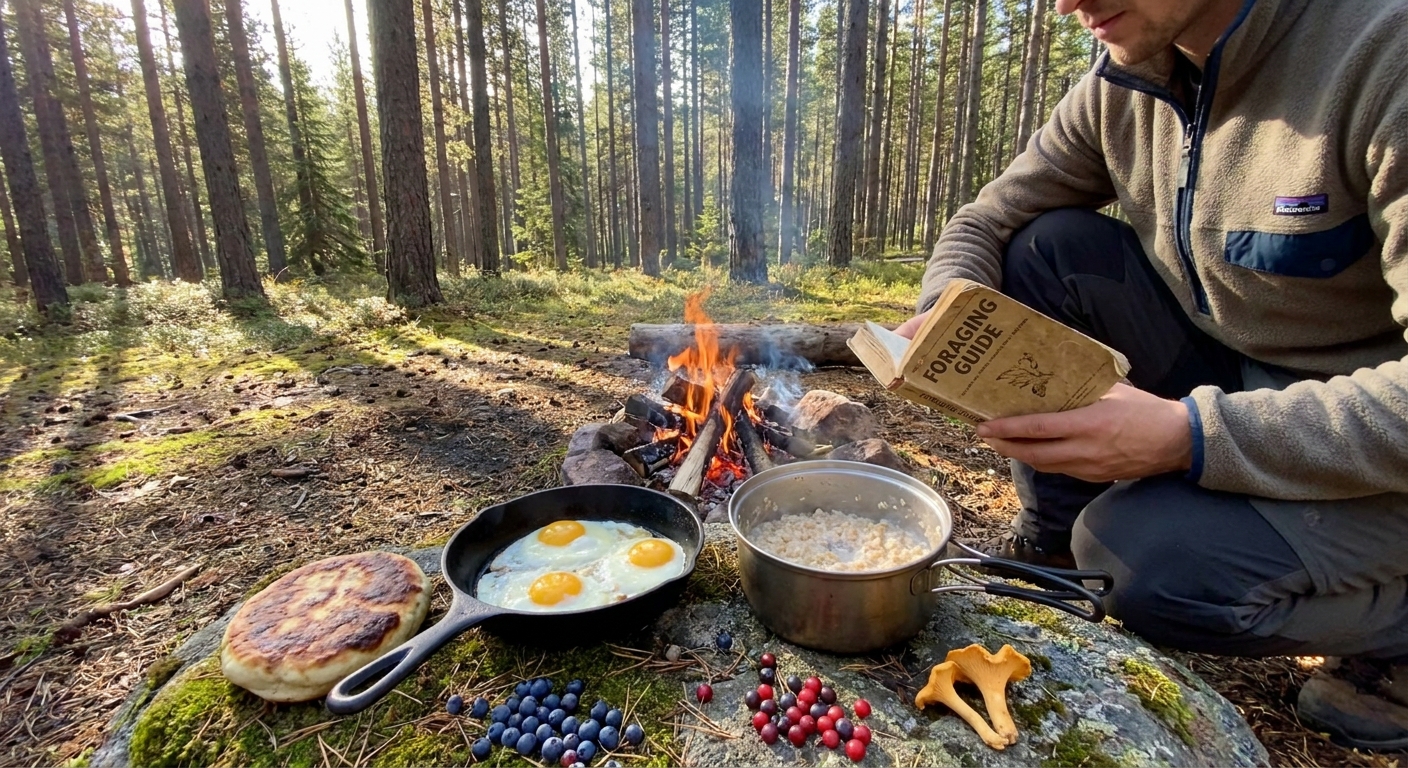
Breakfast often sets the tone for a day on the trail. Adding wild foods to your first meal can provide fresh flavor and nutrition, but it’s also when people are most tempted to rush. That’s a mistake. Tired eyes, low light, and a growling stomach don’t mix well with precise plant identification.
Why Foraged Breakfasts Deserve Special Caution
This article compares reliable wild ingredients you can fold into three common camp breakfasts—oats, eggs, and bannock—highlighting identification details, habitat notes, and safety issues for each.
Category 1: Wild Add‑Ins for Oats and Porridge
Warm grains pair well with tart fruits, seeds, and mild greens.
1. Serviceberries vs. Potential Look‑Alikes
Best for: Oatmeal topping or stirred into simmering porridge.
Serviceberry / Juneberry (Amelanchier spp.)
- Leaves: Oval with fine teeth along the upper half; often softly hairy when young.
- Flowers: White, star‑shaped, 5 petals, early spring.
- Fruits: Small, round, purple‑blue to almost black when ripe; look like large blueberries on small stems.
- Taste: Sweet with a hint of almond.
Habitat: Woodland edges, rocky slopes, hedgerows; many towns plant them ornamentally.
Season: Late spring to early summer, varying with altitude and latitude.
Look‑Alike Concerns
- Buckthorn (Rhamnus spp.): Some species have dark berries and can cause digestive upset.
- Chokecherry (Prunus virginiana): Also edible when ripe and processed, but the pits contain cyanogenic compounds.
Key ID tip: Serviceberries grow on shrubs or small trees with distinct 5‑petaled flowers earlier in spring. The fruit has a small crown or dimple at the end, somewhat blueberry-like.
Safety practice:
- Only harvest from shrubs you’ve observed through both flowering and fruiting.
- Avoid strip‑picking; take scattered berries from multiple branches.
Simple Recipe: Serviceberry Oatmeal
- Simmer oats in water or milk.
- Add a handful of cleaned, ripe serviceberries in the last 5 minutes.
- Sweeten lightly; the berries provide much of the flavor.
2. Wild Seeds: Plantain Seeds vs. Dock Seeds
Best for: Stirring into porridge or sprinkling on top.
Common Plantain (Plantago major / P. lanceolata) Seeds
- Leaves (broadleaf plantain): Oval, with 3–7 strong parallel veins; in a basal rosette.
- Leaves (narrowleaf plantain): Long, lance‑shaped with similar parallel veins.
- Seed stalks: Upright spikes with tiny flowers that become rows of brownish seedpods.
Habitat: Lawns, paths, compacted soil.
Season: Seeds in mid‑ to late summer.
Use: Toast lightly and stir a spoonful into oatmeal for subtle crunch.
Dock (Rumex spp.) Seeds – Caution
- Leaves: Long, lanceolate or triangular; often wavy edges.
- Seed stalks: Reddish‑brown clusters that persist into winter.
While many docks are technically edible, they can be high in oxalates and are less beginner‑friendly than plantain.
Comparison: For novice foragers, plantain seeds are easier to identify and generally milder. Dock is better left to more experienced practitioners.
Preparation Tip:
- Rub dry seed spikes between your hands to free seeds.
- Winnow off chaff.
- Toast seeds in a dry pan before adding to porridge.
3. Mild Green Add‑Ins: Chickweed vs. Bitter Greens
Chickweed (Stellaria media)
- Leaves: Small, opposite, egg-shaped; lower ones with small stalks, upper nearly sessile.
- Stem: Slender, with a single line of fine hairs.
- Flowers: Tiny, white, with 5 deeply notched petals (appear as 10).
Habitat: Moist gardens, edges, cool-season lawns.
Season: Best in spring and fall.
Mild and tender, chickweed can be chopped and stirred into oatmeal near the end of cooking for a subtle, spinach-like contribution.
Comparison:
- Chickweed is much milder than dandelion or garlic mustard and less likely to make breakfast unpleasantly bitter.
Safety note: Avoid any plants with milky sap (spurges) and always confirm the distinctive chickweed flower structure.
Category 2: Wild Ingredients for Eggs and Scrambles
Eggs are an excellent vehicle for wild greens and aromatics.
4. Wild Onions vs. Dangerous Look‑Alikes
Wild Onion/Garlic (Allium spp.)
- Leaves: Grass-like or flat, sometimes hollow; green.
- Bulbs: Small, usually white or purple.
- Smell: Strong onion or garlic odor when any part is crushed.
Habitat: Fields, lawns, open woods.
Season: Early spring and fall, depending on region.
Dangerous Look‑Alikes: Death Camas (Toxicoscordion spp., Zigadenus spp.)
- Leaves: Grass‑like, often in clumps.
- Smell: No onion/garlic smell.
- Flowers: Creamy white to yellowish, star‑shaped clusters.
Rule: Smell every plant. If you do not get a clear onion/garlic scent, do not harvest or eat it.
Recipe Idea: Wild Onion Egg Scramble
- Finely chop a small handful of wild onion leaves and bulbs.
- Sauté in butter until fragrant.
- Add beaten eggs; cook gently until just set.
- Season with salt and pepper.
5. Comparing Greens in Egg Dishes: Nettles vs. Garlic Mustard vs. Dandelion
Nettles (Urtica dioica)
- Pros: High in nutrients; mild once cooked; excellent in scrambles.
- Cons: Require gloves to harvest; must be thoroughly cooked.
Garlic Mustard (Alliaria petiolata)
- Pros: Built-in garlicky flavor; works like a herb.
- Cons: Quickly turns very bitter when older; use sparingly and young.
Dandelion (Taraxacum officinale)
- Pros: Very common; bitter in a pleasant, chicory-like way when young.
- Cons: Can overpower eggs if used in large amounts or when mature.
- Confirm each species based on leaf shape, flower characteristics, and habitat.
- For nettles, verify stinging hairs; for garlic mustard, confirm garlic odor plus 4‑petaled white flowers in season; for dandelion, look for basal rosette and hollow flower stalks.
- Nettles: ½ cup cooked and chopped.
- Garlic mustard: 2–3 tbsp finely chopped young leaves.
- Dandelion: ¼ cup chopped young leaves, blanched if bitter.
Safety & Identification Notes:
Suggested Ratios for Eggs (per 3 eggs):
Category 3: Wild Add‑Ins for Bannock and Trail Breads
Bannock—a simple camp bread of flour, water, and fat—pairs beautifully with wild flavors.
6. Berry Studded Bannock: Blueberries vs. Look‑Alikes
True Blueberries (Vaccinium spp.)
- Leaves: Simple, entire margins or very finely toothed; often oval.
- Flowers: Bell- or urn-shaped, white to pinkish.
- Fruits: Blue to blackish berries with a whitish bloom; small crown at the end.
Habitat: Acidic soils, open woods, barrens.
Season: Mid‑ to late summer.
Look‑Alikes
- Huckleberries (Gaylussacia spp.): Generally edible, have noticeable crunchy seeds.
- Toxic honeysuckles (Lonicera spp.): Some species have paired berries and can be mildly toxic.
Key safety points:
- Learn the entire shrub: leaves, flowers, and fruit.
- Avoid any plant with red, white, or oddly colored berries unless you are absolutely certain.
Blueberry Bannock Idea
- Mix basic bannock dough (flour, pinch of salt, baking powder, water, fat).
- Fold in a small handful of fresh blueberries just before cooking.
- Cook over low to medium heat; high heat will scorch before berries cook through.
7. Savory Herb Bannock: Yarrow vs. Strong Aromatics
Yarrow (Achillea millefolium) – Use in Tiny Amounts
- Leaves: Finely divided, feathery, fern-like.
- Flowers: Flat-topped clusters of small, white to pink heads.
Habitat: Meadows, pastures, open areas.
Season: Leaves prime in spring; flowers in summer.
Cautions:
- Yarrow is potent; use as a seasoning, not as a bulk herb.
- Some individuals react with skin irritation.
Comparison: While yarrow and garlic mustard can both season bannock, yarrow brings a more herbal, chamomile-like edge, while garlic mustard is sharply garlicky and can become harsh when cooked too long.
Herb Bannock Tip:
- Add only 1–2 tsp of finely chopped yarrow leaves to a full pan of bannock.
- Taste a small piece first to assess sensitivity.
General Safety Principles for Wild Breakfasts
- Never forage in the dark or by dim headlamp. Collect ingredients the day before while light is good.
Avoid risky families for breakfast experiments:
- Carrot family (Apiaceae) due to hemlock look‑alikes. - White or red berried shrubs unless expertly known. 3. Introduce one new wild ingredient at a time. If a reaction occurs, you’ll know the cause. 4. Cook most wild plants when possible, especially for beginners. 5. Mind caffeine and dehydration: Both can heighten sensitivity to new foods.
Building a Personal “Breakfast Safe List”
Over time, create your own documented list of:
- Species you’ve confidently ID’d multiple times.
- Seasons and habitats where you find them.
- Preparation methods and tolerances (bitterness, quantity).
- Chickweed (spring, salad or porridge topping)
- Wild onion/garlic (spring, egg scrambles)
- Nettles (spring, cooked only)
- Serviceberries (early summer, porridge add‑in)
- Blueberries (mid‑summer, bannock and oats)
Examples for a beginner’s list:
Treat that list as a living field manual. As your skills grow, your breakfasts can evolve from simple garnishes to fully foraged feasts—always grounded in careful identification, habitat awareness, and restraint.