Every experienced forager eventually realizes that recipes are secondary. What keeps you safe—and confident in the kitchen—is the system you follow before any leaf, fruit, or mushroom touches a pan.
Why a Checklist Matters More Than Any Single Recipe
This article won’t drown you in complicated dishes. Instead, it lays out ten practical rules that you can apply to almost any wild recipe. Think of it as the mentor’s checklist: habits you rehearse until they become second nature.
Rule 1: Learn Whole Species, Not “Edible Parts” in Isolation
It’s common to hear advice like “you can eat the young shoots of X” or “the berries of Y are edible when cooked.” This is incomplete and can be dangerous.
Safer approach:
- Learn the entire life cycle of each species you intend to eat: seedling, vegetative, flowering, fruiting, senescent.
- Understand which parts are edible at which stages—and which are not.
Example: Elder (Sambucus nigra & relatives)
- Leaves & twigs: Contain cyanogenic compounds; do not eat.
- Flowers: Commonly used for fritters and cordials when properly prepared.
- Berries: Edible when ripe and cooked; unripe or raw berries may cause nausea.
Don’t just memorize “elderberry syrup is safe.” Know the plant, its look‑alikes, and its toxic parts.
Rule 2: Respect the “Deadly Families” and Learn Their Warning Signs
Certain plant families contain species that can be lethal in small amounts.
Carrot Family (Apiaceae)
Includes: Wild carrot, parsnip, fennel—but also poison hemlock (Conium maculatum) and water hemlock (Cicuta spp.).
Telltales of dangerous members:
- Purple or mottled stems (poison hemlock).
- Unpleasant, mousy odor (hemlocks).
- Thick, chambered roots (water hemlock).
Mentor’s advice: Beginners should avoid all wild carrot-family roots for food unless working directly with an expert.
Lily and Bunchflower Families (for wild “onions”)
- Death camas (Toxicoscordion/Zigadenus) looks like a wild onion but has no onion smell and is highly toxic.
Checklist item: Any suspected wild onion must pass the smell test—a clear onion/garlic odor when crushed. No smell, no meal.
Rule 3: Double‑Source Every Identification
Never rely on just one reference.
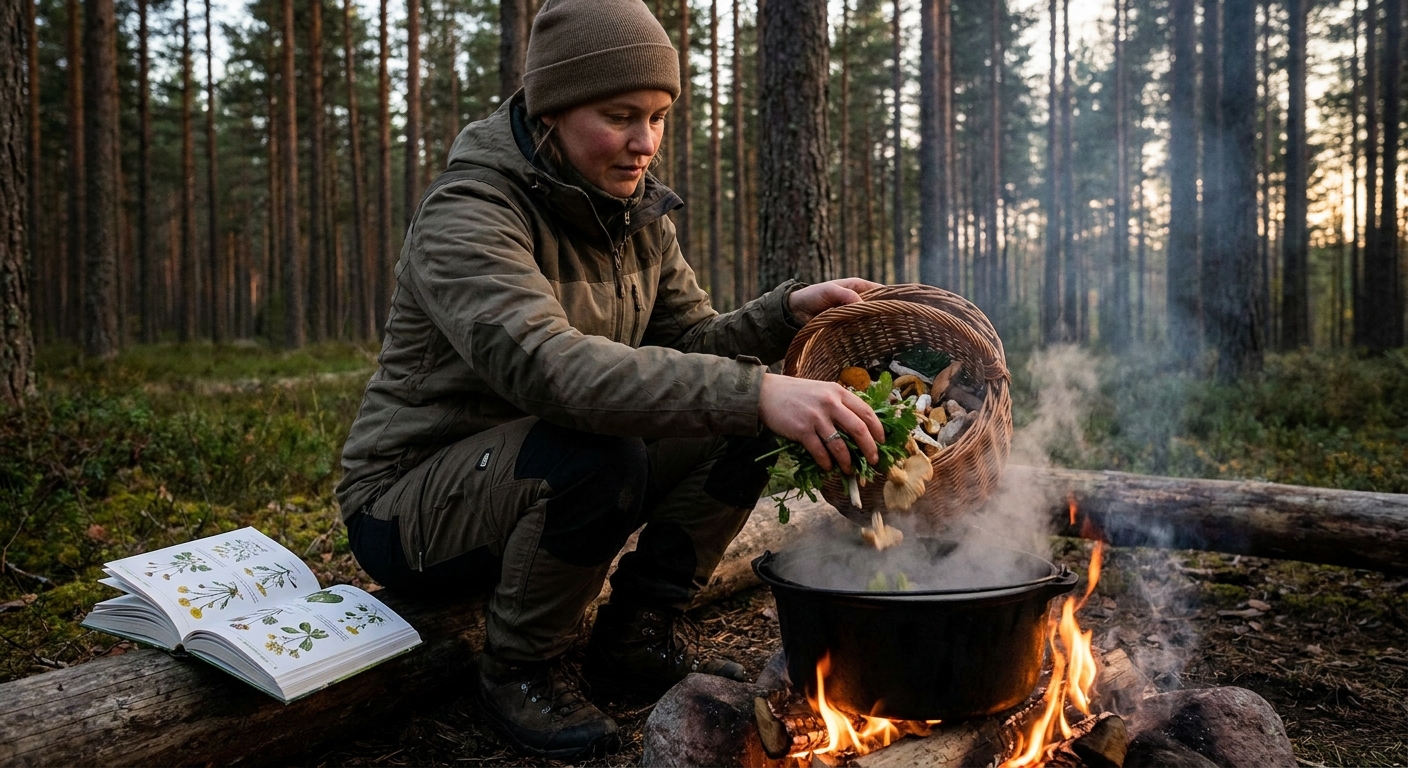
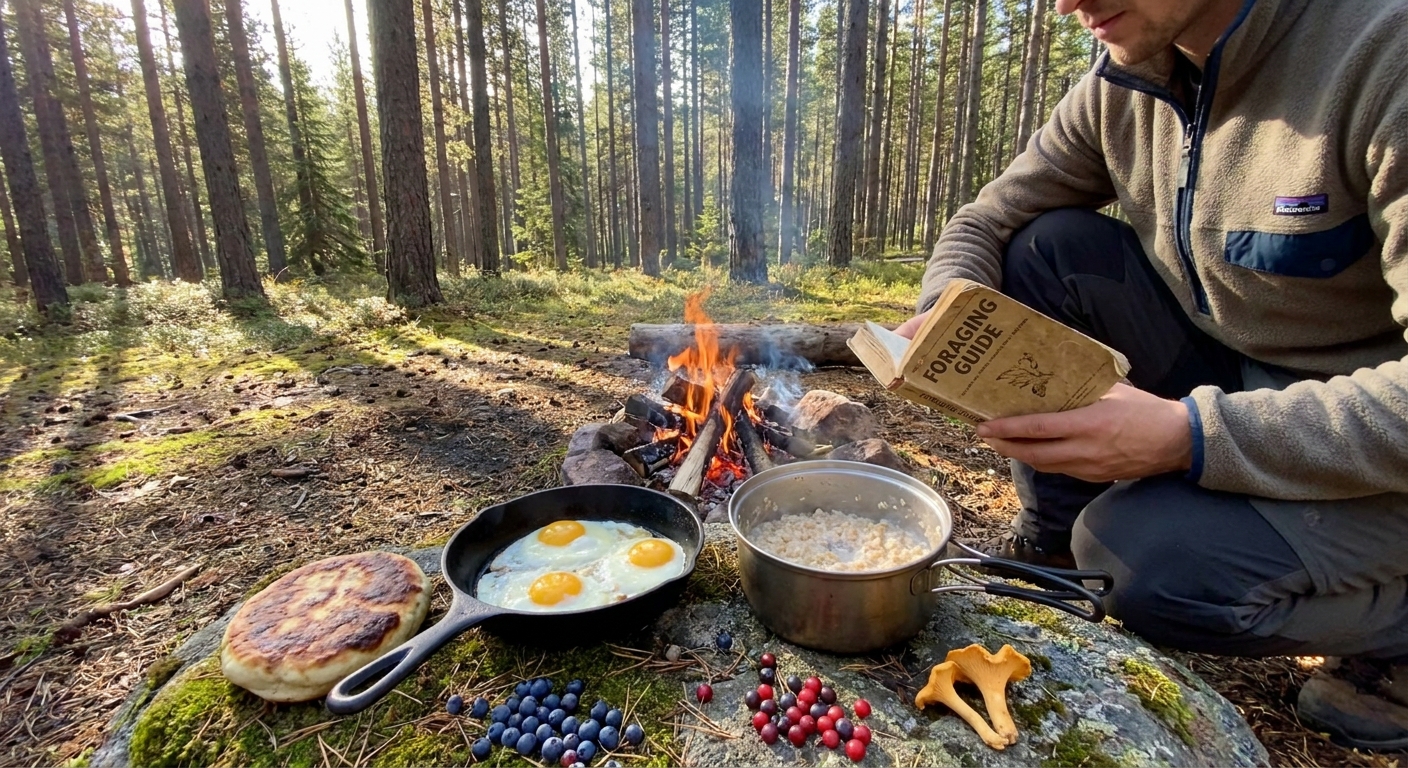
- Printed field guide (preferably region-specific).
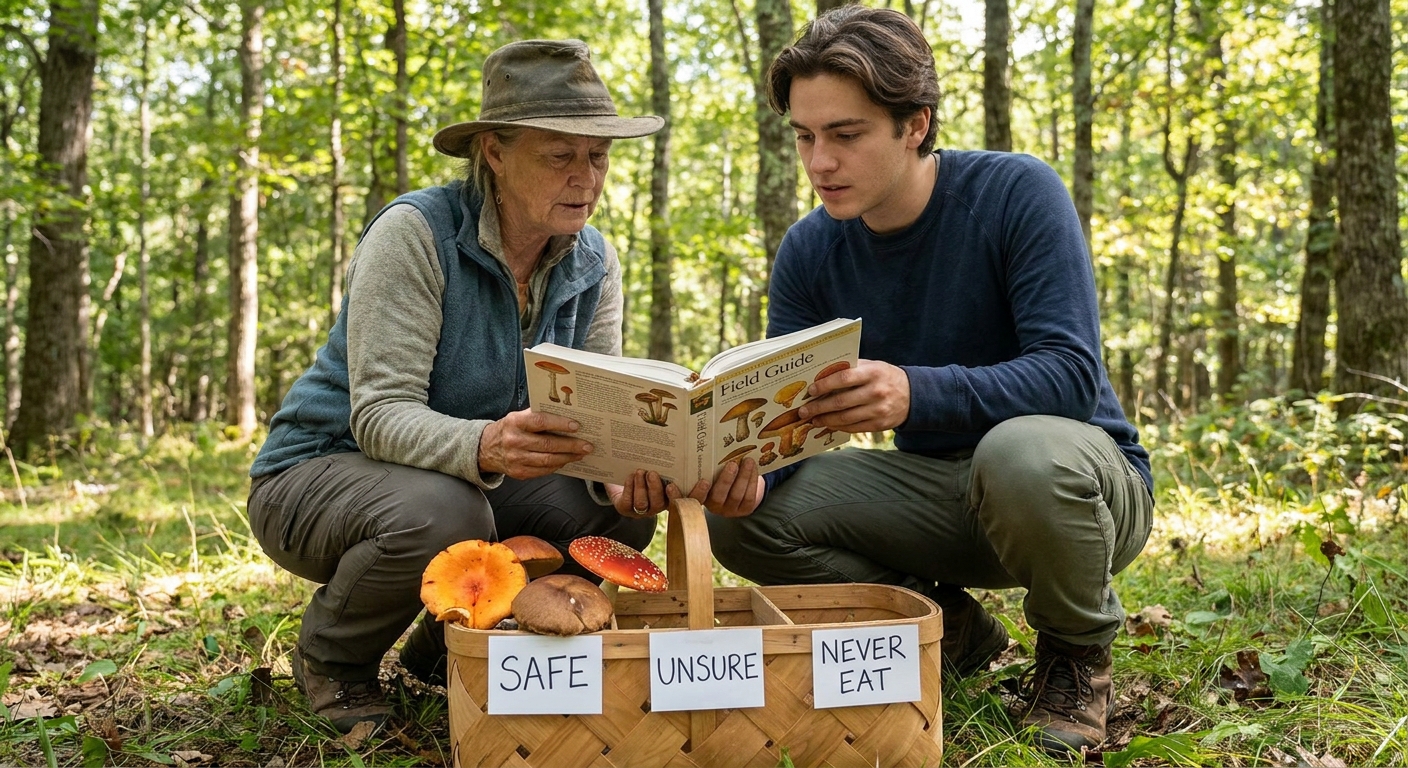
- Trusted human source: Mentor, experienced forager, extension agent, or reputable foraging course.
- Optional but useful: Herbarium specimens, local naturalist clubs, or structured online keys.
Digital apps that “identify” plants from photos should only ever be a starting point, not your final authority.
Practical habit: Before eating a new species, confirm key traits in at least two non‑app sources.
Rule 4: Match Environment to Plant Expectations
Plants grow in patterns. When you find something in the wrong habitat, pause.
Ask yourself:
- Does this species usually grow in wet or dry conditions?
- Is it known from forests, meadows, cliffs, or riverbanks?
- Is this within the documented geographic range of the species?
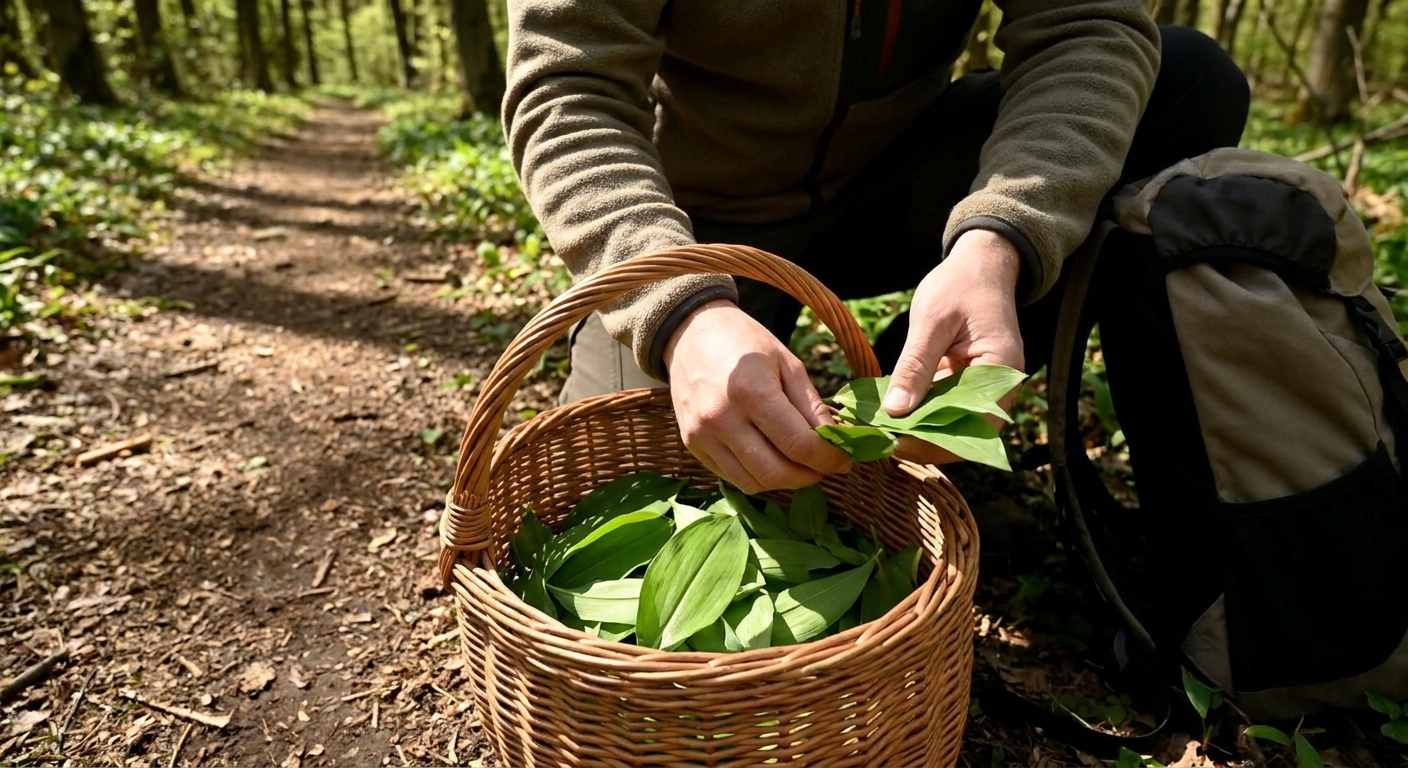
Example: Ramps / Wild Leeks (Allium tricoccum)
- True habitat: Rich deciduous forests, often on north-facing slopes.
- Red flag: A “ramp-like” plant in a dry roadside ditch should make you suspicious.
When habitat and expectation don’t align, recheck your ID.
Rule 5: Start with Gentle, Well‑Studied Species
A mentor rarely begins a student on challenging or controversial plants. Build your foundation with species that are:
- Widely documented in multiple field guides.
- Easy to identify with very few dangerous look‑alikes.
- Mild in flavor and relatively forgiving in the kitchen.
- Dandelion (Taraxacum officinale)
- Chickweed (Stellaria media)
- Lamb’s quarters (Chenopodium album)
- Nettles (Urtica dioica) – cooked
- Wild onion/garlic (Allium spp., confirmed by smell)
Good starter plants (regional variations apply):
Move to more complex species only after you’ve spent at least a season with these.
Rule 6: Use Cooking Methods That Add a Margin of Safety
Cooking does more than soften food; it can reduce harmful compounds and destroy parasites.
Prefer:
- Boiling or simmering: Great for nettles, lamb’s quarters, some roots.
- Thorough sautéing: For wild onions, garlic mustard, many greens.
- Long stewing: Useful for tough greens and some berries.
Approach Raw Uses Carefully
Raw salads and pestos have a smaller margin for error.
Better raw candidates (after solid ID):
- Young chickweed
- Wood sorrel (in small amounts)
- Violet leaves and flowers
Even then, wash thoroughly and try a small amount the first time.
Mentor’s question to ask: “Is there a safer way to prepare this?” If yes, choose it.
Rule 7: Introduce One New Species at a Time
From a safety perspective, mixed wild dishes are like mystery potions. If you react poorly, you won’t know which plant was responsible.
Safer pattern:
- When first eating a species, prepare it on its own or as the only new ingredient in a simple meal.
- Eat a modest portion.
- Wait at least several hours before consuming more.
- Mushrooms
- Strong-tasting greens (mustards, wild brassicas)
- Plants known for occasional sensitivities (yarrow, mugwort, etc.)
This is especially important with:
Rule 8: Respect Dose and Frequency
Even safe foods can cause issues if eaten to excess.
Oxalate‑Rich Plants
- Wood sorrel, lamb’s quarters, dock, some amaranths.
- Large raw amounts may aggravate kidney issues in susceptible individuals.
Strong Mustard Greens
- Garlic mustard, wild mustards, cresses.
- Overconsumption can irritate the digestive tract.
- Think of intense wild plants as condiments or side dishes, not main courses.
- Rotate your wild species; don’t eat large amounts of one plant every day for weeks.
Mentor’s guideline:
Rule 9: Build Recipes Around Confirmed Ingredients
When planning wild meals, design the dish around ingredients you know well, and add new wild components as minor accents.
Example: Safe Wild Soup Template
- Base: Cultivated potatoes, carrots, onions.
- Protein: Lentils, beans, or meat.
- Wild additions:
- 1 cup chopped, cooked nettles (well-known to you).
- Optional: a small handful of a new green, clearly identified, for testing.
If something tastes off or causes discomfort, you’ll have a smaller exposure to the new plant, and you can more easily isolate the cause.
Resist the urge to prove your skills with an “all‑foraged” meal. Proficiency shows more in restraint than in bravado.
Rule 10: Document Your Foraging and Cooking
Serious foragers keep notes. It’s not just for naturalists—it’s a safety tool.
What to Record
- Date and location (approximate) of harvest.
- Habitat: Forest, meadow, wetland, elevation if relevant.
- Plant condition: Young, flowering, seeding, insect damage.
- Preparation: Raw, blanched, sautéed, boiled, fermented.
- Reactions: Flavor impressions and any physical responses.
- You’ll remember that dandelion leaves from sunny, open fields were too bitter for salads but perfect for a slow-cooked stew.
- You’ll know that you tolerate small amounts of wood sorrel well, but large quantities upset your stomach.
Over time, this log becomes your personalized guide:
Putting the Checklist into Practice: A Sample Wild Recipe Walkthrough
Let’s run a simple nettle and potato soup through the checklist:
- Species choice: Stinging nettle—well documented, easily recognized, and already familiar.
- Family awareness: Nettle family (Urticaceae), not one of the “deadly” groups.
- ID double‑check: Opposite, serrated leaves; stinging hairs on stems and leaves; found in rich, moist soil along a known stream.
- Environment: Away from roads, not in a sprayed area, upstream of agricultural runoff.
- Preparation method: Blanched and then simmered in soup—high margin of safety.
- New species count: None; nettles already tested previously.
- Dose: Nettles as a side dish portion within a larger, potato-based soup.
- Documentation: Notes added in your journal about flavor, plant age, and quantity.
Repeat this thought process with each new plant, and your kitchen becomes a classroom as much as a place to eat.
Closing Thoughts: Skill, Not Heroics
Safe wild cooking is not about how many rare or unusual species you can put on a plate. The real skill lies in:
- Walking past plants you can’t fully identify.
- Declining to harvest from questionable habitats.
- Choosing cooking methods that build a buffer of safety.
- Listening to your body and your notes over social media bravado.
Follow these ten rules consistently, and your wild recipes will become richer not just in flavor, but in confidence—a steady, well‑earned confidence that keeps you, and anyone you feed, safely on the trail.