When you step into the woods or along a hedgerow, you’re walking into a living pantry and a chemical laboratory. Plants, fungi, and even some lichens defend themselves with toxins; our job as foragers is to know exactly what we’re dealing with before anything goes near a plate.
Why Safety Comes Before the Harvest
This guide lays out the core safety rules experienced foragers live by—principles that matter more than any single plant profile. Learn these first, and you’ll stay on the right side of safe.
Rule #1: Never Eat Anything You Can’t Positively Identify
“Positive ID” does not mean:
- “It looks like the picture I saw online.”
- “My friend said this was fine.”
- “I ate something similar once and didn’t die.”
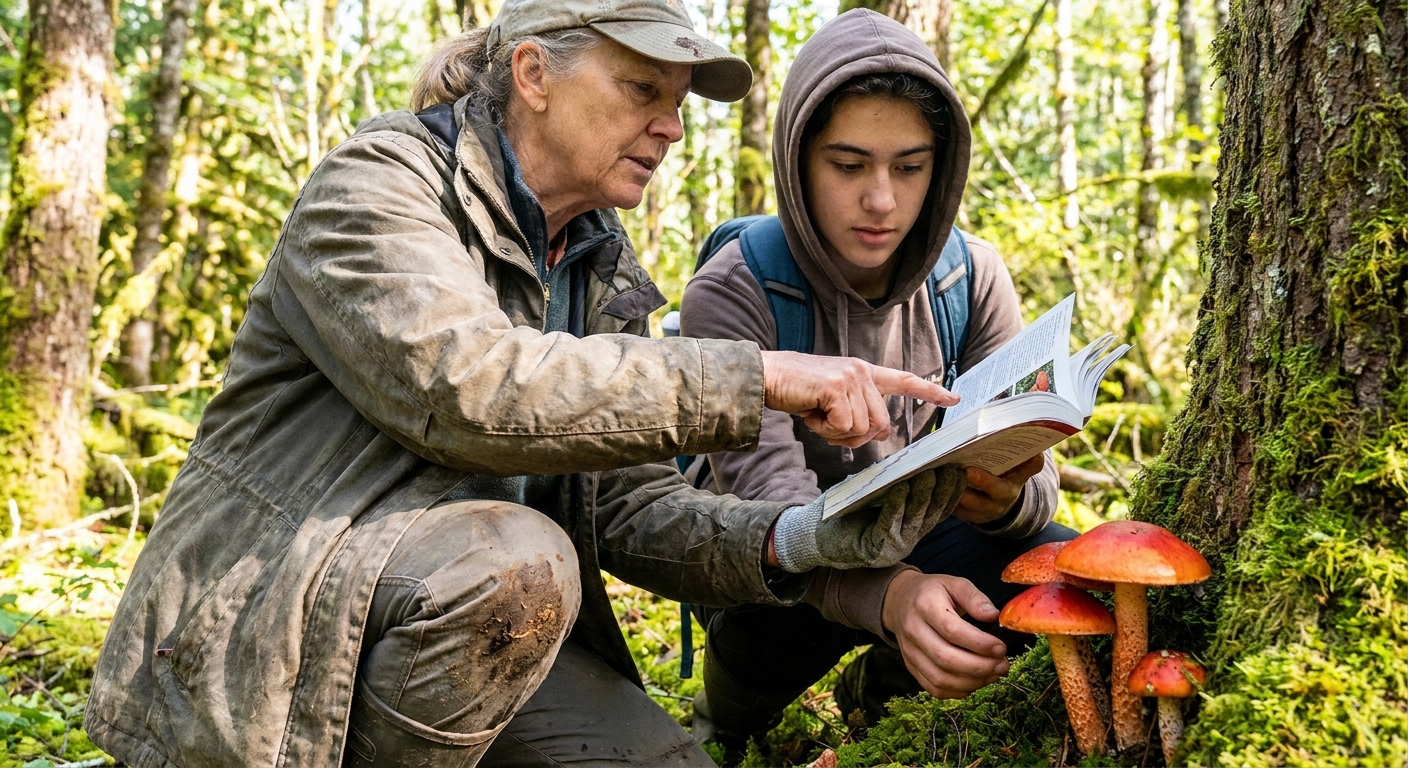
Positive identification means you can confirm multiple diagnostic features using at least two reputable sources (field guides, regional floras, mycological societies, extension services).
Use Multiple ID Features
For any species, confirm at least four to six independent traits:
- Growth habit: tree, shrub, herb, vine, rosette, cluster, etc.
- Leaves: arrangement (alternate/opposite/whorled), margin (smooth/toothed/lobed), shape, venation.
- Stems: color, hairiness, cross-section (round/square), hollow or solid, presence of milky sap.
- Flowers/fruits: color, petal count, symmetry, season, presence of an umbel, cluster, or spike.
- Smell/taste (for some species only): distinctive onion/garlic, carrot, anise, etc. Taste-testing is advanced; never use taste to identify unknown species.
- Habitat: woods vs. field, wet vs. dry, sun vs. shade, soil type.
If even one critical feature doesn’t match, assume you have something else.
Rule #2: Learn the Deadly Look-Alikes First
Every new forager wants to learn edible plants. Experienced foragers learn the killers first. By knowing dangerous look-alikes, you avoid the most serious mistakes.
Classic Example: Wild Carrot vs. Poison Hemlock
Wild Carrot (Queen Anne’s Lace – Daucus carota):
- Habitat: dry fields, roadsides, meadows; full sun.
- Leaves: delicate, carrot-like, finely divided.
- Stem: green, may be slightly hairy; generally not smooth and purple-spotted.
- Flower: flat-topped white umbel, often with a single dark purple flower in center.
- Smell: crushed root smells distinctly like carrot.
Poison Hemlock (Conium maculatum):
- Habitat: moist ditches, stream banks, disturbed soils.
- Leaves: also finely divided and fern-like.
- Stem: smooth, hollow, with purple blotches (ink-splash markings).
- Flower: white umbels, but usually no single dark central flower.
- Smell: unpleasant, musty “mousy” odor.
Safety habit: If you’re not 100% certain it’s wild carrot, do not touch the roots. Hemlock can be deadly even in small amounts.
Other High-Risk Confusions to Study
- Wild Garlic/Onion vs. Death Camas:
- True alliums (wild garlic/onion) always smell strongly of onion/garlic when crushed.
- Death camas has grass-like leaves and no onion smell; ingestion can be fatal.
- Wild Parsnip vs. Cow Parsnip vs. Giant Hogweed:
- All can cause severe skin burns when sap + sunlight combine.
- Learn their height, leaf shape, and stem markings before touching.
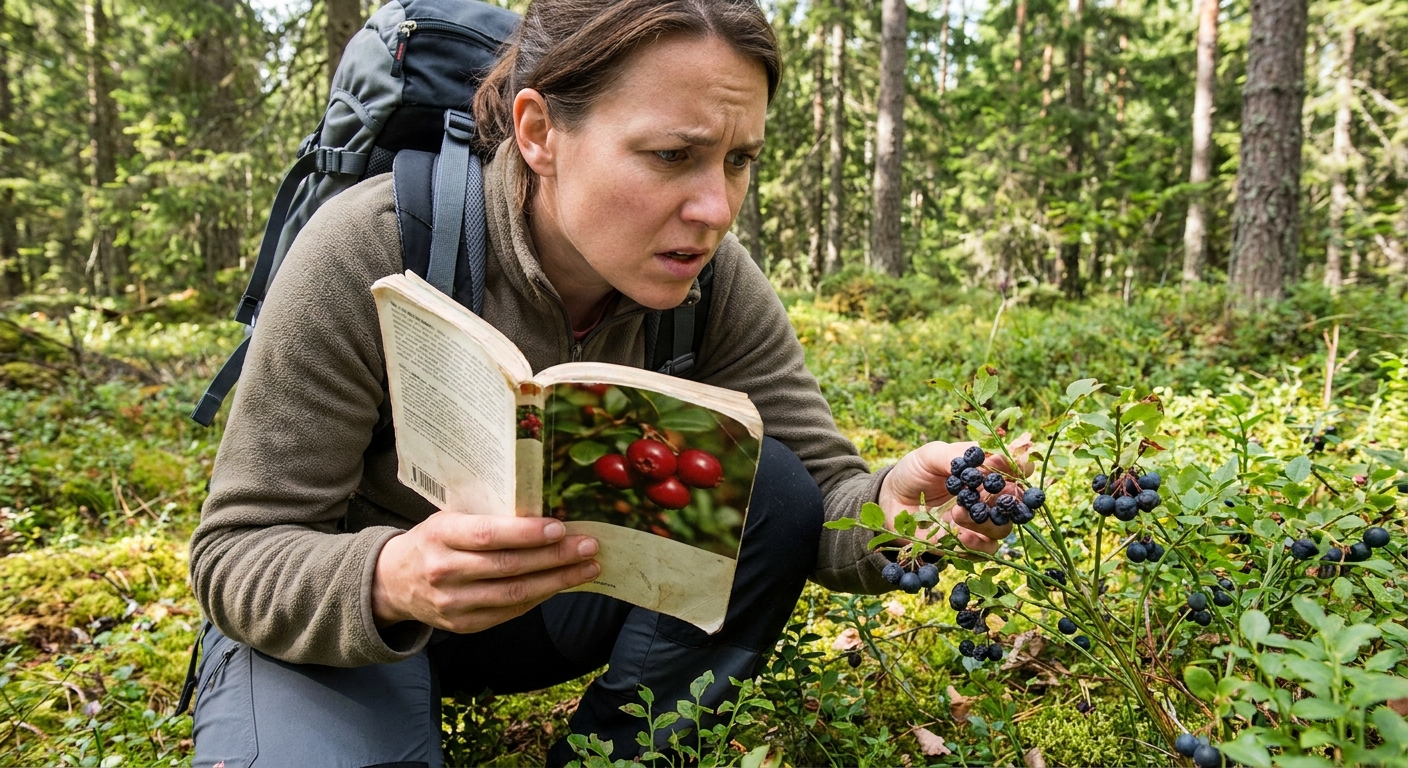
- Edible Berries vs. Poisonous Berries:
- Don’t assume red, black, or blue berries are safe by color.
- Learn baneberry, daphne, and pokeweed if they’re in your region.
Make a separate page in your forage journal titled “Plants that can kill me here” and learn those first.
Rule #3: Respect Seasonal and Life-Stage Changes
Plants can look incredibly different depending on the time of year and their growth stage.
Spring Rosettes vs. Summer Stalks
Many plants start as a low rosette of leaves in spring, then bolt into a tall stem.
- Dandelion: spring rosette of toothed leaves; later sends up hollow flower stalks.
- Chicory: similar rosette; later, stiff branching stems with blue flowers.
- Wild Carrot & Hemlock: both form rosettes; confusion is easier before flowering.
If you’ve only learned a plant’s flowering form, be extremely cautious identifying it in its rosette form.
Toxicity Can Change with Season
- Some plants accumulate higher toxin levels in certain seasons or under stress (drought, frost, damage).
- Mushrooms often have brief, characteristic seasons that help rule out look-alikes.
Use season as a supporting ID clue, never your only one.
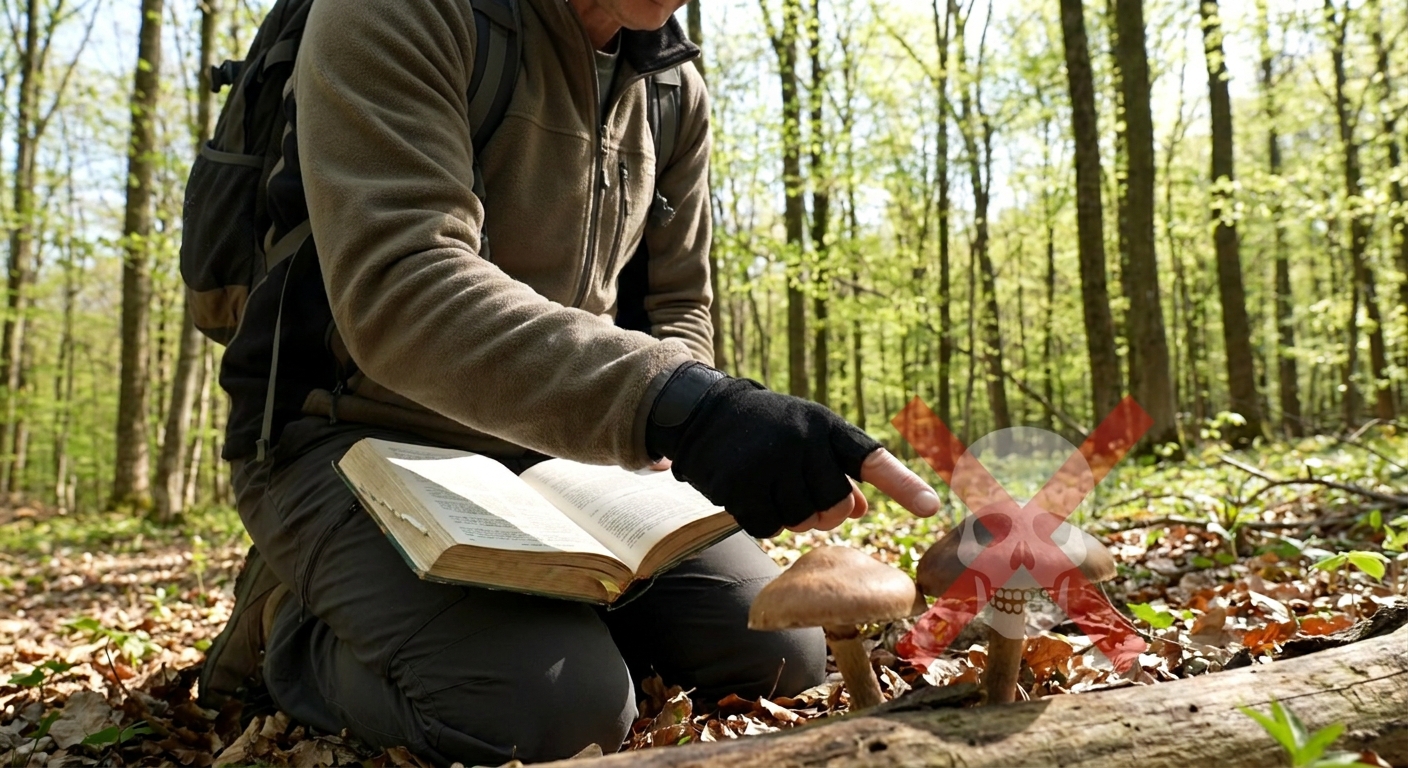
Rule #4: Treat Mushrooms as Advanced Foraging
If you’re new, treat all mushrooms as off-limits until you’ve done serious study.
Key principles:
- Never eat a white-gilled mushroom without expert-level knowledge; deadly Amanita species often have white gills, a ring, and a volva at the base.
- Always check for:
- Gills vs. pores vs. spines
- Spore print color
- Presence of volva (sac at base), ring, scales
- Tree association: some mushrooms only grow with specific trees.
- Join a mycological society and go on guided walks before collecting on your own.
A single misidentified mushroom can cause organ failure or death.
Rule #5: Avoid Contaminated Habitats
Even perfectly edible species are unsafe if they grow in polluted areas.
Places to Avoid
- Roadsides with heavy traffic (lead, cadmium, hydrocarbons).
- Industrial zones, railways, and old dump sites.
- Lawns or parks likely treated with herbicides, pesticides, or fertilizers.
- Downstream or downwind of factories or mining operations.
Safer Habitat Choices
- Deep forest edges away from roads.
- Private land with known land-use history.
- Organic farms (with permission) and unsprayed orchards.
- Clean river valleys, meadows, and upland woods.
When in doubt about pollution, don’t harvest.
Rule #6: Don’t Trust Folk “Safety Tests”
Experienced foragers never use myths as shortcuts:
- “If animals eat it, it’s safe for humans.” → False.
- “If it tastes good, it’s edible.” → False; many toxins are bitter or tasteless.
- “Boiling removes all toxins.” → False; some toxins are heat-stable.
- “Silver spoon/test will turn black near poison.” → Pure myth.
There are no universal tests for edibility. The only safety test is correct species identification plus correct preparation from trusted sources.
Rule #7: Start with Easy, Distinctive Species
Build your confidence on species that have:
- Very distinctive features.
- Few serious look-alikes.
- Wide, clear documentation.
Examples (verify regionally):
- *Dandelion (Taraxacum officinale):
- Basal rosette of deeply toothed leaves.
- Hollow, leafless flower stalk with a single yellow composite flower.
- White milky sap; seed heads form round "clocks" of parachute seeds.
- Blackberry / Raspberry (Rubus spp.):
- Thorny canes, compound leaves, white/pink 5-petaled flowers.
- Aggregate berries turning from green → red → black (blackberry) or red/purple (raspberry).
- Few dangerous look-alikes once fruiting, but beware of sprayed hedgerows.
- Wild Blueberries (Vaccinium spp.) in suitable regions:
- Low shrubs with urn-shaped flowers; berries with crown-like blossom end.
- Must be distinguished from toxic berries—use local guides.
Work with one or two species per season until you’re fully confident.
Rule #8: Go Slow With New Foods
Even safe species can cause issues:
- Allergies or intolerances.
- Digestive upset from overconsumption.
- Reactions with medications.
When trying something for the first time:
- Eat only a small amount (a teaspoon or single leaf).
- Wait 24 hours to see how your body reacts.
- Avoid combining many new wild foods at once.
This is especially important with strongly flavoured greens (e.g., wild mustard family) and species with known digestive effects (e.g., certain wild roots).
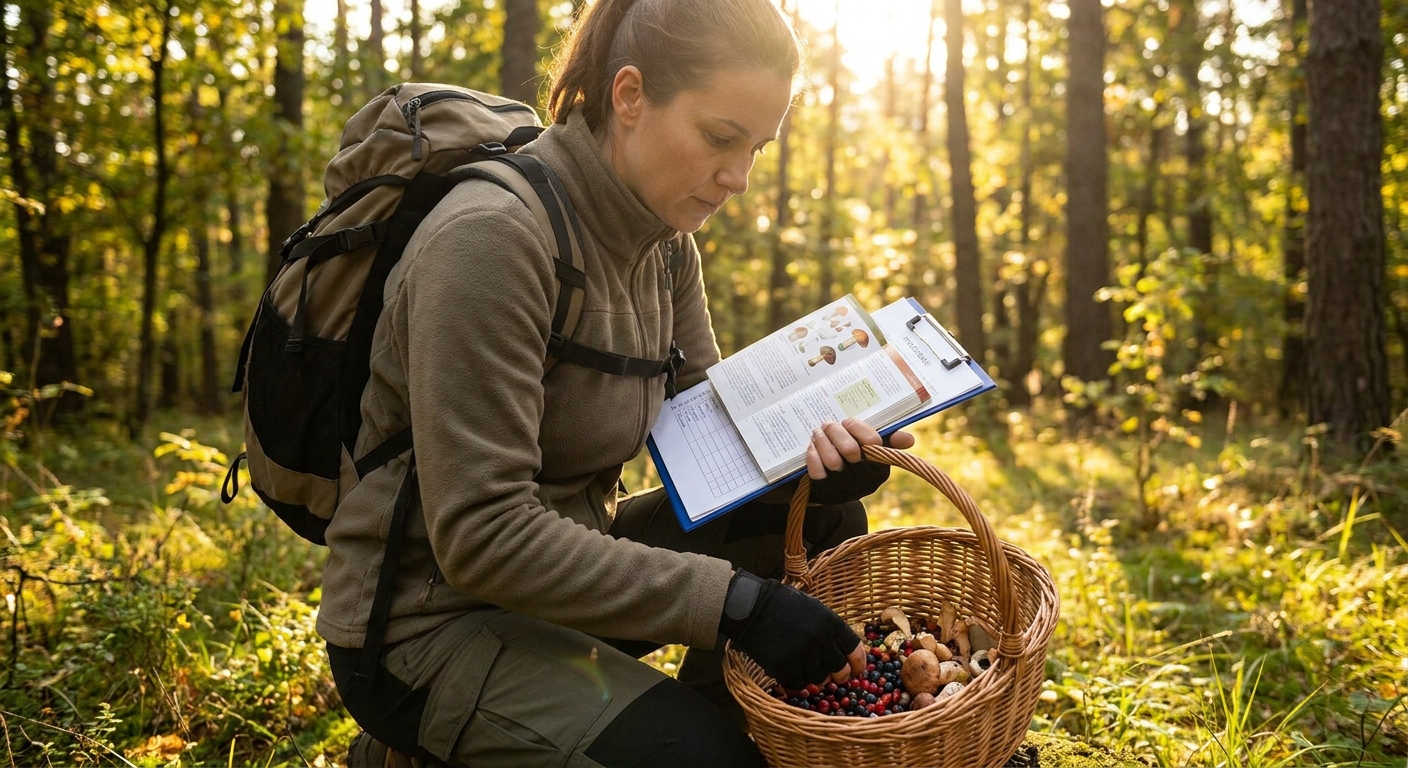
Rule #9: Keep a Foraging Record
Maintain a simple field notebook or app log:
- Date and location (GPS if possible).
- Habitat description (forest type, moisture, elevation).
- Plant description (height, leaf details, flowers, fruits, smell).
- Photos from multiple angles, including base of plant and surrounding area.
This habit trains your observational skills and makes it easier to get help with identification from experienced foragers or local experts.
Rule #10: When in Doubt, Leave It Out
The most important safety tool you have is your ability to walk away.
If any of the following apply:
- You’re rushing or feeling pressured.
- Your ID relies on one feature only.
- You’re mixing up similar species in your head.
- You feel a twinge of uncertainty.
…leave the plant or mushroom where it is. Take photos, make notes, and research later. The forest will still be there next season.
Building a Lifetime of Safe Foraging
Safe foraging isn’t about memorizing a long list of edibles. It’s about:
- Developing careful, methodical observation habits.
- Respecting toxic species as much as edible ones.
- Choosing clean habitats and right seasons.
- Learning from local experts and field guides*.
Treat these golden rules as non-negotiable. With time, patience, and humility, you’ll build a deep, safe relationship with your local landscapes—and your wild meals will taste all the better for it.