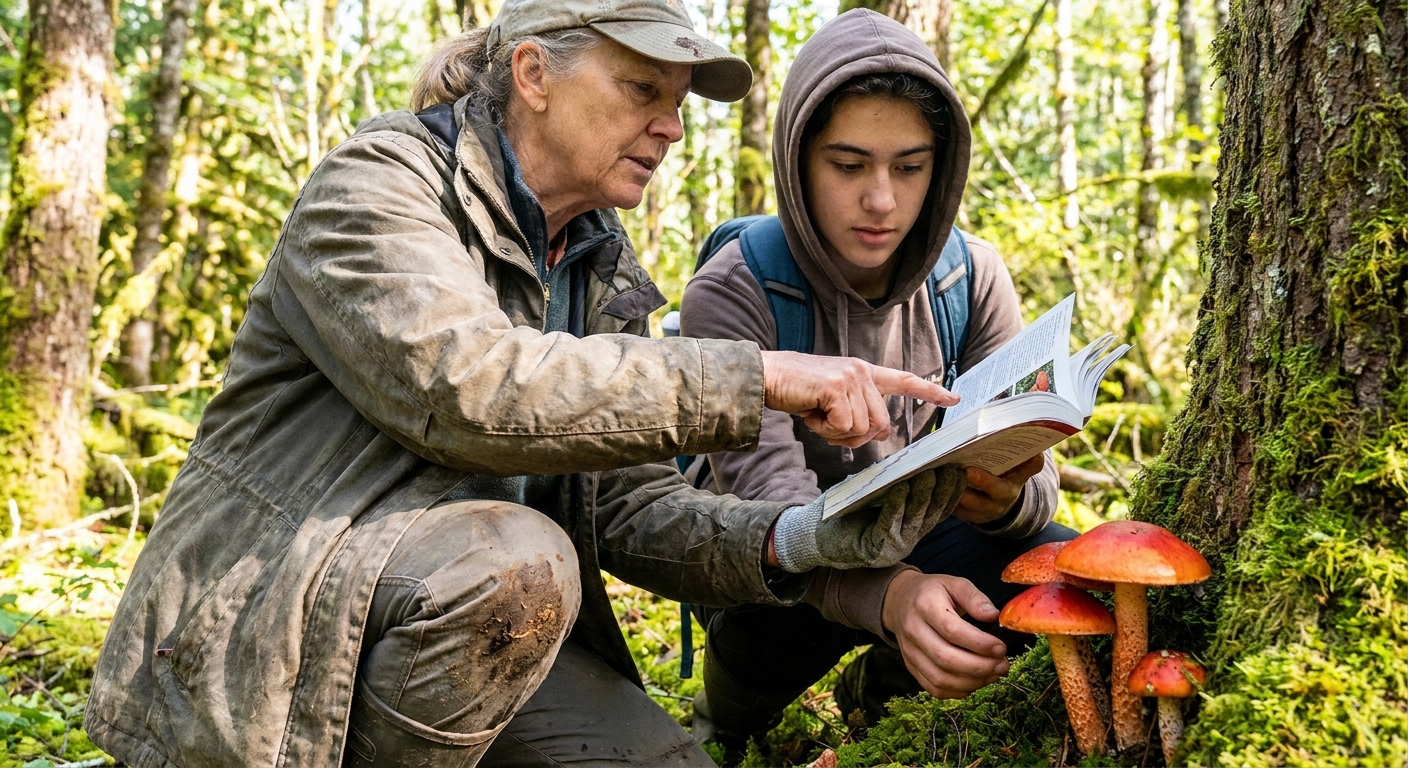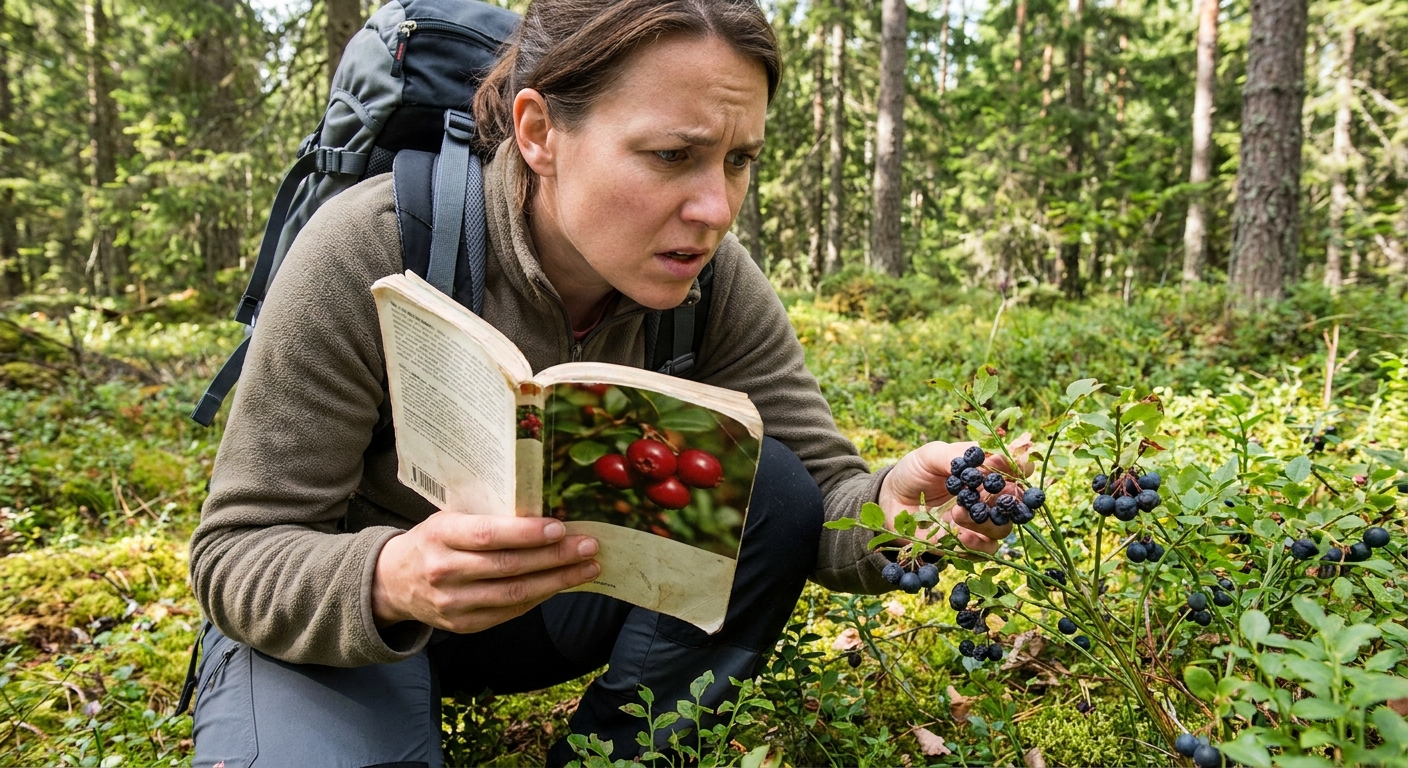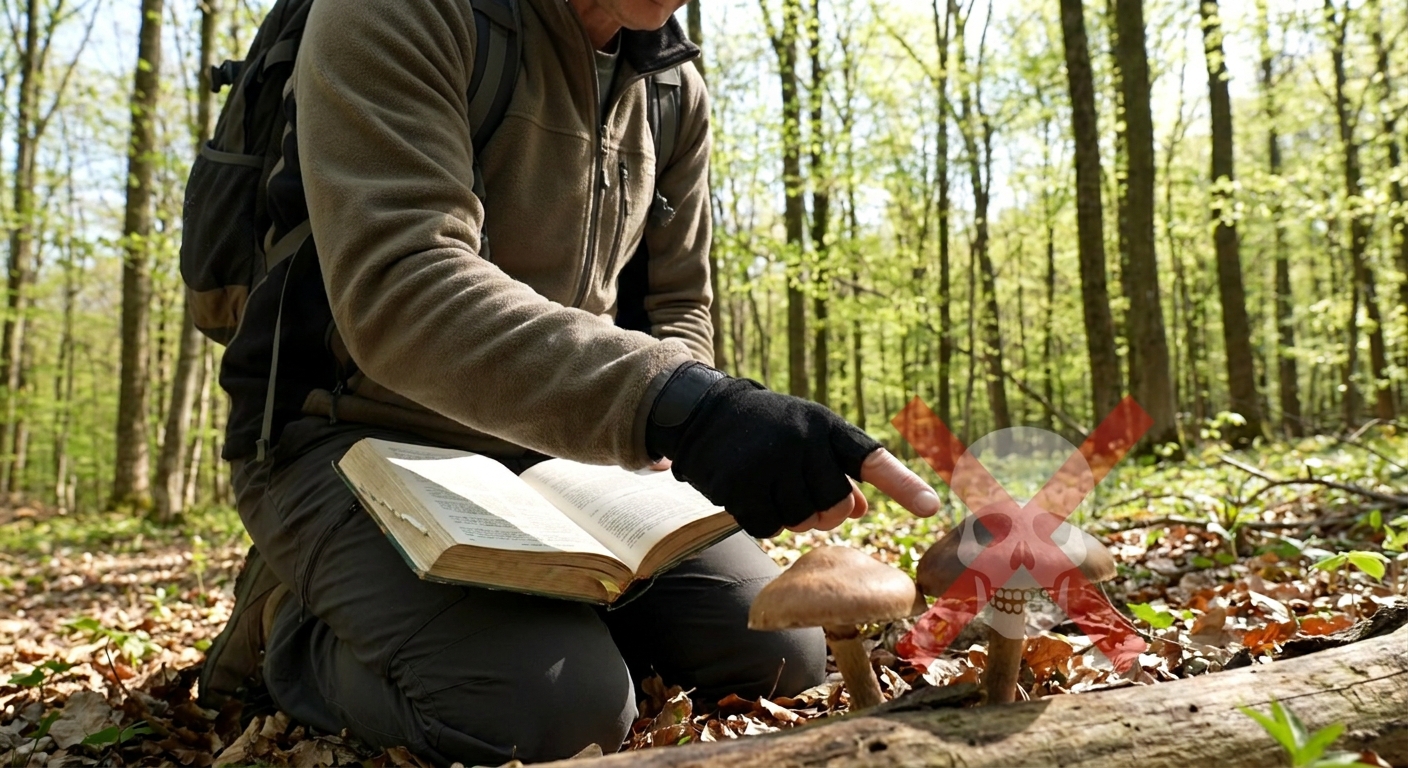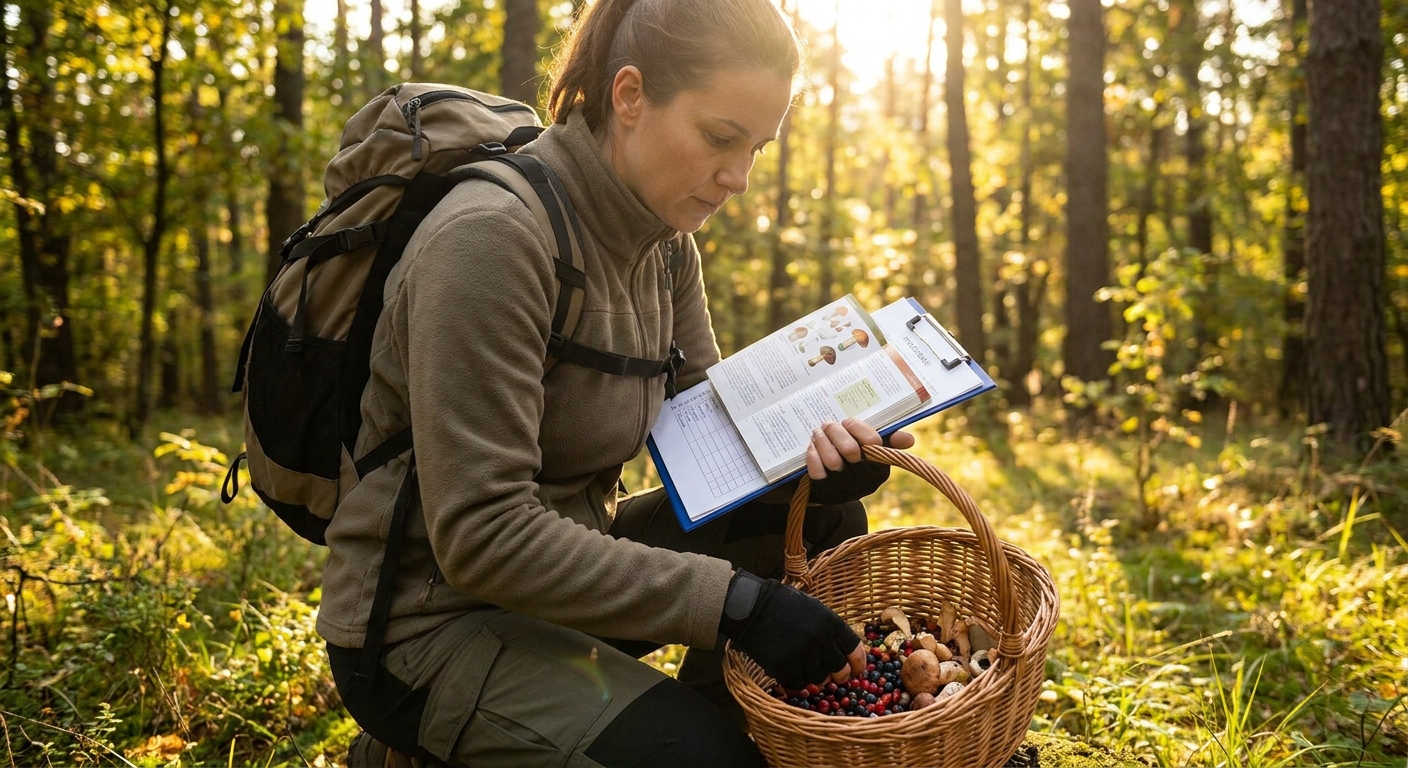
Safe foraging isn’t about having a “good feeling” about a plant. It’s about following a repeatable process every time, from spotting something interesting to plating it for dinner. This step-by-step checklist walks you through each decision point, so your enthusiasm never outruns your caution.
A System, Not a Guess: Why You Need a Checklist
You can copy this into your field notebook or phone and treat it as your standard operating procedure.
Step 1: Location Safety – Is This a Clean Habitat?
Before you look at a single leaf, evaluate the site.
1.1 Check for Pollution Sources
Avoid harvesting within at least:
- 50–100 m (150–300 ft) of busy roads and highways.
- Railways, industrial sites, old dumps, and mine tailings.
- Golf courses, manicured parks, and ornamental beds likely sprayed with chemicals.
Ask yourself:
- Do I see spray markers, dead uniform grass, or warning signs?
- Is the soil discolored or smelling of fuel, solvents, or chemicals?
If the habitat is questionable, stop here. There is no preparation method that reliably removes heavy metals or persistent pollutants.
1.2 Consider Ecological Impact
- Is this a protected area with rules about plant removal?
- Is the species rare, threatened, or culturally significant?
- Is this the only small patch you see?
Ethical foraging is part of safety—damaging fragile ecosystems can have long-term consequences.
Step 2: Plant or Fungus ID – What Exactly Is This?
Now you can pay attention to the organism itself.
2.1 Gather Observations Before Naming
Without trying to guess, record:
- Growth form (tree, shrub, vine, herb, rosette, cluster, mushroom type).
- Leaf characteristics:
- Arrangement (alternate, opposite, whorled).
- Shape, margin (smooth, toothed, lobed), venation.
- Stems:
- Color, thickness, hairiness, hollow or solid.
- Presence of milky or clear sap if broken.
- Flowers or fruits (if present):
- Color, petal number, shape, structure (umbel, spike, panicle, solitary).
- Habitat:
- Moist/dry, sun/shade, soil type, nearby species.
- Season and life stage.
Take clear photos: whole plant, leaves close-up, stem, base, and surroundings.
2.2 Use Reputable Identification Sources
Consult at least two of the following:
- Regional field guides (preferably written by botanists or experienced foragers).
- University extension publications.
- Local flora apps that allow you to cross-check with more authoritative texts.
- Local plant or mycology groups.
Confirm the Latin name—common names can refer to multiple species.
2.3 Confirm Key Diagnostic Traits
For a positive ID, you should be able to match several independent features:
- Leaf arrangement
- Stem type and surface
- Flower/fruit structure
- Habitat and season
- Any unique traits (e.g., garlic smell, milky sap, square mint stems)
If one important feature does not match, treat your ID as uncertain.
Step 3: Check for Toxic Look-Alikes
Once you think you know what it is, ask: “What else looks like this?”
3.1 Research Dangerous Confusions
Look up “look-alikes” or “similar species” for your target plant or mushroom. For example:
- Wild Garlic/Onion → learn Death Camas and other lilies with no onion smell.
- Wild Carrot → learn Poison Hemlock and Water Hemlock.
- Berries (black, blue, red) → learn regional poisonous shrubs and vines.
3.2 Compare Trait-by-Trait
For each look-alike, create a quick table in your notes:
- Shared traits (e.g., both have white umbels).
- Distinguishing traits (e.g., stem hairiness, presence of purple blotches, smell).
Do you see any hint of a dangerous species’ traits? If yes, don’t harvest.
3.3 If You Can’t Name the Poisonous Alternatives
If you don’t know which toxic species you should be ruling out, you’re not ready to eat that plant.
No ID is complete until you know both:
- What it is.
- What it could be mistaken for.
Step 4: Confirm Edibility and Edible Parts
Even if the species is correctly identified, not all parts may be edible.
4.1 Verify Edible Status in Multiple Sources
Cross-check that your species is listed as edible (not just “medicinal” or “used traditionally”) in:
- At least one botanical or foraging reference.
- A second independent source.
4.2 Determine Which Parts and When
Clarify:
- Which parts are edible? (leaves, young shoots, flowers, fruits, seeds, roots).
- At what life stage or season are they safe or palatable?
- Are any parts toxic or unsuitable (e.g., elderberry leaves and stems, cherry pits, yew arils vs. seeds)?
4.3 Learn Required Processing
Many wild foods are only safe or pleasant to eat after specific preparation:
- Leaching: e.g., acorns to remove tannins.
- Boiling & discarding water: some greens high in oxalates or mild irritants.
- Thorough cooking: elderberries, certain mushrooms.
If prep instructions differ between sources, default to the more conservative method.
Step 5: Harvesting Safely and Respectfully
Once you’re confident about identity and edibility:
5.1 Inspect the Individual Plant or Patch
- Look for disease signs: mold, unusual spots, deformities.
- Avoid plants that are heavily insect-damaged or covered in sooty mold.
- Skip individuals that look chemically burned or off-color.
5.2 Follow Sustainable Harvesting Rules
- Take no more than 10–30% of a patch, depending on its size and species.
- For perennials, favor leaf and fruit harvests over pulling whole plants.
- Leave the healthiest, most vigorous plants to reproduce.
5.3 Use Clean Tools and Containers
- Carry a dedicated foraging knife and pruning shears.
- Use breathable bags or baskets; plastic can cause greens to sweat and spoil.
- Keep different species separate to avoid confusion later.
Step 6: Home Verification Before Preparation
Don’t relax your standards once you leave the field.
6.1 Re-Check Your Harvest
Lay everything out:
- Sort species into separate piles.
- Remove any plant that looks different from the rest of its group.
- Cross-check your field notes and photos with guides again.
If anything causes doubt, compost it. Your bin is safer than your stomach.
6.2 Clean Thoroughly
- Rinse in cool running water to remove dirt, insects, and surface contaminants.
- For roots, scrub with a brush to clean crevices.
- For mushrooms, use a soft brush or damp cloth; avoid soaking species that absorb water easily.
Step 7: First-Time Tasting Protocol
Even known edible species can cause issues for some people.
7.1 Start Small
For the first time you eat a wild species:
- Consume only a small portion (one or two leaves, a spoonful, or a single small piece).
- Prepare it simply so you can distinguish its effects from other foods.
7.2 Monitor Your Body
Pay attention for 24 hours to signs of:
- Digestive upset (nausea, cramps, diarrhea).
- Skin or mouth irritation.
- Headache, dizziness, or unusual sensations.
If any symptoms appear, don’t eat that species again until you’ve sought professional advice.
7.3 Avoid Multiple New Foods at Once
Trying five new wild plants in a single meal makes it impossible to know what caused a reaction. Introduce one new species at a time.
Step 8: Record and Reflect
Turn each foraging trip into a lesson.
8.1 Maintain a Foraging Log
For each species, note:
- Date and exact location (GPS if possible).
- Habitat description.
- Plant/fungus description and photos.
- Preparation method.
- Any bodily reactions or taste notes.
8.2 Review Your Mistakes Safely
If you had to discard a harvest due to uncertainty, write down why:
- Misread a feature?
- Forgot to check look-alikes?
- Rushed in fading light?
This reflection builds habits that prevent repeat errors.
Quick Reference: The 10-Point Wild Food Safety Checklist
- Clean Site? No obvious pollution or spray risk.
- Legal & Ethical? Harvesting allowed; species not rare.
- Full Description Noted? Leaves, stems, flowers/fruit, habitat, season.
- Two Reliable Sources Agree? Latin name and ID features match.
- Look-Alikes Ruled Out? Especially deadly or toxic species.
- Edible Parts Confirmed? And at correct life stage/season.
- Processing Understood? Cooking/leaching/peeling as needed.
- Sustainable Harvest? Minimal impact on plant and ecosystem.
- Home Re-Check? Sort, discard odd individuals, rinse well.
- Test Portion Only? One new species at a time, watch for reactions.
Print this list. Keep it where you keep your knife. Over time, it will become automatic—but it’s worth revisiting often.
Final Word: Discipline Keeps You on the Trail
Every experienced forager has stories of what they chose not to eat. That restraint, guided by a clear process, is what keeps them foraging year after year.
Use this checklist as your mentor-in-your-pocket. Adjust it to your region, add the species you meet, and keep it honest. The wild pantry is generous, and there is no prize for being the boldest eater—only for being the one who comes home safely, again and again.