Wild foods don’t appear all at once; they move in waves. Learning to cook with those seasonal waves is one of the safest ways to organize your foraging. You’ll know what to expect, when to look, and which plants are usually at their best (and safest) at a given time.
Cooking with the Seasons: The Safest Way to Forage
This roadmap walks through the four seasons with practical recipe ideas, ID notes, and safety considerations for each.
Spring: Tender Greens and Early Aromatics
Spring is when many foragers start their year. The focus is on young greens and early shoots.
1. Nettles (Urtica dioica) – Spring Soup & Fritters
Identification
- Leaves: Opposite, pointed, serrated; deep green.
- Stems: Square, covered in stinging hairs.
- Growth: Dense patches in rich, moist soil—streambanks, old farmyards, woodland edges.
Season: Early to mid‑spring, when plants are under about 30 cm (12 in) tall.
Look‑Alikes:
- Dead-nettles (Lamium spp.): Also have serrated leaves but do not sting and often have purple flowers and a minty odor.
Safety tip: Harvest with gloves and long sleeves. Avoid older nettles, which can develop gritty particles and stronger fibers.
Spring Recipe: Nettle and Potato Soup
- Wearing gloves, pinch off the tender top 4–6 inches of nettles.
- Rinse thoroughly.
- Sauté onion and garlic in butter or oil.
- Add cubed potatoes, cover with broth, and simmer until tender.
- Stir in chopped nettles and cook 10–15 minutes.
- Blend if desired; season with salt, pepper, and a squeeze of lemon.
Cooking neutralizes the sting completely.
2. Chickweed (Stellaria media) – Fresh Spring Salad
Identification
- Leaves: Opposite, egg-shaped, small; lower leaves with tiny stalks, upper nearly stalkless.
- Stems: Slender, weak, with a single line of hairs running lengthwise.
- Flowers: Tiny white stars with 5 deeply divided petals (look like 10).
Habitat: Moist garden beds, shaded lawns, cool disturbed soils.
Season: Typically early spring and fall.
Look‑Alikes & Warnings:
- Mouse-ear chickweed (Cerastium spp.): Hairier and tougher; generally edible but less palatable.
- Avoid spurges (Euphorbia spp.), which have milky sap and can irritate skin and gut.
Spring Recipe: Chickweed & Egg Salad
- Harvest bright green tops before flowering heavily.
- Rinse gently and spin dry.
- Chop and mix with sliced hard‑boiled eggs, a little mustard, oil, and salt.
- Serve on bread, crackers, or in wraps.
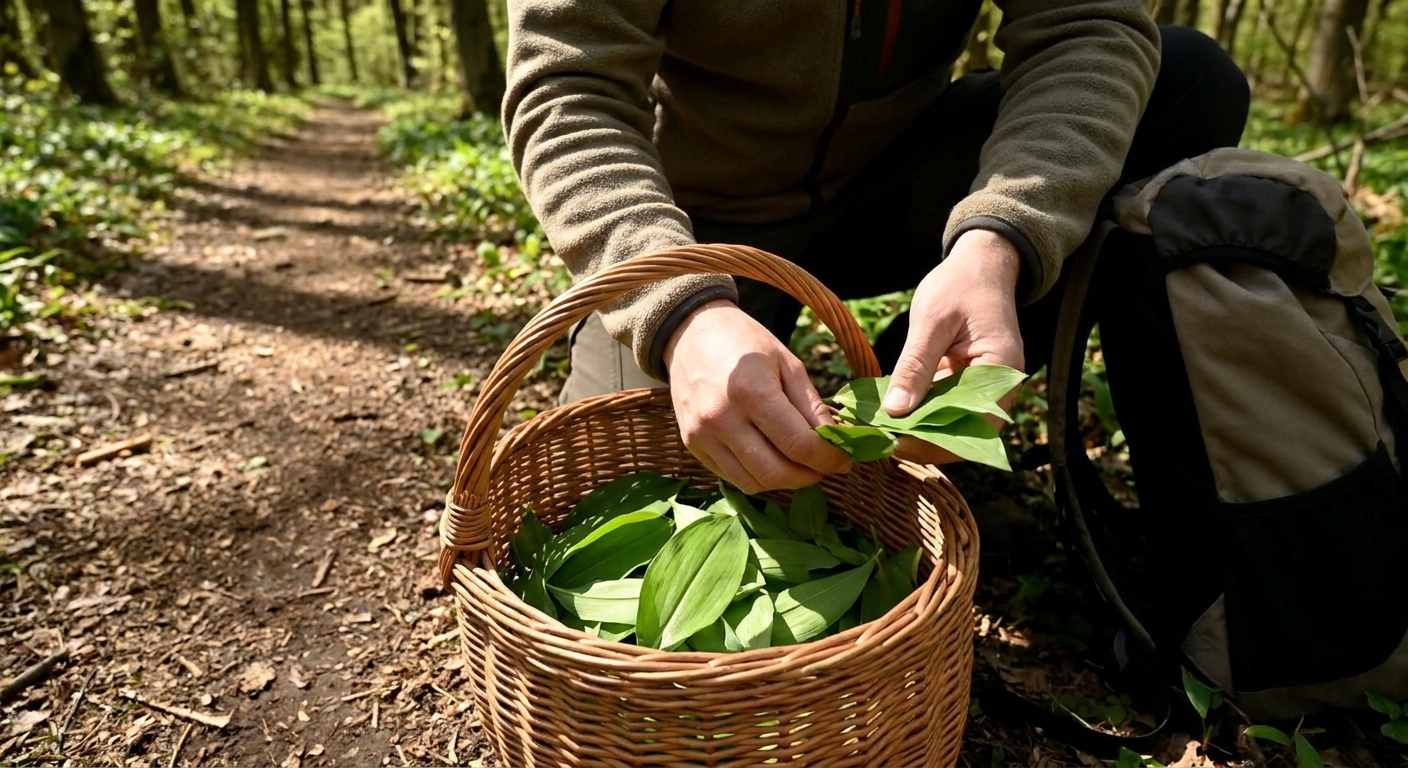
3. Ramps / Wild Leeks (Allium tricoccum) – Regional, Handle with Care
Identification
- Leaves: 1–3 broad, smooth, bright green leaves per bulb.
- Smell: Strong onion/garlic aroma when crushed.
- Flowers: White, spherical umbels that appear after leaves die back.
Habitat: Rich, moist deciduous forests, often on slopes.
Season: Early to mid‑spring, depending on region.
Sustainability Warning: Ramps have been seriously overharvested in many areas.
Harvest rule: If ramps are legal and abundant in your region, take only a single leaf from scattered plants rather than digging bulbs.
Spring Recipe: Ramp Leaf Compound Butter
- Finely chop a small handful of ramp leaves.
- Mix into softened butter with salt and pepper.
- Form into a log, wrap, and chill.
- Use sparingly on potatoes, eggs, or fish.
Summer: Berries, Flowers, and Robust Greens
Summer brings fruit and flowers, but also heat‑stressed, bitter greens. Choose carefully.
4. Elderflowers (Sambucus nigra & relatives) – Fritters and Cordials
Identification
- Leaves: Opposite, pinnate (leaflets along a midrib); typically 5–7 serrated leaflets.
- Flowers: Flat clusters (umbels) of many tiny cream‑white flowers.
- Shrub/small tree: Multiple stems, often in moist ditches or along streams.
Habitat: Streambanks, field edges, moist hedgerows.
Season: Late spring to early summer, depending on climate.
Look‑Alikes:
- Dwarf elder (Sambucus ebulus) in some regions; similar but smaller and herbaceous.
- Poison hemlock (Conium maculatum) has white umbel flowers but finely divided leaves and purple‑blotched stems and no berry clusters like elder.
Do not confuse elderflower shrubs with carrot‑family herbs. Check leaves and woody growth.
Summer Recipe: Elderflower Fritters
- Collect fresh flower clusters free of insects.
- Shake gently to remove debris; do not wash heavily or you’ll lose aroma.
- Make a light batter (flour, water or milk, pinch of salt, optional egg).
- Dip clusters by the stem and fry in shallow oil until golden.
- Dust with sugar or serve savory with salt.
Use moderation; fried foods and new plants together can challenge digestion.
5. Blackberries and Raspberries (Rubus spp.) – Trail Crumble
Identification
- Canes: Woody, often arching, with thorns.
- Leaves: Compound, usually 3–5 leaflets with serrated edges.
- Flowers: White to pink 5‑petaled blooms.
- Fruits: Aggregates of drupelets; blackberries turn black when ripe, raspberries red or black.
Habitat: Field edges, clearings, disturbed thickets.
Season: Mid‑ to late summer.
Look‑Alikes:
- Most Rubus species are edible, though some are very seedy or tart.
- Avoid unknown shrubs with single large berries or unusual colors.
Summer Recipe: Skillet Berry Crumble (Camp Version)
- Grease a pan or small skillet.
- Add a layer of cleaned, ripe berries.
- Mix oats, flour, sugar, and fat into coarse crumbs.
- Sprinkle over berries and cover.
- Cook over low heat or coals until berries bubble and topping firms.
6. Wild Greens in Summer – Know When to Stop
By mid‑summer, many spring greens become too bitter or tough.
General Tip:
- Switch to cooked dishes where bitterness can be balanced with fat, acid, and time: stews, sautés, and curries.
- Reduce reliance on raw salads, especially with dandelion, garlic mustard, and older lamb’s quarters.
Fall: Nuts, Roots, and Late Berries
Fall is rich but demands more processing and more precise ID.
7. Acorns (Quercus spp.) – Flour and Thickener
Identification
- Trees: Oaks have distinctive lobed or toothed leaves, depending on species.
- Acorns: Nut enclosed partially in a cap; shape and size vary.
Habitat: Forests, parks, ridges.
Season: Fall; nuts drop when mature.
Tannin Warning: Raw acorns are extremely bitter; tannins can irritate the gut.
Basic Leaching Process:
- Shell acorns and remove dark or damaged nuts.
- Grind coarsely.
- Soak in multiple changes of cold water (or simmer, then change water) until bitterness is greatly reduced.
- Dry and grind into flour.
Fall Recipe: Acorn Thickened Stew
- Prepare stew with familiar vegetables and meats.
- In the last 20 minutes, stir in 1–2 tbsp of leached acorn flour.
- Simmer to thicken; avoid large first-time portions.
8. Burdock Root (Arctium lappa & A. minus) – For Experienced Foragers
Identification
- Leaves: Large, heart‑shaped, wavy, somewhat woolly underneath.
- Flowers: Purple thistle‑like heads that form hooked burrs.
- Roots: Long, pale, and slender in first‑year plants.
Habitat: Disturbed soils, field edges, vacant lots.
Season: Best harvested in fall of the first year before flowering stems appear.
Look‑Alikes:
- Other thistles and composites; some safe, some not well studied.
Burdock is more advanced—work with a mentor if you’re new to it.
Fall Recipe: Burdock Stir‑Fry (Gobo Style)
- Dig first‑year roots; scrub well and peel.
- Cut into matchsticks and soak briefly in water with a splash of vinegar.
- Stir‑fry with oil, garlic, and soy sauce until tender.
9. Late Berries – Rose Hips (Rosa spp.)
Identification
- Shrubs: Prickly stems; classic rose leaves and flowers earlier in the year.
- Hips: Round or oval fleshy fruits that ripen from green to orange/red.
Habitat: Hedges, field edges, coasts, roadsides (avoid polluted areas).
Season: Late fall, often after frost.
Inner Hairs: The seeds and inner hairs can irritate the throat and digestive tract.
Use Safely:
- Simmer whole hips in water.
- Strain through fine mesh or cloth to remove seeds and hairs.
Fall Recipe: Rose Hip Tea Base
- Simmer cleaned hips in water for 20–30 minutes.
- Strain thoroughly.
- Sweeten lightly; use as a vitamin‑rich tea or soup base.
Winter: Stored Forage and Evergreen Flavors
Winter is less about fresh gathering and more about using what you dried, froze, or processed earlier.
10. Evergreen Needles – Caution and Comfort
Pine, Spruce, and Fir Tips can all be used to add citrus-like notes to teas and broths, but correct ID is crucial.
Safer Genera (in many regions):
- Pines (Pinus spp.) – Needles in bundles.
- Spruce (Picea spp.) – Short, stiff, square needles that roll between fingers.
- True firs (Abies spp.) – Flat needles that do not roll, often with pleasant aroma.
- Yew (Taxus spp.): Flat needles, red berry‑like arils; highly toxic.
Dangerous Confusion:
If you see red “berries” on an evergreen shrub/tree, do not use it for tea.
Winter Recipe: Pine Needle Tea (Aromatic, Not a Meal)
- Confirm a true pine species (bundled needles, characteristic cones).
- Rinse handful of needles, chop lightly.
- Steep in just‑below‑boiling water for 10–15 minutes.
- Strain and sweeten if desired.
Avoid for pregnant individuals and those with certain health conditions; check with a healthcare provider if unsure.
11. Using Your Pantry: Dried Mushrooms and Greens
If you’ve dried mushrooms or greens earlier in the year:
- Rehydrate mushrooms in warm water; strain to remove grit.
- Add to winter stews and soups toward the beginning of cooking.
- Rehydrate dried nettles or other greens and simmer in broths.
Only dry and store species you’re absolutely certain of. Label jars clearly with name, location, and date.
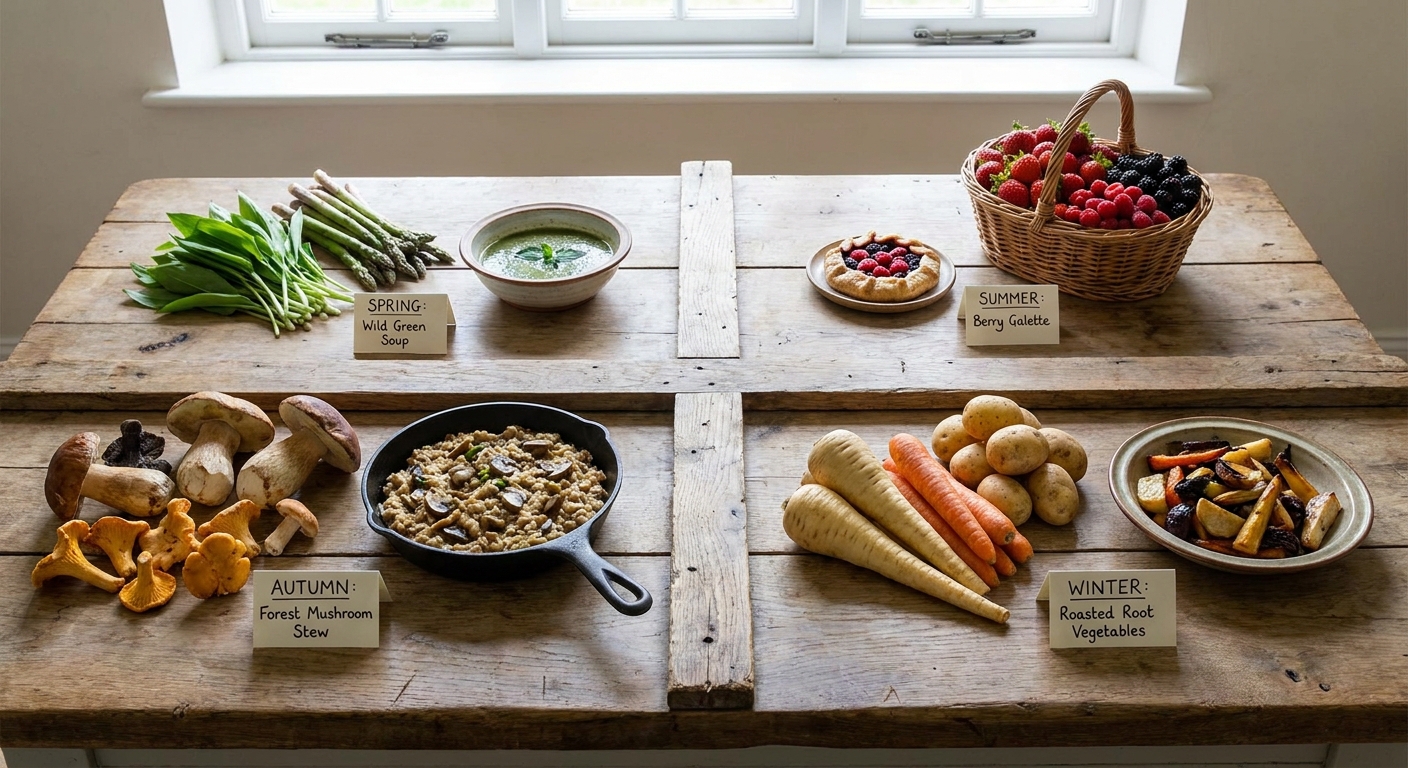
Building Your Own Seasonal Wild Recipe Calendar
As you gain experience, create a simple seasonal chart:
- Spring: Nettles, chickweed, violets, ramps leaves.
- Summer: Berries, flowers (elder, linden), some greens.
- Fall: Nuts (acorns, hazelnuts), roots (for advanced foragers), late berries.
- Winter: Stored goods, evergreens for teas, dried mushrooms.
- Typical habitat.
- Prime harvest window.
- Favorite safe recipe.
- Any personal cautions.
Alongside each entry, note:
Over a few years, this becomes your personalized trail‑to‑table almanac—an evergreen reference that keeps your wild cooking aligned with both the seasons and sound safety practices.